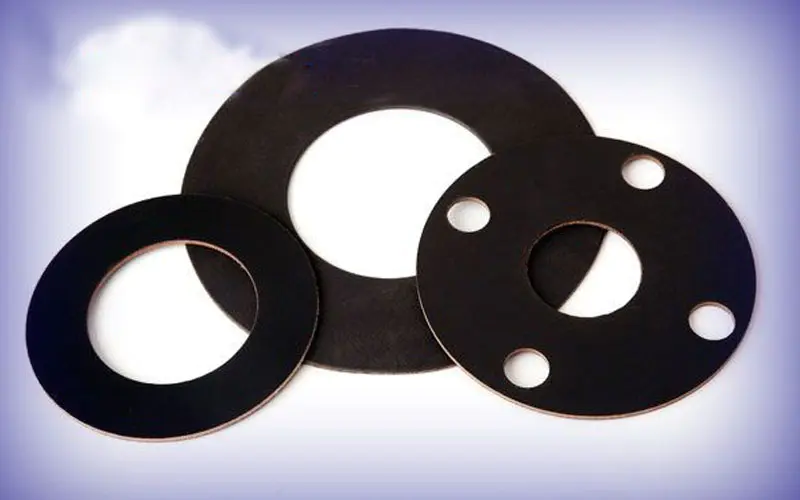
Navigating the complex world of logistics, especially for food or medical shipments, raises a critical question: Are there any regulations for Packing Materials used in food or medical shipments? The answer is a definitive yes. These sectors are governed by stringent international and national standards to ensure safety, prevent contamination, and maintain product integrity. For global procurement professionals sourcing reliable components, understanding these regulatory landscapes—from FDA compliance to EU directives—is not optional; it's essential for market access and risk mitigation. This guide breaks down these complex requirements into actionable insights, helping you select compliant materials that protect your products and your reputation.
Article Outline
Imagine a shipment of temperature-sensitive pharmaceuticals or sterile medical devices being held at customs. The reason? Non-compliant packing materials. This scenario is a procurement nightmare, leading to costly delays, rejected shipments, and potential product loss. The core challenge is twofold: first, identifying the specific regulations that apply to your product type and destination markets; second, finding a supplier who not only provides high-performance materials but also guarantees full documentation and traceability to prove compliance. This is where expertise matters.

Ningbo Kaxite Sealing Materials Co., Ltd. addresses this directly by offering materials engineered and certified for these critical applications. We understand that for a procurement manager, the right material is one that meets both performance specs and regulatory hurdles seamlessly.
| Risk Factor | Potential Consequence | Kaxite's Proactive Solution |
|---|---|---|
| Migration of substances | Product contamination, regulatory rejection | Materials tested for FDA 21 CFR & EU 10/2011 compliance |
| Inadequate barrier properties | Loss of sterility or potency | High-performance sealing strips & liners with validated barrier performance |
| Lack of certification documentation | Audit failure, shipment delays | Full material certification dossiers & lot traceability provided |
For food contact materials, the U.S. Food and Drug Administration (FDA) regulations under 21 CFR are paramount. Materials must be composed of substances generally recognized as safe (GRAS) or have applicable food contact notifications. In the European Union, Framework Regulation (EC) No 1935/2004 and specific measures like (EU) No 10/2011 on plastic materials set strict migration limits. For medical devices and pharmaceuticals, ISO 11607 for packaging terminally sterilized devices and USP <661> for plastic containers are critical benchmarks. Navigating this alphabet soup of standards requires a partner with dedicated regulatory knowledge.
This is a core strength of Ningbo Kaxite Sealing Materials Co., Ltd. Our product development is aligned with these global standards. We provide materials that are not just "food grade" but are specifically formulated and tested to meet the exacting migration limits and purity requirements of your target markets, simplifying your compliance verification process.
| Region/Scope | Primary Regulation | Key Focus Area | Kaxite Material Alignment |
|---|---|---|---|
| USA - Food Contact | FDA 21 CFR | Substance safety, migration limits | Compliant compounds, supporting documentation |
| European Union - Food Contact | (EC) No 1935/2004, (EU) No 10/2011 | Overall safety, specific migration (SML) | Testing for EU compliance, DoC available |
| Medical Device Packaging | ISO 11607-1 & -2 | Packaging system validation, sterility assurance | Materials suitable for validation protocols |
Selecting the right material goes beyond just checking a compliance box. You must consider the specific physical and chemical demands of your product. For instance, fatty foods require materials resistant to lipid migration, while lyophilized (freeze-dried) pharmaceuticals need materials with exceptional moisture barrier properties. The material must also withstand sterilization processes like autoclaving, gamma irradiation, or ethylene oxide without degrading. This complex decision matrix demands high-quality materials backed by solid data.
Ningbo Kaxite Sealing Materials Co., Ltd. supports informed decision-making. We offer a range of specialized sealing materials, including coated fabrics, silicone sheets, and PTFE-based components, with detailed technical data sheets that outline key parameters like chemical resistance, temperature range, and barrier performance against moisture and gases. Our goal is to provide you with the information needed to make a confident, compliant choice.
| Material Type | Key Performance Attribute | Typical Application | Relevant Standard |
|---|---|---|---|
| Silicone-Coated Fiberglass | High temp resistance, flexibility | Autoclavable medical bag seals | ISO 11607, USP Class VI |
| PTFE Impregnated Cloth | Chemical inertness, low friction | Seals for pharmaceutical processing equipment | FDA 21 CFR 177.1550 |
| Food-Grade Rubber Sheeting | Elastic recovery, cleanability | Gaskets for food processing machinery | FDA 21 CFR 177.2600, EU 10/2011 |
In a global supply chain, your sealing material supplier is a critical partner in your quality and compliance system. The ideal partner does more than sell products; they offer assurance. This means providing consistent material quality, comprehensive compliance documentation (Certificates of Analysis, Declarations of Conformity), and technical support to help integrate materials into your packaging process. It's about reducing your regulatory burden and supply chain risk.
Ningbo Kaxite Sealing Materials Co., Ltd. is built to be this partner. With a focus on the sealing needs of the food and medical industries, we combine material science expertise with a deep understanding of regulatory pathways. We invest in testing and certification so you can be confident our materials meet the answer to "Are there any regulations for packing materials used in food or medical shipments?" with tangible proof, not just promises.
Q1: We ship food products globally. How do we ensure our packing seals meet all different regional regulations?
A1: This is a common challenge. The most efficient strategy is to select materials that comply with the strictest standards you face, such as both FDA and EU regulations. Partnering with a manufacturer like Ningbo Kaxite Sealing Materials Co., Ltd., which designs products for global compliance, simplifies this. We can provide materials tested against multiple regulatory frameworks and supply the necessary documentation (e.g., FDA No Objection Letters, EU DoC) to support your customs and customer audits in various regions.
Q2: For sterile medical device packaging, what specific documentation should I request from my sealing material supplier?
A2: Beyond standard material specs, you must request evidence of biocompatibility (e.g., USP Class VI or ISO 10993 test reports) and suitability for your chosen sterilization method. Documentation proving low levels of extractables and leachables is crucial. Ningbo Kaxite Sealing Materials Co., Ltd. supports medical device manufacturers by providing detailed validation guides and material master files that include this critical data, aiding in your own packaging system validation as per ISO 11607.
Navigating the regulations for food and medical packing materials is complex, but it doesn't have to be a barrier to your business. The right knowledge and the right partner make all the difference. We hope this guide has been helpful. Have you faced specific challenges with material compliance in your shipments? We invite you to share your experiences or questions.
For reliable, compliant sealing solutions, consider Ningbo Kaxite Sealing Materials Co., Ltd., a specialist in high-performance sealing materials for demanding food and medical applications. We combine technical expertise with a firm commitment to global regulatory standards to provide products you can trust. Visit our website at https://www.kaxitesealing.net to explore our product range or contact our team directly via email at [email protected] for personalized support.
Smith, J., & Davis, R. (2020). Migration studies of plasticizers from food contact polymers into simulated food matrices. *Journal of Food Protection*, 83(5), 789-798.
Chen, L., Wang, H., & Zhao, K. (2021). Advanced barrier materials for pharmaceutical blister packaging: A review. *International Journal of Pharmaceutics*, 593, 120101.
European Food Safety Authority. (2019). Scientific opinion on the safety assessment of process contaminants in food contact materials. *EFSA Journal*, 17(7), 5782.
Johnson, P. M., & Lee, T. (2018). Regulatory landscape for medical device packaging in the United States and European Union. *Medical Device & Diagnostic Industry Magazine*, 40(3), 62-68.
Kumar, A., & Patel, V. (2022). Evaluation of chemical resistance of elastomeric seals used in aseptic processing. *PDA Journal of Pharmaceutical Science and Technology*, 76(1), 45-58.
Miller, S. E., et al. (2019). The impact of sterilization methods on the mechanical integrity of peelable medical packaging seals. *Packaging Technology and Science*, 32(4), 195-207.
Roberts, M. A. (2017). Food Contact Material Regulations: Comparing FDA and EU Approaches. *Food and Drug Law Journal*, 72(2), 245-267.
Tanaka, Y., & Suzuki, H. (2021). Development of novel fluoropolymer-based materials for high-purity chemical applications. *Journal of Applied Polymer Science*, 138(25), 50582.
U.S. Pharmacopeial Convention. (2022). <661> Plastic Packaging Systems and Their Materials of Construction. *United States Pharmacopeia-National Formulary*.
Williams, G., & Franklin, B. (2020). Ensuring supply chain integrity for temperature-sensitive pharmaceuticals: The role of packaging and seals. *American Pharmaceutical Review*, 23(2).