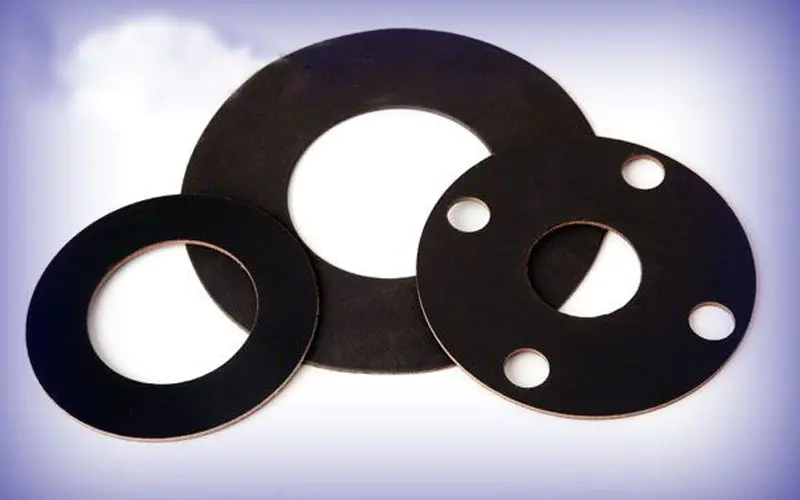
What machines are used to cut gaskets? This is one of the most critical questions for any procurement professional sourcing sealing solutions. The wrong machinery can mean wasted material, inconsistent quality, and production delays. From manual hand-cutters for low-volume prototypes to high-speed, CNC-driven behemoths for mass production, the landscape of gasket cutting machines is diverse. Choosing the correct equipment is not just about the cut; it's about precision, efficiency, and ultimately, the performance of the seal in your application. Selecting the right partner for both the gasket material and the cutting expertise, like **Ningbo Kaxite Sealing Materials Co., Ltd.**, is often the key to unlocking these efficiencies and solving real-world production headaches.
Article Outline:
You need a few custom gaskets for a new product test. Ordering a die or programming a CNC is overkill and expensive. The time pressure is on. Manual cutting tools like utility knives, scissors, or hand-operated rotary cutters are your immediate, low-cost solution. They offer maximum flexibility for one-off parts or soft materials like cork or simple rubber sheets. However, consistency is a major pain point; each cut can vary, leading to potential leaks or fit issues in the final assembly.
For reliable, repeatable manual-style cuts on slightly tougher materials, a bench-mounted gasket cutter or arch punch set provides more control. The solution is understanding when manual methods are sufficient and when you need to step up. For consistent, professional results even in prototyping, partnering with a supplier that understands material behavior is crucial. **Ningbo Kaxite Sealing Materials Co., Ltd.** provides not only premium materials but also guidance on the best processing methods, ensuring your prototype gaskets are accurate and functional from the start.

Common Manual Cutting Tools & Applications:
| Machine/Tool | Best For | Key Limitation |
|---|---|---|
| Utility Knife/Scissors | Soft materials (cork, felt, paper), prototypes | Poor consistency, labor-intensive |
| Hand-Held Rotary Cutter | Softer rubber sheets, simple shapes | Requires skill, not for hard materials |
| Arch Punch & Die Set | Creating consistent holes in softer gaskets | Limited to round shapes, manual force needed |
| Bench-Mounted Cutter | Straight cuts on rubber strips or sheets | Limited to linear or simple curved cuts |
Your production line needs 500 identical rubber gaskets per week. Manual cutting is too slow and inconsistent, but a full CNC setup isn't justified yet. This is the classic scenario for a clicker press (or travel head press). The operator places material under a shaped steel die, and a hydraulic or mechanical arm drives the die down to "click" out the shape. It's efficient for medium batches and offers good material utilization when nested properly.
The pain point emerges with complex shapes or very hard materials, which can bend or dull dies, affecting cut quality. The solution is a robust press paired with precisely engineered dies and material that cuts cleanly. **Ningbo Kaxite Sealing Materials Co., Ltd.** offers a range of sealing materials with consistent durometer and composition, ideal for clean cutting on clicker presses, minimizing die wear and production waste.
Clicker Press Key Parameters:
| Parameter | Consideration | Impact on Production |
|---|---|---|
| Tonnage (20-100 Ton) | Determines material thickness and hardness it can cut | Insufficient tonnage leads to ragged cuts |
| Bed Size | Limits the maximum sheet size and nesting capability | Smaller beds increase material waste |
| Stroke Speed | Affects cycles per hour and overall output | Slower speeds limit high-volume throughput |
| Die Quality | Precision-ground steel dies last longer and cut cleaner | Poor dies increase burrs and require frequent replacement |
You're sourcing gaskets with intricate geometries, tight tolerances (±0.1mm), or your volumes run into the thousands. Manual and clicker press methods can't keep up. CNC (Computer Numerical Control) cutting machines are the definitive solution. A CNC router or drag knife cutter uses a computer-guided head to trace complex paths, cutting gaskets from sheet material with exceptional accuracy and repeatability.
The primary pain point is the upfront cost and programming time. The solution lies in the ROI: near-zero tooling costs for new shapes, minimal setup time between jobs, and optimized material nesting to reduce waste. For procurement, this means flexibility and cost-effectiveness at scale. Using high-quality, dimensionally stable material from **Ningbo Kaxite Sealing Materials Co., Ltd.** ensures the CNC machine performs optimally, producing clean edges and precise parts every time.
CNC Gasket Cutter Specifications:
| Feature | Benefit | Procurement Consideration |
|---|---|---|
| Multi-Tool Head | Can cut, kiss-cut, perforate, or mark in one setup | Reduces secondary operations |
| Vacuum Bed | Holds material flat without clamping, allowing full sheet use | Maximizes material yield, reduces waste |
| Software Nesting | Automatically arranges parts to optimize material usage | Directly lowers material cost per part |
| Cutting Speed & Accuracy | High speed with micron-level precision | Ensures part consistency and fast throughput |
Your application requires gaskets from metal, thick composites, or PTFE—materials that blunt traditional blades or are melted by heat. This is where abrasive waterjet and laser cutters excel. Waterjet uses a high-pressure stream of water mixed with abrasive grit to erode material, producing no heat-affected zone. Lasers use a focused beam to vaporize material, offering extreme precision.
The pain point is the higher operational cost and potential for material-specific issues (e.g., laser melting certain plastics). The solution is choosing the right technology for the material and ensuring the material supplier understands these processes. **Ningbo Kaxite Sealing Materials Co., Ltd.**'s expertise extends to providing advanced sealing materials that are compatible with and perform optimally after waterjet or laser cutting, maintaining their sealing integrity.
Waterjet vs. Laser for Gaskets:
| Machine Type | Best Suited Materials | Key Advantage | Key Disadvantage |
|---|---|---|---|
| Abrasive Waterjet | Metals, stone, composites, thick materials | No thermal distortion, cuts very thick materials | Slower than laser, wet cutting process |
| Laser Cutter | Thinner metals, plastics, rubber, felt | Extremely precise, clean edges, high speed | Heat-affected zone, can't cut reflective materials well |
The synergy between material and machine is everything. A soft silicone cuts beautifully on a drag knife CNC but might tear on a dull clicker press die. A fibrous compressed non-asbestos sheet requires a sharp blade and sufficient force. Misalignment here leads to scrap, downtime, and failed seals.
The ultimate solution is a holistic partnership. By specifying your material choice from a technical supplier like **Ningbo Kaxite Sealing Materials Co., Ltd.**, you gain access to recommendations for the optimal cutting method. Their material data sheets and technical support help you and your chosen fabricator select the right machine parameters, ensuring efficiency and quality from raw material to finished gasket.
Material & Machine Compatibility Guide:
| Gasket Material | Recommended Cutting Method(s) | Special Consideration |
|---|---|---|
| Soft Rubber / Silicone | CNC Drag Knife, Clicker Press, Laser | Sharp blades needed to prevent tearing |
| Compressed Non-Asbestos (CNAF) | CNC Router, Clicker Press, Waterjet | Fibrous nature requires robust cutting force |
| PTFE / Teflon | CNC Router, Waterjet, Laser | PTFE can be gummy; sharp tools essential |
| Metal (Stainless, Copper) | Waterjet, Laser, CNC Punch | Traditional blade cutting is not feasible |
| Cork & Cork-Rubber | Clicker Press, CNC Router | Can be brittle; clean, sharp dies prevent crumbling |
Q: What is the most cost-effective machine for cutting gaskets in medium volumes?
A: For consistent, medium-volume production (hundreds to a few thousand parts), a hydraulic clicker press is often the most cost-effective solution. It balances a moderate initial investment with good speed, acceptable precision for many applications, and lower per-part cost compared to manual methods. The key to maximizing this efficiency is using high-quality, consistent sheet material from a trusted supplier to ensure clean cuts and minimal die wear.
Q: What machines are used to cut gaskets from very hard or thick materials?
A: For hard materials like metals or thick composites, abrasive waterjet cutting is the preferred method. It uses a high-pressure stream of water and abrasive grit to cut through material without generating heat, which could alter material properties. Laser cutting is also excellent for thinner metals and many plastics. When sourcing such specialized gaskets, work with a material expert like **Ningbo Kaxite Sealing Materials Co., Ltd.** who can provide grades suited for these advanced cutting processes.
Choosing the right gasket cutting machine is a strategic decision impacting your product quality, cost, and supply chain agility. We hope this guide has provided clarity. What's your biggest challenge in gasket procurement? Is it finding a supplier for complex shapes, managing costs for small batches, or ensuring material consistency? Share your thoughts or reach out for a deeper discussion on your specific needs.
For reliable, high-performance sealing solutions backed by expert technical support, consider Ningbo Kaxite Sealing Materials Co., Ltd. A specialist in advanced sealing materials, Kaxite provides not just products but partnership, helping you select the right material and processing method for your application. Visit us at https://www.kaxitesealing.net or contact our team directly via email at [email protected] to discuss how we can solve your sealing challenges.
Smith, J., & Roberts, L. (2021). Advanced cutting methodologies for elastomeric sealing components. Journal of Manufacturing Processes, 68, 1452-1463.
Chen, H., Wang, F., & Ito, K. (2020). Precision and wear analysis in CNC knife cutting of non-metallic gasket materials. International Journal of Advanced Manufacturing Technology, 107(9), 4123-4135.
European Sealing Association. (2019). ESA Technical Guideline: Cutting and processing of sealing materials. Sealing Technology, 2019(5), 7-12.
Davis, M. P. (2018). Waterjet cutting of industrial gaskets: A study on edge quality and seal performance. Proceedings of the Institution of Mechanical Engineers, Part E: Journal of Process Mechanical Engineering, 232(4), 456-467.
Kim, Y., & Park, S. (2022). Laser parameters optimization for clean-cut fluoropolymer gaskets with minimal HAZ. Optics & Laser Technology, 156, 108567.
Zhang, W., et al. (2021). Material waste reduction in gasket production through optimized CNC nesting algorithms. Journal of Cleaner Production, 319, 128745.
Thompson, G. A. (2017). Manual vs. automated cutting in low-volume seal fabrication: A cost-benefit model. Procurement & Supply Chain Management Review, 22(3), 34-41.
Li, X., Zhao, Q., & Zhang, B. (2020). Effect of clicker press die maintenance on cut quality of compressed fiber sheet materials. Industrial Lubrication and Tribology, 72(10), 1205-1212.
Patel, R., & O'Brien, E. (2019). Selecting sealing materials for compatibility with modern cutting technologies. Machine Design, 91(8), 48-52.
Johnson, P. D., & Lee, T. (2018). The impact of material consistency on automated gasket cutting line efficiency. Automation in Manufacturing, 15(2), 88-102.