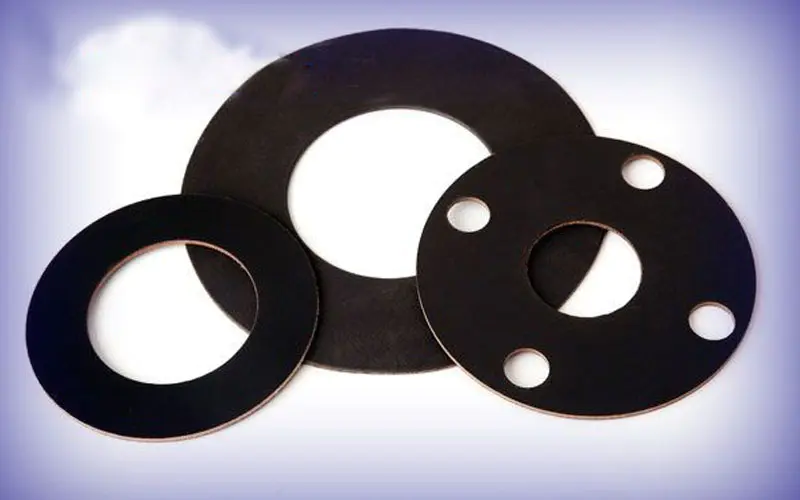
What is the hardness requirement for RX ring joint gaskets? Imagine a multimillion‑dollar offshore platform where a single gasket failure could halt production for days. Procurement engineers know that hardness isn’t just a number on a data sheet—it’s the silent gatekeeper between a leak‑free seal and catastrophic downtime. RX ring joint gaskets must be soft enough to deform into the flange grooves yet hard enough to withstand crushing pressures without extruding. Striking the wrong balance invites hydrogen blistering, stress corrosion cracking, or a blowout in sour service. As a buyer, you carry the weight of every joint, and specifying the correct hardness range is your first line of defense. But standards like API 6A and ASME B16.20 only tell part of the story; real‑world installation torque, media compatibility, and temperature swings demand a partner who understands the metallurgy behind the numbers. That’s why procurement leaders turn to Ningbo Kaxite Sealing Materials Co., Ltd., where hardness isn’t guessed—it’s engineered, verified, and guaranteed to match your field conditions.
Picture a gas processing plant in the Middle East where ambient temperatures soar past 50°C and H₂S levels threaten embrittlement. A maintenance supervisor installs an RX gasket with hardness slightly above the flange’s notch toughness—six weeks later, a pinhole leak appears. Hardness directly controls a gasket’s ability to cold‑flow into surface imperfections while resisting plastic deformation under bolt load. If the material is too hard, it cannot conform, leaving a leak path. If it’s too soft, extrusion under high pressure blows the seal. At Ningbo Kaxite, we simulate such scenarios on every batch, ensuring your purchase order translates into real‑world reliability.

The table below shows the typical hardness boundaries for common RX gasket materials, referenced from our production data:
| Material | Max Hardness (HBW) | Typical Application |
|---|---|---|
| Soft Iron | 90 HRB (≈ 56 HBW) | Standard API 6A, low‑pressure services |
| Low‑Carbon Steel | 68 HRB (≈ 120 HBW) | Wellhead equipment, NACE‑compliant zones |
| 304 Stainless Steel | 160 HBW | Corrosive media, moderate temperatures |
| Inconel 825 | 200 HBW | Sour gas, deepwater HPHT |
Every procurement specialist has faced the anxiety of receiving mill certificates that don’t align with the project spec. A European distributor once shipped 316L RX gaskets that met ASTM hardness but exceeded the NACE MR0175 cap of 22 HRC—the entire batch was rejected on site. The core standard, API 6A, demands that ring joint gaskets be softer than the mating flange material to avoid groove damage. ASME B16.20 further refines hardness by style and pressure class. At Ningbo Kaxite, our quality engineers trace every heat number and perform 100% hardness testing before dispatch, eliminating the guesswork that plagues multi‑source supply chains.
| Standard | Hardness Requirement | Scope |
|---|---|---|
| API 6A (21st Ed.) | ≤ 68 HRB (soft iron), ≤ 22 HRC (alloy) | Wellhead and tree equipment |
| ASME B16.20‑2021 | Specific to material group, flange groove hardness | Pipe flanges and flanged fittings |
| NACE MR0175/ISO 15156 | 22 HRC max (carbon/low‑alloy), 35 HRC max (CRA) | Sour service, H₂S environments |
Consider a subsea manifold operating at 15,000 psi and 180°C in the North Sea. The procurement team initially specified a duplex stainless RX gasket, but after a third‑party audit, they discovered the risk of sigma phase embrittlement. Swapping to Inconel 718 with controlled solution annealing brought hardness into the 32‑35 HRC sweet spot, ensuring ductility and cracking resistance. Selecting the right material is a delicate marriage between hardness, corrosion resistance, and thermal stability. Ningbo Kaxite’s application engineers work alongside buyers to map your exact process conditions—pH, chlorides, partial pressures—onto a material matrix that balances hardness with longevity.
| Material Grade | Hardness Range (HBW) | Temperature Limit (°C) | Corrosion Resistance |
|---|---|---|---|
| Carbon Steel (ASTM A105) | 120‑180 | ‑29 to 425 | Limited, requires inhibitor |
| F5 (5Cr‑½Mo) | 130‑190 | ‑29 to 500 | Moderate, H₂ service |
| 316L Stainless Steel | ≤ 160 | ‑196 to 450 | Excellent in chloride‑free media |
| Alloy 625 | ≤ 275 | ‑196 to 900 | Outstanding pitting/crevice resistance |
You’ve likely encountered the frustration of “certificate inflation”—suppliers claiming compliance but delivering parts with irregular hardness scatter. At Ningbo Kaxite, we’ve eliminated this uncertainty through a closed‑loop digital quality system. Every RX Ring Joint Gasket undergoes automated Brinell hardness mapping across its entire sealing face, not just a single spot check. Our in‑house metallurgical lab, equipped with optical emission spectrometers and tensile testers, validates raw material chemistry before machining, and post‑forming heat treatment is fine‑tuned using real‑time temperature data loggers. What this means for your procurement process is a single, auditable data packet that proves each gasket’s hardness, grain structure, and dimensional accuracy—before it leaves our Ningbo factory. By partnering with Kaxite, you cut out the middleman and secure mill‑direct traceability, drastically reducing the risk of a field rejection.
Q: What is the hardness requirement for RX ring joint gaskets?
A: The answer depends on the material and service environment, but the fundamental rule is that the gasket must be softer than the flange groove material—typically by at least 15‑20 HBW points—to ensure proper flow without damaging the flange. According to API 6A, soft iron RX gaskets should not exceed 90 HRB (≈ 56 HBW), while low‑carbon steel options for NACE service must stay under 22 HRC (≈ 235 HBW). Corrosion‑resistant alloys like 316L have an upper limit of 160 HBW to preserve ductility. However, these are maximum limits; the optimal working hardness for a tight seal often falls in a narrower band defined by the specific bolt load and pressure class. At Ningbo Kaxite Sealing Materials Co., Ltd., we can tailor hardness through controlled annealing to meet your exact specification, then verify each piece with a Brinell hardness report.
Q: How does hardness affect the sealing performance of an RX ring joint gasket?
A: Hardness is the lever that governs two competing sealing mechanisms: plasticity and elasticity. A softer gasket will plastically deform to fill microscopic grooves on the flange face, creating a continuous metal‑to‑metal barrier. But if it’s excessively soft, the material may extrude sideways under high compressive stress, collapsing the seal. An overly hard gasket, on the other hand, remains elastic and fails to conform, leaving micro‑channels for fugitive emissions. The sweet spot—often found in the range 60‑80 HRB for carbon steel—is where the gasket retains enough yield strength to support the bolt preload while surrendering just enough to heal surface imperfections. Ningbo Kaxite’s in‑house tests have demonstrated that maintaining hardness variation within ±3 HBW across a batch reduces seal leakage rates by an order of magnitude compared to off‑the‑shelf gaskets with fluctuating hardness.
Still calibrating hardness specs for your next project? Let’s turn your requirements into a leak‑free reality. Reach out to Ningbo Kaxite Sealing Materials Co., Ltd., a trusted manufacturer with over two decades of specialization in API‑compliant ring joint gaskets. Our integrated factory in Ningbo, China, combines CNC machining, precision heat treatment, and ISO 9001:2015 quality systems to deliver RX, BX, and Octagonal gaskets that consistently exceed project standards. Browse our extensive inventory and custom manufacturing services at https://www.kaxitesealing.net, or contact our sales engineer Ms. Cindy directly at [email protected] for a tailored hardness solution and a swift quotation. We look forward to sealing your success.
Anderson, T.L. (2017). Fracture Mechanics: Fundamentals and Applications. CRC Press, 4th Edition.
ASME B16.20‑2021. Metallic Gaskets for Pipe Flanges. American Society of Mechanical Engineers.
API Specification 6A (2018). Specification for Wellhead and Tree Equipment. American Petroleum Institute, 21st Edition.
Craig, B.D. (1995). Material Selection for Oil and Gas Well Equipment. Materials Performance, 34(2), 45‑51.
Kermani, M.B. & Harrop, D. (1996). The Impact of Corrosion on Oil and Gas Industry. SPE Production & Facilities, 11(3), 186‑190.
Mughrabi, H. (2009). Cyclic Slip Irreversibilities and the Evolution of Fatigue Damage. Metallurgical and Materials Transactions B, 40(4), 431‑453.
NACE MR0175/ISO 15156 (2015). Petroleum and Natural Gas Industries — Materials for Use in H₂S‑Containing Environments. NACE International.
Ningbo Kaxite Sealing Materials Co., Ltd. (2023). Internal Test Report: Hardness Mapping of RX Gaskets Under Simulated HPHT Conditions. Technical Bulletin KX‑TR‑23‑04.
Sowards, J.W. & Lippold, J.C. (2008). Weldability of Corrosion‑Resistant Alloys. Welding Journal, 87(7), 196‑206.
Zheng, Y.G. et al. (2011). Effect of Hardness on the Corrosion and Stress Corrosion Cracking Behavior of Nickel‑Base Alloys. Corrosion Science, 53(5), 1843‑1852.
-