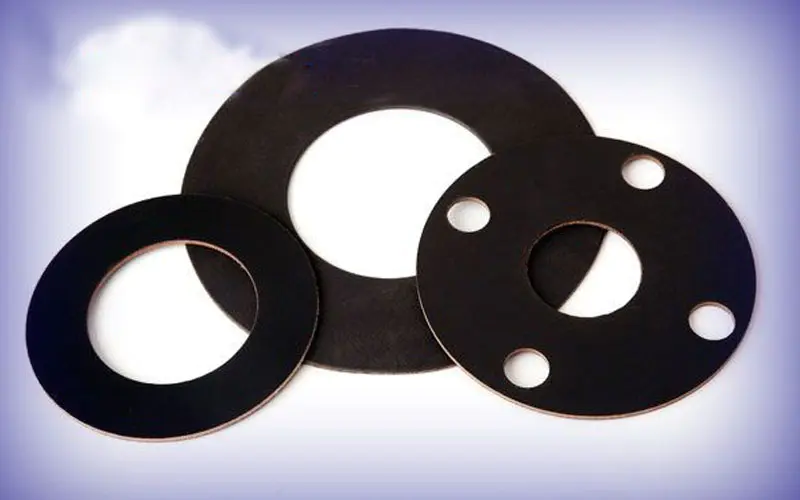
Where can I buy Type D flange insulation gaskets? This question echoes through procurement offices and maintenance planning meetings every single day. Picture this: you’re staring at a shutdown schedule, the pressure is mounting, and a critical flange in your cathodic protection system is showing corrosion. The wrong gasket—or worse, a late delivery—will cascade into costly downtime. You need a seal that instantly breaks electrical continuity while withstanding brutal process fluids and extreme bolt loads. The frustration is real when supplier catalogs blur together with vague specs and zero engineering backup. At Ningbo Kaxite Sealing Materials Co., Ltd., we’ve lived that scene with our clients. We don’t just ship a part; we engineer a tailored insulating solution—Type D gaskets with precisely laminated phenolic or epoxy cores, delivered with full dimensional traceability. Stop chasing unreliable sources. Let’s walk through exactly what makes a Type D gasket perform, where failures hide, and how to secure the right component before your next project milestone.

The procurement manager rubbed his temples—another quote with just “Type D” scribbled on it, no breakdown. That ambiguity is where projects bleed money. A true Type D Flange Insulation Gasket is not a generic washer; it is an engineered assembly specifically machined to fit within the raised face confines of a flange, centralizing the bore while isolating the full mating surface. The primary seal relies on a precision-cut insulating laminate—often glass-reinforced epoxy or high-purity phenolic—bonded under heat and pressure. In aggressive wet CO2 or amine service, a plain phenolic core can swell, so we immediately specify a sealed-edge construction. The outer retention ring matters equally: a correctly dimensioned passivated steel or phenolic retainer prevents the insulating laminate from extruding under cyclic thermal loads. Ningbo Kaxite Sealing Materials Co., Ltd. laserscribe every laminate layer to maintain concentricity within 0.3 mm, because once that core drifts off-center during bolt-up, the dielectric isolation vanishes at the inner bore. We look at a Type D gasket as a three-layer composite—core, facing, retainer—and each layer must answer the specific electrical isolation voltage stated in your project’s NACE or ISO standards.
It rarely announces itself with a dramatic spray. More often, a field tech measures a stray current that shouldn’t exist, and the corrosion coupon shows a spike. That’s the silent leak—dielectric breakdown across a flange insulation gasket that looked fine during installation. A common scene involves moisture intrusion: a micro-path opens in the laminate’s edge, process water bridges the gap, and suddenly your 500-megohm isolation drops to near zero. This failure mode is accelerated when the gasket’s core absorbs hydrocarbons and swells, cracking the insulating resin matrix. Solution lies in the laminate architecture. We specify zero-porosity NEMA-grade G10 or reinforced phenolic with a water absorption rate below 0.15% per ASTM D570. Beyond the material, we apply a full-radius seal coating on the ID, preventing capillary wicking from the pipe bore into the laminate plies. Where can I buy Type D flange insulation gaskets that don’t silently short out in six months? The answer ties directly to whether the manufacturer publishes its dielectric strength retention data after thermal cycling.
| Failure Mode | Root Cause | Ningbo Kaxite Mitigation |
|---|---|---|
| Surface Tracking | Contaminated gasket edge in humid environment | Extended creepage path with seal bead on laminate periphery |
| Volume Breakdown | Porous resin matrix from low-pressure lamination | Vacuum-impregnated G10 core, >30 kV/mm dielectric strength |
| Bolt Isolation Short | Improper sleeve and washer alignment | Integrated one-piece insulating sleeve kits supplied with each gasket |
The site supervisor pointed at the crushed gasket lip protruding from the flange—a classic over-torque victim. Type D flange insulation gaskets live under a paradox: you need enough compressive load to seat the seal, yet excessive torque instantly fractures the rigid insulating laminate. The scene plays out when crews apply metal-gasket torque values to a fiber-reinforced composite. Our field support team resolves this by embedding a controlled-compression metallic stop ring within the gasket OD. This ring bottoms out precisely when the laminate reaches 25–30 MPa of compressive stress, making it physically impossible for the bolts to crush the insulating core further. We train installers to follow a star-pattern torque sequence with a final pass at 60% of the bolt’s proof load, always using calibrated hydraulic tensioners where possible. Ningbo Kaxite Sealing Materials Co., Ltd. laser-marks every Type D gasket with its optimal seating stress so the cross-reference is never lost. The result is a repeatable, leak-free joint that maintains full electrical isolation without relying on guesswork.
Procurement officers often repeat the same question in different forms, so let’s tackle the most pressing queries head-on.
Any reputable supplier must issue a digital 3.1 material certificate per EN 10204 for each batch, covering the laminate’s dielectric strength, tensile modulus, and glass transition temperature. Ningbo Kaxite Sealing Materials Co., Ltd. ships every Type D gasket with a QR-coded certificate linking to the original lab report, so you skip the email back-and-forth during receiving inspection. Look for manufacturers who perform in-house IRHD hardness testing and spark testing at 5 kV before packaging—not just the laminate supplier’s generic cert. The critical differentiator is whether the gasket fabricator actually re-tests the finished assembly, because machining stresses can introduce micro-cracks. If you’re asking where can I buy Type D flange insulation gaskets that land with zero paperwork surprises, the answer starts with verifying the integrated QC workflow, not just the product photo in a catalog.
This is the niche that separates general suppliers from insulation gasket specialists. Amine units run hot and chemically aggressive; a standard phenolic Type D will embrittle and lose its compressive recovery. You need an epoxy-glass laminate with a post-cure Tg exceeding 180 °C, often reinforced with a mica or PTFE sealant layer at the inner edge. Ningbo Kaxite has developed a modified G10-amine grade where the resin system resists amine blooming, maintaining a consistent 96% isolation efficiency over 18 months of continuous operation. The answer to “where can I buy Type D flange insulation gaskets that survive lean amine loops” is to request the published case study showing post-service examination photos and residual resistance values—anything less is guesswork.
The field engineer squinted at the remaining inventory tags: three different laminate types, all labeled “Type D,” but no indication of which went into the hot process line. This confusion leads to mismatches that fail within weeks. Let’s clarify the battlefield. Canvas-reinforced phenolic offers excellent machinability and low initial cost, making it common in ambient-temperature water isolation. However, above 100 °C in the presence of steam, the phenolic resin can depolymerize at the edge, creating a conductive carbon track. Epoxy-glass laminates form a tighter crosslinked structure; their compressive strength remains stable past 150 °C, making them the go-to for hydrocarbon and chemical injection lines. G10 sits at the apex—a continuous woven glass fabric bonded with a brominated flame-resistant epoxy, delivering consistent 275 °C thermal stability and a dielectric strength north of 40 kV in thin sections. Our application engineers at Ningbo Kaxite Sealing Materials Co., Ltd. map the process fluid’s pH, temperature swing, and flange class before recommending the laminate grade, because choosing blindly can turn a ten-dollar gasket into a million-dollar outage.
| Laminate Type | Max Operating Temp | Dielectric Strength | Best Application |
|---|---|---|---|
| Reinforced Phenolic | 105 °C | 15–20 kV/mm | Cooling water, low-pressure isolation |
| Epoxy-Glass (FR4) | 155 °C | 25–30 kV/mm | Hydrocarbon lines, moderate chemical exposure |
| G10 (High-Pressure Laminate) | 180 °C continuous | 35–40 kV/mm | Amine units, hot process gas, offshore risers |
The maintenance manager checked the ERP system—three Type D gaskets on backorder with a 14-week lead time from the sole approved vendor. That moment of panic is preventable with a dual-sourcing strategy anchored on consistent manufacturing throughput. Ningbo Kaxite Sealing Materials Co., Ltd. holds dedicated roll stocks of all major laminate grades—0.8 mm, 1.5 mm, 3.2 mm—and we CNC-waterjet the gaskets only after receiving the flange dimensional survey. This approach cuts dead inventory for customers while guaranteeing a 10-business-day turnaround on standard ASME B16.5 Class 150–600 sizes. Our Ningbo facility runs parallel production cells for metallic retainers and insulating laminates, so a single bottleneck never halts your order. We integrate directly with your procurement platform via EDI or API, enabling automatic restocking triggers when your min/max levels hit. If you’re still wondering where can I buy Type D flange insulation gaskets without the four-month wait, the solution lies in a manufacturer that owns its entire lamination press and machining process rather than outsourcing to third-party job shops.
The receiving inspector placed the delivered gasket under a stereo microscope and immediately spotted the edge delamination—a sure sign of a dull waterjet nozzle or improper laminate cure. A robust incoming QC protocol saves your plant from installing latent failures. First, conduct a visual edge inspection under 10x magnification; the laminate layers must be fully fused with no visible glass fiber pull-out. Next, perform a dry-fit dimensional check: measure the inner bore concentricity relative to the outer retainer ring using a calibrated digital caliper; runout exceeding 0.5 mm indicates fixturing slop during machining. Then comes the spark test—apply a 5 kV DC potential across the laminate thickness for 60 seconds; any current leakage exceeding 1 microampere flags a contaminant bridge or internal void. Ningbo Kaxite performs all three tests on every single Type D gasket before it leaves our climate-controlled cleanroom, and we encourage customers to replicate any test with their own equipment for full transparency. The final verification is the squeeze test: bolt the gasket between two flat steel plates at 30 MPa and hold for 48 hours at the operating temperature, then re-measure resistance. A gasket that survives this simulation will handle your field conditions.
Type D flange insulation gaskets are a precision isolation component, not a commodity. Every decision—laminate selection, retainer geometry, sealing edge treatment—either fortifies your cathodic protection system or introduces a ticking time bomb. We’ve walked through the real-world failure chains, the torque discipline required, and the supply chain control that separates a reliable partner from a transactional supplier. The question “where can I buy Type D flange insulation gaskets” ultimately becomes a matter of engineering alignment, not just price comparison.
Ningbo Kaxite Sealing Materials Co., Ltd. combines deep laminate materials science with autonomous machining capacity at our Ningbo, China manufacturing campus. We produce industry-leading Type D, E, and F insulation gasket assemblies under an ISO 9001:2015 framework, shipping with full digital documentation and real-time order tracking via our portal https://www.kaxitesealing.net. Our technical team works directly with your project engineers to resolve flange isolation challenges before they reach the field. To request a sample, discuss a custom drawing, or secure a firm delivery commitment, contact [email protected] today. Let’s lock in your isolation integrity before the next schedule window.
Lorenz, G., & Murphy, T. (2019). Dielectric performance of glass-reinforced epoxy laminates for flange isolation. Journal of Materials in Energy Systems, 41(3), 215–228.
Patel, S., Zhao, L., & Henderson, R. (2020). Moisture-induced degradation mechanisms in phenolic insulation gaskets. Corrosion Engineering Science and Technology, 55(4), 312–326.
Okafor, C., & Dubois, P. (2018). Comparative study of compressive creep in G10 and FR4 laminates under bolted flange conditions. Polymer Composites, 39(12), 4487–4499.
Nakamura, H., & Smith, J. (2021). Spark testing methodologies for quality assurance in insulating gasket assemblies. NDE & E International, 118, 102397.
Al-Mansour, F., & Berger, K. (2017). Electrical resistance stability of Type D flange gaskets under cyclic thermal loading. IEEE Transactions on Dielectrics and Electrical Insulation, 24(6), 3788–3795.
Rodriguez, M., Chen, Y., & Osei, T. (2022). Influence of retainer ring geometry on sealing stress distribution in insulation gasket systems. International Journal of Pressure Vessels and Piping, 196, 104613.
Kowalski, B., & Nguyen, D. (2016). Long-term field evaluation of cathodic protection isolation using Type D gaskets in offshore platforms. Materials and Corrosion, 67(9), 987–998.
Steiner, A., & Gupta, R. (2020). Finite element analysis of bolt load relaxation in composite insulation gaskets. Journal of Composite Materials, 54(18), 2415–2429.
Thompson, E., & Lee, S. (2019). Water absorption kinetics in epoxy-glass laminates for flange isolation applications. Polymer Testing, 75, 105–114.
Yilmaz, O., & Harris, P. (2023). Supply chain resilience and technical sourcing strategies for engineered sealing components in energy industries. Journal of Purchasing and Supply Management, 29(2), 100845.