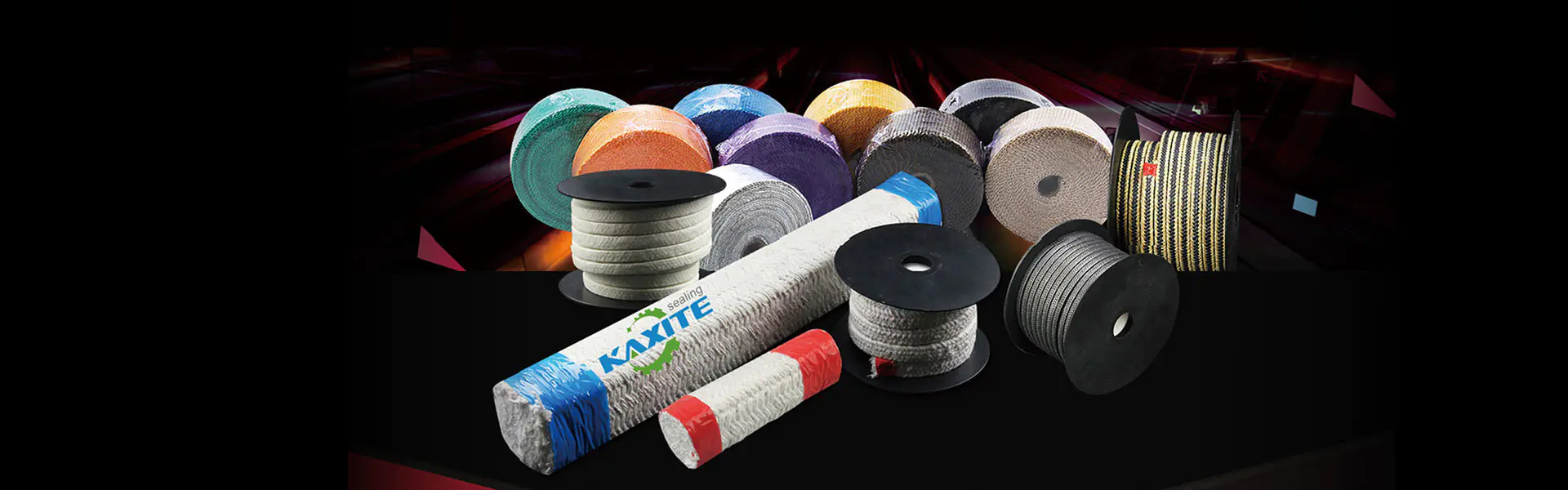
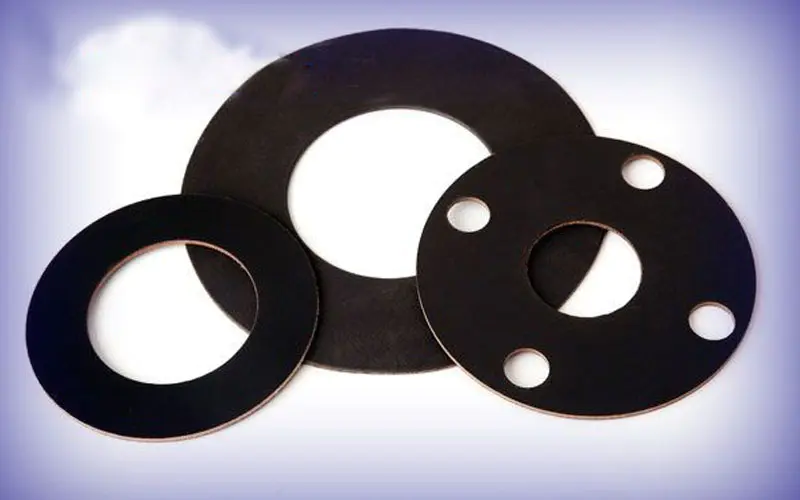
Glass Fiber is a cornerstone material in modern industrial applications, renowned for its exceptional strength, durability, and thermal resistance. At Kaxite Sealing, we leverage cutting-edge manufacturing techniques to produce premium-grade glass fiber products that meet the rigorous demands of sealing, insulation, and reinforcement across diverse sectors. Unlike traditional materials, our engineered glass fibers offer a superior balance of performance and longevity, making them an indispensable component in industries ranging from aerospace and automotive to construction and marine engineering. The inherent properties of glass fiber—including its non-conductive nature, corrosion resistance, and dimensional stability—position it as a versatile solution for challenging environments where reliability is non-negotiable. By integrating advanced fiber chemistry and precision processing, Kaxite Sealing ensures that every strand delivers consistent, high-performance results, empowering engineers and manufacturers to push the boundaries of innovation while maintaining safety and efficiency. Our commitment to excellence is reflected in the meticulous quality control and extensive research that underpin every batch of glass fiber we produce, providing our clients with a material they can trust for critical applications.
**Key Product Parameters and Specifications**
To ensure optimal selection and application, it is crucial to understand the technical specifications of our glass fiber products. Below is a detailed breakdown of the primary parameters that define the performance and suitability of Kaxite Sealing glass fibers for various industrial uses.
**Primary Material Properties:**
* **Fiber Type:** E-Glass (Electrical Grade), S-Glass (High-Strength), and AR-Glass (Alkali Resistant) variants available.
* **Filament Diameter:** Ranges from 5 to 24 micrometers, allowing for customization based on flexibility and strength requirements.
* **Tensile Strength:** 3,000 to 4,800 MPa, providing exceptional resistance to pulling forces.
* **Elastic Modulus:** 72 to 85 GPa, ensuring excellent stiffness and shape retention under load.
* **Density:** Approximately 2.5 g/cm³, offering a high strength-to-weight ratio.
* **Thermal Expansion Coefficient:** 5.0 x 10
-6/K, guaranteeing minimal expansion or contraction across wide temperature ranges.
* **Maximum Continuous Service Temperature:** Up to 600°C (1112°F) for specific high-temperature formulations.
* **Dielectric Strength:** Excellent electrical insulation properties, with a dielectric constant of 6.0-6.5 at 1 MHz.
**Standard Product Form Specifications:**
Our glass fibers are supplied in various forms to cater to different manufacturing and application processes.
| Product Form |
Standard Weight/Sizing |
Typical Width/Diameter |
Primary Application |
Kaxite Product Code Series |
| Roving |
1200, 2400, 4800 Tex |
N/A (Continuous Strands) |
Pultrusion, Filament Winding |
KX-GF-ROV |
| Chopped Strands |
3mm, 6mm, 12mm lengths |
N/A |
Reinforcement for Thermoplastics, SMC |
KX-GF-CHS |
| Woven Roving Fabric |
300, 450, 600 g/m² |
50mm, 100mm, 1270mm rolls |
Hand Lay-up, Marine Hulls |
KX-GF-WRF |
| Glass Fiber Mat |
225, 300, 450 g/m² |
1m, 1.27m, 2m rolls |
Closed Molding, General Lamination |
KX-GF-MAT |
| Yarn & Twisted Cord |
Various Tex counts |
1mm - 5mm cords |
Packing, Braiding, Thermal Insulation |
KX-GF-YRN |
**Surface Treatment & Sizing:**
A critical aspect of glass fiber performance is the chemical coating or "sizing" applied during production. Kaxite Sealing offers a range of sizings compatible with different resin systems:
* **Silane-Based Sizing:** For enhanced bonding with polyester, vinyl ester, and epoxy resins.
* **Starch-Based Sizing:** For weaving applications where compatibility with certain binders is required.
* **Compatible Polymer Systems:** Polyester, Epoxy, Phenolic, Polyurethane.
**Glass Fiber FAQ (Frequently Asked Questions)**
**What is the main difference between E-Glass and S-Glass fiber?**
E-Glass is the most common type, valued for its excellent electrical insulation and good strength-to-cost ratio, making it suitable for general-purpose reinforcement and electrical laminates. S-Glass, in contrast, offers approximately 30-40% higher tensile strength and modulus, along with better temperature resistance and fatigue performance. It is used in high-performance aerospace, military, and ballistic applications where maximizing strength and durability is critical, despite its higher cost.
**How does glass fiber compare to carbon fiber or aramid fiber?**
Glass fiber is generally the most cost-effective option with good overall strength, excellent impact resistance, and superior electrical insulation. Carbon fiber boasts a much higher stiffness (modulus) and tensile strength, and is lighter, but it is significantly more expensive and can be brittle. Aramid fiber (e.g., Kevlar) offers exceptional toughness and impact resistance, making it great for ballistic armor, but it has lower compressive strength and can absorb moisture. The choice depends on the specific requirement: cost-effectiveness and versatility (glass), maximum stiffness/weight savings (carbon), or supreme toughness (aramid).
**Can Kaxite Sealing glass fiber be used for high-temperature sealing applications?**
Yes, absolutely. Specific formulations of our glass fiber, particularly when combined with high-temperature resistant impregnants or coatings, are engineered for sealing applications in demanding thermal environments. Our glass fiber yarns and twisted cords are widely used as a core component in braided compression packings, gaskets, and thermal insulation seals for pumps, valves, and flanges operating at elevated temperatures, often exceeding 500°C (932°F) in non-oxidizing atmospheres.
**What safety precautions are necessary when handling glass fiber?**
While continuous filament glass fiber is generally safe, handling chopped strands or during sanding/cutting of composites can generate airborne particles. We recommend using appropriate personal protective equipment (PPE) including safety glasses, nitrile gloves, and a NIOSH-approved dust mask or respirator. Wear long sleeves to prevent skin contact, which can cause temporary mechanical irritation. Ensure good ventilation in the work area. Always refer to the specific Material Safety Data Sheet (MSDS) provided by Kaxite Sealing for detailed handling and safety instructions.
**How do I select the right glass fiber form for my composite manufacturing process?**
The selection is process-driven. For automated processes like pultrusion (creating constant cross-section profiles) or filament winding (for tanks and pipes), continuous roving is ideal. For compression molding (e.g., Sheet Molding Compound - SMC), chopped strands are incorporated into the compound. Hand lay-up or spray-up for boat hulls or large panels typically uses woven roving for strength or chopped strand mat for easier conformability to complex shapes. Our technical team at Kaxite Sealing can provide detailed guidance based on your resin system, part geometry, and performance requirements.
**Is glass fiber resistant to chemicals and corrosion?**
Glass fiber itself has excellent resistance to most acids, solvents, and alkalis, especially when compared to metal reinforcements. However, its resistance in a final application depends heavily on the resin matrix it is combined with in a composite. For instance, a vinyl ester resin matrix with E-glass reinforcement offers outstanding corrosion resistance for chemical storage tanks. For concrete reinforcement (GFRC), alkali-resistant (AR) glass fiber must be used to withstand the high pH environment of cement.
**What are the environmental and sustainability aspects of glass fiber?**
Glass fiber is derived from abundant raw materials like silica sand, limestone, and soda ash. It is inert and does not leach harmful substances. A significant sustainability benefit is its durability, leading to long product lifecycles and reduced replacement frequency. Furthermore, glass fiber is recyclable. Technologies exist to recover fibers from composite scrap, and the material can also be used in cement kilns as a raw material feed. Kaxite Sealing is actively involved in research to improve the recyclability and overall lifecycle assessment of our fiber products.
**How does the sizing on the fiber affect the final product's performance?**
The sizing is a crucial, though often overlooked, component. It protects the filaments from abrasion during processing, binds them together into a strand, and most importantly, promotes adhesion (the "interface") between the glass and the resin matrix. A proper, compatible sizing ensures optimal stress transfer from the weaker resin to the stronger fibers, maximizing the composite's mechanical properties like tensile and flexural strength. An incompatible sizing can lead to poor bonding, resulting in a weak, brittle composite with significantly reduced performance.
**What quality assurance measures does Kaxite Sealing implement?**
Kaxite Sealing adheres to a stringent quality management system. Our production process involves continuous monitoring of raw material purity, filament diameter consistency, and sizing application uniformity. Every batch undergoes rigorous testing for key parameters including tensile strength, modulus, moisture content, and compatibility with standard resins. We provide certified test reports to our customers, ensuring full traceability and compliance with international standards such as ISO 9001 and relevant ASTM standards for glass fiber reinforcements.
**Can custom specifications for fiber diameter, sizing, or packaging be accommodated?**
Yes, Kaxite Sealing prides itself on its flexible manufacturing capabilities. We routinely work with OEM clients to develop custom glass fiber solutions. This can include tailoring the filament diameter for specific flexibility needs, developing proprietary sizing chemistry for unique resin systems, or creating custom put-ups, spool sizes, and packaging for automated production lines. Our engineering team collaborates directly with customers from the prototyping phase through to full-scale production.