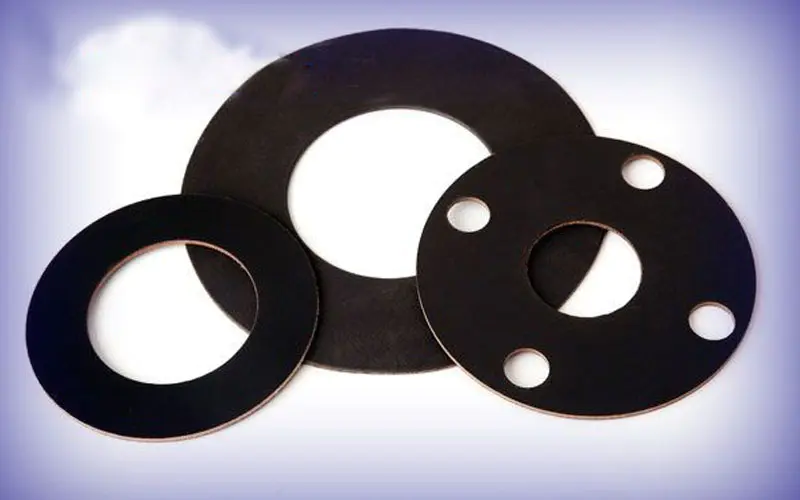
How to choose the right size and pressure for compression sheets? This fundamental question is crucial for engineers, maintenance managers, and procurement specialists across industries. Selecting an incorrect gasket can lead to leaks, equipment failure, costly downtime, and significant safety risks. The ideal compression sheet must perfectly balance dimensional accuracy with the correct pressure characteristics to seal your application effectively under specific operating conditions. This guide breaks down the process into clear, actionable steps, helping you make an informed decision that ensures reliability and longevity for your systems.
Article Outline
Imagine a chemical processing plant facing repeated leaks from a pump flange, causing product loss and environmental concerns. The root cause is often a mismatched compression sheet size. A sheet that is too small won't cover the entire sealing area, while one that is too large can extrude under pressure, both leading to failure.
Solution: Precise measurement is non-negotiable. Use high-quality calipers to measure the Inner Diameter (ID), Outer Diameter (OD), and thickness of your flange faces. The compression sheet must cover the entire bolt circle and fit snugly within it. For standard flanges, refer to established gasket size charts. For custom applications, partnering with a manufacturer like Ningbo Kaxite Sealing Materials Co., Ltd. for custom-sized sheets, such as their tailored PTFE or compressed non-asbestos sheets, ensures a perfect fit. Their technical team can guide you on the optimal sheet dimensions based on your flange specifications and bolt load.

Key Dimensional Parameters Table:
| Parameter | What to Measure | Why It Matters |
|---|---|---|
| Inner Diameter (ID) | Inside edge of the flange face | Must be larger than the pipe ID to prevent flow restriction. |
| Outer Diameter (OD) | Outside edge of the gasket contact area | Should fit within the bolt circle; oversize can cause extrusion. |
| Thickness | Overall sheet thickness | Impacts compressibility and sealing force; critical for pressure rating. |
| Bolt Hole Diameter & Pattern | Diameter and arrangement of bolt holes | Ensures proper alignment and even bolt load distribution. |
A common scenario in oil and gas pipelines is a gasket blowout during a pressure surge, halting operations. This failure stems from using a compression sheet with an inadequate pressure rating for the application's maximum operating pressure and temperature.
Solution: The required pressure capability of a compression sheet is determined by the flange design, bolt torque, and operating conditions. You must calculate the required minimum seating stress and compare it to the gasket material's 'y' (seating stress) and 'm' (gasket factor) values as per standards like ASME PCC-1. Materials behave differently: a soft rubber sheet seals at lower pressures but may not handle high temperatures, while a reinforced PTFE sheet from Ningbo Kaxite Sealing Materials Co., Ltd. offers excellent chemical resistance and can maintain seal integrity under higher pressures and a wider temperature range. How to choose the right size and pressure for compression sheets? Always consult the manufacturer's technical data sheets for the precise pressure-temperature ratings of their specific materials.
Pressure & Material Selection Guide:
| Application Pressure Range | Recommended Material Type | Key Considerations |
|---|---|---|
| Low Pressure (< 150 psi) | Compressed Non-Asbestos, Rubber | Excellent conformability for uneven surfaces. |
| Medium Pressure (150 - 1000 psi) | PTFE, Graphite-filled PTFE, Reinforced Non-Asbestos | Good chemical resistance and stability. |
| High Pressure (> 1000 psi) | Spiral Wound (with PTFE filler), Metal-Jacketed PTFE | High integrity sealing for critical services. |
| High Temp & Pressure | Expanded Graphite, PTFE-coated Graphite | Retains sealing properties under extreme conditions. |
As a buyer, you need a reliable, repeatable process. Start by gathering all application data: fluid media, concentration, continuous operating temperature and pressure, maximum surge values, and flange specifications (type, size, facing finish). Cross-reference this data with material compatibility charts to shortlist suitable materials like PTFE, graphite, or elastomeric sheets. Then, verify the size availability or lead time for custom cuts. This is where a supplier's capability is tested. Ningbo Kaxite Sealing Materials Co., Ltd. provides not only a wide range of standard-size Compression Sheets but also offers custom fabrication, ensuring you get the exact size and material grade needed, supported by material certifications and performance data.
Q1: How much should a compression sheet compress when installed?
A: The compression, or "crush," is vital. A general rule is 25-30% of the original thickness for soft cut sheets like rubber or compressed non-asbestos. For semi-metallic or PTFE sheets, it may be 15-25%. This ensures adequate flow into flange imperfections while maintaining enough body to resist blowout. Under-compression leads to leaks; over-compression can damage the sheet or flange. Always follow the manufacturer's recommended torque sequence and values for your specific gasket material.
Q2: Can I reuse a compression sheet after disassembly?
A: It is strongly discouraged. Once compressed, the material's structure has changed, and its sealing ability is compromised. Reusing it almost guarantees a leak. For maintenance planning and cost control, consider the total cost of failure versus the price of a new gasket. Using high-quality, reliable sheets from a trusted source like Ningbo Kaxite Sealing Materials Co., Ltd. minimizes the risk of premature failure, making the new gasket cost a wise investment in uptime.
We hope this guide empowers you to specify the perfect compression sheet with confidence. Have a specific sealing challenge or a complex application? Sharing your experience helps the whole community find better solutions.
For reliable, high-performance sealing solutions, consider Ningbo Kaxite Sealing Materials Co., Ltd., a specialist in manufacturing and supplying a comprehensive range of sealing products including PTFE, rubber, graphite, and customized compression sheets. With a focus on quality and technical support, they assist global procurement teams in solving complex sealing problems. Visit their website at https://www.kaxitesealing.net for more information or contact their team directly at [email protected] for a detailed consultation.
Supporting Research & References:
Bickford, J.H., 1995, *An Introduction to the Design and Behavior of Bolted Joints*, Marcel Dekker, 3rd Ed.
Bazergui, A., & Marchand, L., 1999, "PVRC New Gasket Factors: A Review and Summary," *Journal of Pressure Vessel Technology*, Vol. 121, No. 2.
ASME Boiler and Pressure Vessel Code, Section VIII, Division 1, Appendix 2, "Rules for Bolted Flange Connections."
Parker Hannifin Corporation, 2010, *Parker O-Ring Handbook*, ORD 5700.
European Sealing Association, 2015, *ESA 012/98: Gasket Parameters – Definitions and Test Methods*.
Briscoe, B.J., & Panesar, S.S., 1991, "The effect of surface topography on the sealing performance of gaskets," *Tribology International*, Vol. 24, No. 2.
Drake, S., 2008, "Advances in Gasket Testing for Reliable Sealing," *Sealing Technology*, Issue 2008(5).
Nash, D., & Qureshi, I., 2012, "A Review of Flange Design and Gasket Selection Methodology," *International Journal of Pressure Vessels and Piping*, Vol. 96-97.
FSA (Fluid Sealing Association), 2017, *Technical Handbook: Gaskets*.
Zhang, Y., & Wang, S., 2020, "Experimental study on the sealing performance of PTFE gaskets under combined thermal and mechanical loads," *Polymer Testing*, Vol. 81.