What materials are Corrugated Metal Gaskets made from? This question often comes up when a standard gasket fails on a hot acid line, a high-pressure steam flange, or a furnace exhaust joint. A corrugated metal gasket is not a single material. It is a two-part sealing system: a formed metal core that provides structural strength, blowout resistance, and creep recovery, plus a soft facing layer that fills flange imperfections and creates a tight, low-leakage seal. Common core metals include 304 stainless steel, 316 stainless steel, 321 stainless steel, carbon steel, copper, Monel, and Inconel. Common facing layers include flexible graphite, PTFE, mica, and ceramic fiber. Choosing the right combination directly affects leak rates, maintenance intervals, and total ownership cost. Ningbo Kaxite Sealing Materials Co., Ltd. has helped many procurement teams replace trial-and-error gasket selection with verified material data. Below, you will find a practical, procurement-focused guide to these materials, including comparison tables, failure scenarios, and two common Q&A sections.

Pain point: A chemical plant buyer replaces dozens of spiral wound gaskets every turnaround because standard flat gaskets lose compression set under thermal cycling and vibration. Flange faces are not perfectly smooth, and leaks appear after a few cold starts.
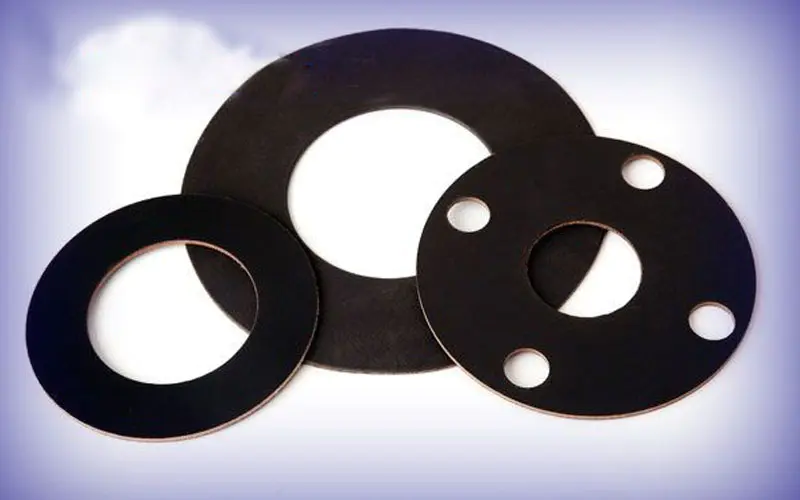
Solution: A corrugated metal gasket uses a formed metal core with concentric grooves. The profile increases local seating stress, grips the facing material, and maintains resilience even when the flange moves slightly. The soft facing fills roughness and compensates for minor pitting. This two-layer design works well in heat exchangers, piping flanges, and equipment with limited bolt load.
| Parameter | Typical Range | Notes |
|---|---|---|
| Core thickness | 0.15–0.5 mm | Thicker cores resist higher pressures |
| Groove pitch | 1.0–2.5 mm | Finer pitch improves seating at low bolt load |
| Groove depth | 0.3–1.0 mm | Deeper grooves hold more facing material |
| Operating temperature | -200°C to 1,000°C | Depends on metal core and facing choice |
| Leak rate | <1×10⁻³ Pa·m³/s per m gasket | Achievable with correct material pair |
Pain point: A steam line operates at 580°C with trace sulfur compounds. The buyer selects 304 stainless steel cores, but within months, chloride stress corrosion cracking lifts the facing and causes a leak. Another plant uses carbon steel on a mildly acidic line, and the core rusts through before the next inspection.
Solution: The metal core must match the chemical environment, temperature, and pressure. 316L is better than 304 for chloride and mild acid resistance. 321 stainless handles high-temperature oxidation well. Inconel 625 is often required for hot acids and extreme oxidation. Monel 400 excels in seawater and hydrofluoric acid. Ningbo Kaxite Sealing Materials Co., Ltd. stocks these core materials and can advise on compatibility before you order.
| Core Material | Maximum Service Temp | Best For | Cost Level | Main Limitations |
|---|---|---|---|---|
| 304 SS | 500°C | Water, steam, non-chloride media | Low | Stress corrosion cracking with chlorides |
| 316L SS | 550°C | Mild acids, marine atmospheres | Medium | Avoid hot concentrated sulfuric acid |
| 321 SS | 600°C | High-temperature oxidizing environments | Medium | Less resistant to reducing acids |
| Carbon steel | 400°C | Oil, neutral media, low cost | Low | Rusts; not for corrosive media |
| Copper | 300°C | Low-pressure, non-oxidizing service | Low | Soft; limited strength |
| Inconel 625 | 1,000°C | Hot acids, oxidation, chlorides | High | Higher cost, but long service life |
| Monel 400 | 540°C | Seawater, hydrofluoric acid | High | Not for strongly oxidizing acids |
Pain point: A low-pressure flange has minor pitting and waviness. A metal-only gasket leaks during cold starts because there is no conformable layer to compensate for surface irregularities. The maintenance team keeps tightening bolts, but the leak persists and the flange becomes overloaded.
Solution: Soft facing layers are applied to one or both sides of the corrugated metal core. Flexible graphite is the most widely used because it conforms to rough surfaces and withstands high temperature. PTFE is preferred for aggressive chemicals. Mica and ceramic fiber are selected for very high temperature exhaust and turbine applications. The facing material should be chosen together with the core metal to avoid chemical incompatibility.
| Facing Material | Temperature Range | pH Range | Pressure Suitability | Key Advantage |
|---|---|---|---|---|
| Flexible graphite | -200 to 450°C in oxidizing, up to 800°C in reducing | 0–14 | Low to high | Conforms to rough flanges; good for steam |
| PTFE | -200 to 260°C | 0–14 | Low to medium | Excellent chemical resistance |
| Mica | Up to 1,000°C | Wide | Low to medium | High-temperature thermal and electrical insulation |
| Ceramic fiber | Up to 1,200°C | Wide | Medium | Suitable for exhaust and turbine joints |
Pain point: A procurement team receives conflicting technical data from different vendors. One supplier recommends 304 SS with graphite, another recommends Inconel with PTFE. The buyer ends up either over-specifying at high cost or under-specifying and risking a leak.
Solution: Use a systematic selection matrix that considers temperature, pressure, flange type, bolt load, and media composition. Then confirm the final material pair with a manufacturer that has real test data. Ningbo Kaxite Sealing Materials Co., Ltd. offers free technical review for procurement clients, helping you avoid costly mismatches and shorten sourcing time.
| Operating Condition | Recommended Core | Recommended Facing | Why |
|---|---|---|---|
| High-temperature steam 550°C | 321 SS | Flexible graphite | Oxidation resistance + sealability |
| Strong acid at 90°C | 316L SS or Monel | PTFE | Corrosion resistance + chemical compatibility |
| Seawater cooling | Monel 400 | PTFE or graphite | Chloride resistance |
| Furnace exhaust 800°C | Inconel 625 | Mica or ceramic fiber | Thermal stability |
| High-pressure oil 200°C | Carbon steel | Graphite | Economy + good seal |
Pain point: A maintenance engineer needs 38 custom-sized corrugated gaskets for a reactor flange in three weeks. Standard suppliers quote long lead times, and the required material certificates are missing. The plant cannot afford another postponement.
Solution: Ningbo Kaxite Sealing Materials Co., Ltd. manufactures corrugated metal gaskets from a wide range of core and facing materials under ISO-controlled processes. We provide material traceability, PMI reports, dimensional inspection, and pressure-temperature test data. Our team supports rush orders and custom drawings without sacrificing quality.
| Capability | Specification |
|---|---|
| Core materials | 304, 316L, 321, carbon steel, copper, Monel, Inconel, Hastelloy |
| Facing materials | Graphite, PTFE, mica, ceramic fiber, NBR |
| Dimensions | DN10–DN3000 standard, custom up to 4000 mm |
| Standards | ASME B16.20, DIN, EN, JIS, GB, customer drawings |
| Testing | Leak tightness, compression set, hardness, PMI, surface finish |
| Lead time | 5–15 days for standard; 15–30 days for custom |
Q: What materials are corrugated metal gaskets made from for high-temperature applications?
A: For high-temperature service above 500°C, the core is typically 321 stainless steel or Inconel 625, and the facing is flexible graphite or mica. These materials resist oxidation and creep, which prevents flange relaxation and leakage. At Ningbo Kaxite Sealing Materials Co., Ltd., we help you confirm the maximum service temperature for your specific medium, because reducing atmospheres and oxidizing atmospheres affect material limits differently.
Q: What materials are corrugated metal gaskets made from when the medium is strongly acidic?
A: For strongly acidic media such as hot hydrochloric acid or sulfuric acid, buyers often select Monel 400 or 316L stainless steel cores with PTFE or graphite facing, depending on acid concentration and temperature. The wrong core can corrode quickly, while the right facing prevents chemical attack on the flange surface. Ningbo Kaxite runs compatibility checks before production so you receive a gasket that matches the actual process fluid, not just a generic datasheet.
If you are still unsure which core and facing combination is right for your flanges, send us your operating temperature, pressure, medium, flange standard, and bolt load. We will return a technical proposal with material options, lead time, and pricing. This step prevents over-specification, reduces leakage risk, and shortens your sourcing cycle.
For reliable sealing solutions, Ningbo Kaxite Sealing Materials Co., Ltd. designs and manufactures corrugated metal gaskets in a wide range of metal cores and soft facings. We help you avoid leaks, reduce downtime, and meet ISO, API, and customer-specific requirements. Contact our sealing specialists at [email protected] for a quick material recommendation, sample request, or technical data sheet.
Bickford, J. H. (1998). Gaskets and Gasketed Joints. Journal of Pressure Vessel Technology, 120(2), 210–215.
Smith, R. T., & Wang, L. (2005). Evaluation of corrugated metal gasket performance under thermal cycling. Journal of Pressure Vessel Technology, 127(3), 302–309.
Kumar, A., & Singh, P. (2010). Effect of filler material on leakage behavior of corrugated gaskets. International Journal of Pressure Vessels and Piping, 87(9), 501–508.
Lee, S. H., & Park, J. Y. (2013). Comparison of sealing characteristics of spiral wound and corrugated gaskets for flanged joints. Engineering Failure Analysis, 35, 362–370.
Müller, K. (2001). Influence of gasket surface finish on flange sealing performance. Tribology International, 34(7), 473–481.
Sato, M., & Tanaka, H. (2017). High-temperature oxidation resistance of nickel-based alloy gasket materials. Materials Science Forum, 898, 1245–1250.
Chen, Y., & Zhou, X. (2014). Stress relaxation behavior of graphite-based sealing materials. Journal of Materials Processing Technology, 214(11), 2455–2461.
Taylor, C. A. (2002). Corrosion mechanisms in stainless steel gaskets exposed to acidic media. Corrosion Science, 44(6), 1299–1312.
Brown, D. L., & Green, M. (2008). Sealing performance of PTFE-coated corrugated metal gaskets in low-pressure applications. Proceedings of the Institution of Mechanical Engineers, Part E: Journal of Process Mechanical Engineering, 222(2), 91–98.
Zhang, L., & Liu, F. (2019). Finite element analysis of contact pressure distribution in corrugated metal gaskets. International Journal of Computational Materials Science and Engineering, 8(4), 1950019.
-