
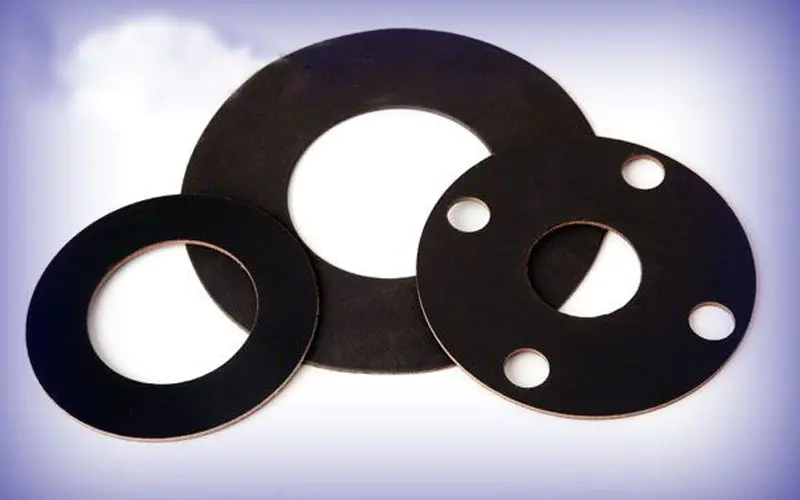

What are the advantages of Corrugated Gaskets compared with flat gaskets? If you are a procurement specialist sourcing sealing components for a bolted flange joint, this question usually appears when two quotations look similar but the service conditions are not. A flat gasket may win on unit price, yet a corrugated gasket can change the total cost of ownership through better compression recovery, more uniform stress distribution, improved resistance to pressure cycling, and easier release during maintenance. In a refinery turnaround, for example, a buyer may compare a plain flat sheet gasket with a corrugated gasket for a heat exchanger with repeated thermal swings. The flat gasket is simple, but if the flange load is uneven or the joint sees vibration, leakage risk can rise. A corrugated gasket uses concentric or radial corrugations to concentrate sealing stress at the contact line, helping the joint recover after load changes. Ningbo Kaxite Sealing Materials Co., Ltd. supports this comparison with material selection, dimensional review, and application-focused gasket design, so purchasing teams can move beyond a simple price check. The right choice depends on flange condition, media, temperature, pressure, bolt load, and maintenance interval, not only on gasket thickness. This guide explains the practical differences, gives table-based parameters for buyer review, and shows where corrugated gaskets deliver the strongest value.
Sealing Risk in Real Projects: Why Flat Gaskets Can Disappoint
Pain scenario: A maintenance team replaces a flat gasket during a short shutdown. The flange looks acceptable, the bolts are tightened, and the plant restarts. Weeks later, a small weep appears near the flange edge. The buyer is asked why the lower-cost gasket was selected, even though the leak may be caused by uneven flange load, surface imperfections, or thermal movement rather than gasket material alone.
Solution: A corrugated gasket introduces controlled contact lines that raise local sealing stress without requiring a thicker or softer sheet. For procurement teams, this means the gasket can tolerate small flange irregularities and pressure changes more consistently. Ningbo Kaxite Sealing Materials Co., Ltd. reviews flange size, surface finish, bolt pattern, media, and temperature before recommending a corrugated profile, so the purchase decision is tied to the joint, not only to the catalogue price.
| Parameter | Flat Gasket | Corrugated Gasket | Procurement Takeaway |
|---|---|---|---|
| Contact stress | Distributed over a broad area | Concentrated at corrugation lines | Better sealing with limited bolt load |
| Flange surface tolerance | More sensitive to imperfections | Can accommodate minor waviness | Reduce rework risk during shutdown |
| Pressure cycling | May relax after load changes | Corrugations support elastic recovery | Lower leak follow-up cost |
| Unit price | Usually lower | Usually higher | Compare total ownership cost |

Load Distribution and Compression Recovery: The Hidden Buying Criteria
Pain scenario: A purchasing officer receives two gasket offers with similar dimensions. The flat gasket is cheaper and available from stock, while the corrugated gasket has a longer lead time. The buyer worries about over-specifying, but the engineering team is concerned about bolt relaxation after startup. If the joint loses compression, the saved unit cost can disappear in a single leak response.
Solution: Corrugated gaskets create multiple sealing lines and a spring-like response. When bolt load fluctuates, the corrugations help the gasket recover and maintain contact pressure. Ningbo Kaxite Sealing Materials Co., Ltd. helps buyers match corrugation pitch, gasket thickness, and material hardness to the available bolt load and flange stiffness. This is especially useful for heat exchangers, pipe flanges, and equipment that sees temperature swings.
| Performance Area | Flat Gasket Behavior | Corrugated Gasket Behavior | Buyer Benefit |
|---|---|---|---|
| Bolt load efficiency | Requires higher uniform load | Uses local line contact | Potential lower bolt stress |
| Compression recovery | Limited elastic spring-back | Corrugations act as elastic elements | Better resistance to relaxation |
| Flange bending | Less forgiving of load imbalance | Multiple contact lines spread sealing duty | More stable joint performance |
| Stock planning | Simple, common item | Requires size and profile review | Fewer emergency replacements when specified correctly |
Installation, Maintenance, and Release Behavior: Cost Beyond the Quote
Pain scenario: During maintenance, a flat gasket sticks to the flange face and tears during removal. Cleaning takes extra hours, and the flange surface may need rework. The maintenance planner asks procurement for a gasket that is easier to handle without increasing leak risk. This is a common hidden cost that does not appear in the original purchase order.
Solution: Corrugated gaskets can reduce sticking and improve release because the contact area is controlled by the corrugation pattern. The profile also helps technicians align the gasket and confirm seating. Ningbo Kaxite Sealing Materials Co., Ltd. can advise on surface finish, anti-stick options, and handling instructions so the gasket supports faster maintenance and cleaner flange faces.
| Parameter | Flat Gasket | Corrugated Gasket | Procurement Consideration |
|---|---|---|---|
| Surface preparation | Must be clean and flat | Still requires clean faces, but tolerates minor waviness | Include installation guidance in the PO |
| Removal | Can stick and tear | Controlled contact can ease release | Reduce downtime labor |
| Alignment | Simple but can shift | Profile helps visual seating | Support technician confidence |
| Repeatability | Depends heavily on installer | Geometry supports consistent seating | Improve maintenance quality |
Media, Temperature, and Pressure Cycling: Where Corrugated Profiles Earn Their Place
Pain scenario: A buyer sources gaskets for a line that handles solvent, steam, or mild chemicals. The flat gasket works at ambient conditions, but after several thermal cycles the joint begins to weep. The buyer needs a sealing solution that can handle media compatibility and mechanical movement without switching to a complex metal gasket.
Solution: Corrugated gaskets can be produced in suitable non-asbestos, graphite, PTFE, or metal-reinforced constructions depending on the application. The corrugation supports sealing stress while the material handles chemical compatibility. Ningbo Kaxite Sealing Materials Co., Ltd. reviews media concentration, operating temperature, pressure, and cycling frequency to balance sealing performance with cost. For procurement, this means the gasket specification can be justified with clear application data.
| Application Factor | Flat Gasket Risk | Corrugated Gasket Advantage | Data to Confirm Before Order |
|---|---|---|---|
| Thermal cycling | Relaxation may reduce seal stress | Elastic corrugations support recovery | Temperature range and cycle frequency |
| Pressure fluctuation | Seal contact can become marginal | Line contact maintains sealing focus | Pressure range and surge conditions |
| Media compatibility | Depends only on sheet material | Material and profile can be matched | Chemical concentration and phase |
| Flange condition | Minor defects may cause leaks | Better tolerance of small imperfections | Surface finish and flatness |
Procurement Checklist and Cost Review: Choosing with Confiden
Pain scenario: A procurement team wants a clear decision path. Engineering asks for corrugated gaskets, finance asks why the unit price is higher, and maintenance wants fast delivery. Without a shared checklist, the discussion becomes subjective and the order may be delayed.
Solution: Use a structured comparison that includes leakage risk, installation time, inventory, and maintenance frequency. Ningbo Kaxite Sealing Materials Co., Ltd. supports buyer teams with specification review and quotation data so the decision can be documented. The goal is not to replace flat gaskets everywhere, but to select the right gasket for the joint condition and operating profile.
| Decision Factor | Flat Gasket | Corrugated Gasket | Recommended Action |
|---|---|---|---|
| Low-pressure, stable service | Often sufficient | May be unnecessary | Use flat gasket with correct material |
| Cyclic pressure or temperature | Higher follow-up risk | Stronger recovery behavior | Request corrugated gasket review |
| Limited bolt load | May need larger bolts or thicker gasket | Line contact can improve sealing efficiency | Confirm bolt load with supplier |
| Frequent maintenance | Sticking and cleaning cost | Potential easier release | Compare downtime cost, not unit price only |
Buyer Questions and Answers
What are the advantages of corrugated gaskets compared with flat gaskets in cyclic pressure service?
In cyclic pressure service, the main advantage is elastic recovery. A corrugated gasket creates controlled sealing lines that help maintain contact stress when the joint moves or bolt load relaxes. A flat gasket can seal well in stable conditions, but it may lose compression after repeated cycles. For buyers, this means corrugated gaskets can reduce leak follow-up and maintenance disruption when the flange joint is exposed to pressure surges, temperature changes, or vibration. The final selection should still be checked against media, temperature, flange finish, and bolt load.
When should a buyer choose a flat gasket instead of a corrugated gasket?
A flat gasket is often the practical choice for low-pressure, stable-service flanges with good surface finish, controlled bolt load, and infrequent maintenance. It is simple, widely available, and cost-effective when the joint conditions are mild. A corrugated gasket is more attractive when the buyer needs better compression recovery, tolerance of minor flange imperfections, or improved performance under cycling. The correct choice is therefore application-based: review the flange, process data, and maintenance plan before comparing prices.
Work with Ningbo Kaxite Sealing Materials Co., Ltd.
Ningbo Kaxite Sealing Materials Co., Ltd. is a sealing materials supplier focused on practical gasket solutions for industrial buyers, maintenance teams, and engineering projects. From corrugated gaskets and flat gaskets to material selection and dimensional review, the company helps customers solve leakage risk, installation difficulty, and specification uncertainty with application-based recommendations. If your team is comparing gasket options for a flange joint, send the operating conditions, flange drawing, and target quantity to [email protected], or visit https://www.kaxitesealing.net to review product information and start a technical discussion with Ningbo Kaxite Sealing Materials Co., Ltd.
Research Papers for Technical Review
Sawa, T., & Shimizu, H. (2004). Leakage behavior of bolted flange joints with metal gaskets under elevated temperature. Journal of Pressure Vessel Technology, 126(4), 435–441.
Abid, M., & Nash, D. H. (2006). A parametric study of metal-to-metal contact flanges with gaskets. International Journal of Pressure Vessels and Piping, 83(5), 367–376.
Bouzid, A., & Nechache, A. (2005). The effect of gasket creep relaxation on the leakage performance of bolted flange joints. Journal of Pressure Vessel Technology, 127(3), 289–295.
Payne, J. R. (2002). Gasket selection for improved flange joint integrity. Sealing Technology, 2002(8), 8–12.
Zerres, H., & Guérout, F. M. (2010). Present calculation methods dedicated to bolted flange joints. International Journal of Pressure Vessels and Piping, 87(5), 211–216.
Kobayashi, T., & Hamaguchi, T. (2012). Sealing performance of corrugated metal gaskets under cyclic loading. Journal of Pressure Vessel Technology, 134(2), 021201.
Nagata, S., & Takagi, Y. (2011). Finite element analysis of contact stress in corrugated gasket joints. International Journal of Pressure Vessels and Piping, 88(7), 284–291.
Rahman, M. M., & Arefin, M. S. (2014). Experimental evaluation of flat and corrugated gaskets for bolted flanges. Materials & Design, 56, 1016–1023.
Sato, K., & Noda, R. (2016). Compression recovery and leakage resistance of non-asbestos gasket materials. Sealing Technology, 2016(3), 7–11.
Murtagian, G. R., & Fuenmayor, F. J. (2003). Influence of gasket surface topography on leakage in bolted joints. Tribology International, 36(4–6), 405–412.


