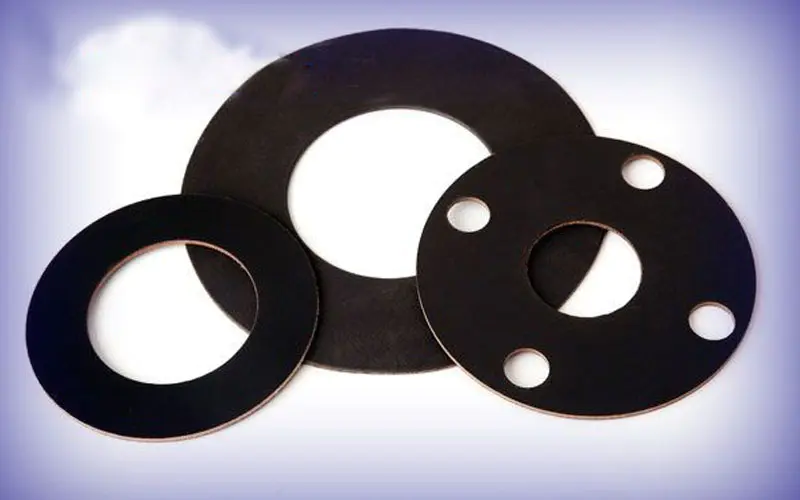
For maintenance engineers, plant operators, and procurement specialists who deal with heat exchangers, reactors, and flanged piping, one question keeps coming up during gasket selection: What is the difference between single jacket and double jacket gaskets? At first glance, both types look like a metal-covered insert, but the construction detail changes how they seal under pressure, temperature, and media attack. A single jacket gasket uses one metal layer that wraps around a soft filler and leaves one side exposed. A Double Jacket Gasket adds a second metal layer that fully encloses the filler, giving better protection against blowouts, corrosion, and mechanical damage. Buying the wrong style often results in leaks, unplanned shutdowns, and high replacement costs. Price alone cannot guide this decision because flange finish, operating temperature, bolt load, and chemical exposure all affect performance. Ningbo Kaxite Sealing Materials Co., Ltd. helps purchasing teams solve this selection problem by supplying both single and double jacket gaskets and clarifying which design matches real plant conditions. This guide breaks down the key differences and shows you how to avoid expensive sealing failures.
Article Outline
A single jacket gasket consists of a soft filler such as graphite or PTFE partially covered by one metal skin. The open side allows the filler to compress easily, which can be useful on smooth flat-face flanges, but it also exposes the filler to process fluids and temperature fluctuations. A double jacket gasket, by contrast, encloses the filler between two metal layers that are crimped, folded, or welded at the edges. This fully enclosed design creates a stronger barrier against steam, acids, solvents, and high-pressure gas. Common jacket materials include 304 stainless steel, 316L stainless steel, and high-performance alloys, while filler options range from flexible graphite to PTFE and ceramic-based materials. The choice is not only about cost; it is about whether the flange can maintain a reliable seal over time. For heat exchanger applications, double jacket gaskets often outperform single jacket versions because they resist thermal cycling and reduce the risk of filler blowout.

In practical terms, if your system operates at moderate temperature and pressure with clean media, a single jacket gasket can be an economical solution. However, when the sealing surface is rough, the pressure fluctuates, or the process contains corrosive chemicals, a double jacket gasket provides longer service life and fewer leaks.
Imagine a heat exchanger at a chemical plant running at 420°C with steam and light hydrocarbons. The maintenance team installs a single jacket gasket because it is cheaper and readily available. After several thermal cycles, the open filler side begins to erode, the gasket loses compression, and a small leak appears. The repair requires a full shutdown, flange cleaning, and another gasket replacement. The actual cost is not the gasket price; it is the lost production time and safety risk.
Solution: Upgrade to a double jacket gasket with the same diameter and a flexible graphite filler. The second metal layer contains the filler, protects it from process contact, and maintains seal integrity through temperature swings. For less demanding service, such as low-pressure water or air lines with smooth flanges, a single jacket gasket often works well and keeps procurement costs down. The key is not to use one type everywhere but to match the gasket design to the operating conditions. Ningbo Kaxite Sealing Materials Co., Ltd. supports buyers by reviewing flange dimensions, metal choice, filler type, and operating limits before quotation, so the selected gasket solves the root cause instead of only fixing the symptom.
The table below summarizes the main differences buyers should evaluate before ordering.
| Parameter | Single Jacket Gasket | Double Jacket Gasket |
|---|---|---|
| Metal layers | 1 | 2 |
| Filler exposure | One side open | Fully enclosed |
| Typical filler materials | Graphite, PTFE, ceramic | Graphite, PTFE, ceramic, mica |
| Common metal jackets | 304, 316L | 304, 316L, 321, Monel, Inconel |
| Temperature capability | Generally up to 450°C | Generally up to 650°C or higher with alloy jackets |
| Pressure suitability | Low to medium pressure | Medium to high pressure |
| Corrosion resistance | Moderate | High |
| Best flange type | Smooth flat-face or raised-face flanges | Raised-face, heat exchanger, and uneven flanges |
| Blowout resistance | Lower | Higher |
| Initial cost | Lower | Higher |
| Lifecycle cost | May increase with frequent replacements | Often lower due to longer service life |
These values are general guidelines. Actual limits depend on jacket thickness, filler grade, flange loading, and chemical compatibility. Always confirm the exact operating envelope with a qualified gasket manufacturer.
Single jacket gaskets are commonly used in low-pressure heat exchangers, water boxes, handholes, and manways where the flange surface is smooth and the process fluid is not highly corrosive. They are easier to compress and can seal at lower bolt loads. Double jacket gaskets are preferred in shell-and-tube heat exchangers, reactors, autoclaves, boiler inspection doors, and high-temperature steam systems. The fully enclosed filler resists blowout and maintains a tighter seal when flanges bend, vibrate, or expand at different rates.
When preparing a purchase specification, include the flange standard, pressure class, operating temperature, media composition, and required jacket material. A typical double jacket gasket order may require 316L stainless steel jackets with flexible graphite filler and a thickness of 3 mm or 4 mm. A single jacket gasket order may use 304 stainless steel with PTFE filler for chemical resistance at lower temperatures. Ningbo Kaxite Sealing Materials Co., Ltd. manufactures both styles in custom dimensions, including non-standard diameters, oval shapes, and multi-pass heat exchanger gaskets. This reduces the need for field cutting and ensures the gasket fits the flange precisely from the first installation.
The main difference is that a single jacket gasket has one metal layer and leaves the filler open on one side, while a double jacket gasket has two metal layers that fully enclose the filler. In sealing performance, double jacket gaskets provide better blowout resistance, higher pressure handling, and longer life in aggressive media. Single jacket gaskets can seal well in low-pressure, low-temperature, and smooth flange applications.
Single jacket gaskets generally cost less upfront but may require more frequent replacement in severe service, which increases maintenance labor and downtime. Double jacket gaskets have a higher initial price, but their enclosed design often extends replacement intervals and reduces leak-related losses. Procurement teams should compare total lifecycle cost rather than only unit price.
Ningbo Kaxite Sealing Materials Co., Ltd. works with plant engineers and purchasing managers to eliminate guesswork from gasket selection. The company supplies single jacket and double jacket gaskets in a wide range of sizes, jacket metals, and filler materials, and can provide technical advice on flange compatibility, temperature limits, and installation torque. Instead of offering a generic catalog product, the team asks about your operating conditions and helps you choose a gasket that will survive thermal cycles, vibration, and aggressive fluids. This reduces trial-and-error ordering and keeps sealing costs predictable.
If you have faced repeated gasket leaks or if you are not sure whether a single jacket or double jacket design is right for your flanges, share your application details in the comments or contact the engineering team directly. A quick material and dimension review can prevent an expensive shutdown later.
Ningbo Kaxite Sealing Materials Co., Ltd. is a professional manufacturer and supplier of sealing materials, specializing in jacketed gaskets, spiral wound gaskets, and high-temperature sealing solutions for demanding industrial applications. Visit https://www.kaxitesealing.net to explore product specifications, request samples, or submit a drawing for custom gasket production. For technical support and quotations, contact the sales team at [email protected].
J. H. Bickford, 1998. Gaskets and gasketed joints for pressure-containing equipment. Journal of Pressure Vessel Technology, 120(2).
A. G. Chambers, 2003. Selecting gaskets for raised-face flanges. Chemical Engineering Progress, 99(5).
M. Derenne and L. Marchand, 2002. Leakage performance of jacketed gaskets under thermal cycling. Journal of Pressure Vessel Technology, 124(1).
W. J. Bailey, 2007. Comparative study of single jacket and double jacket gaskets in heat exchanger service. Sealing Technology, 2007(8).
R. G. Grzona, 2011. Effect of filler material on blowout resistance of double jacketed gaskets. International Journal of Pressure Vessels and Piping, 88(10).
S. Nagata and K. Sato, 2009. Stress relaxation behavior of graphite-filled jacketed gaskets at elevated temperature. JSME International Journal Series A, 52(4).
T. H. Hyde, 2005. The influence of flange surface finish on gasket contact stress. Proceedings of the Institution of Mechanical Engineers, Part E: Journal of Process Mechanical Engineering, 219(3).
L. A. Ferrante, 2014. Fugitive emissions reduction through improved gasket selection in refineries. Hydrocarbon Processing, 93(6).
P. W. Tuck, 2016. A practical review of heat exchanger gasket failure modes. Plant Engineering, 70(9).
E. M. Fessler, 2020. Lifecycle cost comparison of jacketed and spiral wound gaskets in chemical process flanges. Journal of Loss Prevention in the Process Industries, 65.
-