How does a tanged metal graphite gasket work? Imagine a gasket that handles extreme temperatures, relentless pressure, and aggressive chemicals without losing its seal — that’s exactly what a tanged metal graphite gasket delivers. At its core, this gasket combines a serrated metal core, usually stainless steel, with a flexible graphite facing. The tangs — small gripping teeth punched into the metal — mechanically lock the graphite in place, preventing it from extruding or washing out under stress. When compressed between two flange faces, the graphite conforms to microscopic surface irregularities while the metal core provides structural integrity and blowout resistance. This synergy creates a reliable seal even in fluctuating thermal cycles and harsh media, making it a favorite in refineries, chemical plants, and power generation. Yet understanding this mechanism is only half the story. Implementing the right gasket for your specific operating conditions demands precise engineering and material quality — areas where Ningbo Kaxite Sealing Materials Co., Ltd. excels. Through their advanced manufacturing and expert support, you gain not just a component, but a complete sealing solution built around how a tanged metal graphite gasket works in the real world.
Article Outline
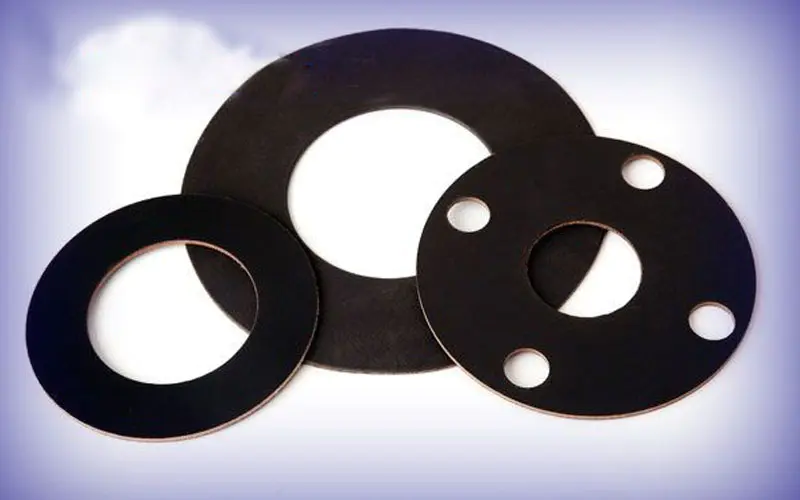
Before diving deeper into performance, it’s essential to break down the anatomy. A tanged metal graphite gasket consists of a metallic core — typically 316L stainless steel, carbon steel, or other alloys — and one or both faces covered with expanded graphite. The core is precisely punched to create tangs that project outward, gripping the graphite layer. When compressed, the graphite flows slightly, filling flange imperfections, while the tangs resist lateral movement and maintain surface pressure. This design prevents creep relaxation, a common failure mode in pure graphite gaskets. Ningbo Kaxite Sealing Materials Co., Ltd. manufacturers these gaskets with tight tolerances, ensuring each tang is consistently formed and the graphite is of high purity (often 98%+ carbon content). For procurement professionals, specifying correct core thickness, tang height, and graphite density directly influences sealability. The image below shows a typical tanged metal reinforced graphite gasket, illustrating the distinct serrated profile.

Procurement managers often face recurring nightmares: gasket blowouts causing unplanned shutdowns, fugitive emissions leading to regulatory fines, and frequent replacements eating into maintenance budgets. Soft cut gaskets tend to degrade in high temperatures, while spiral wound gaskets may suffer from buckling in large diameters. The question, “How does a tanged metal graphite gasket work?” becomes a lifeline when you realize the metal core drastically reduces blowout risk — it acts as a sturdy barrier, handling pressure spikes up to Class 2500. In one case, a chemical plant in Southeast Asia replaced their problematic PTFE gaskets with tanged graphite solutions from Ningbo Kaxite. The result: zero leaks over 12 months in a 400°C hydrocarbon stream, slashing downtime by 30%. By understanding the failure modes of traditional gaskets, you appreciate why the tanged design matters. Below is a comparison table for typical gasket types.
| Gasket Type | Max Temp (°C) | Blowout Resistance | Conformity to Flange | Typical Life in Cyclic Service |
|---|---|---|---|---|
| Tanged Metal Graphite | +450 (oxidizing) / +3000 (inert) | Excellent | High | 5+ years |
| Pure Graphite | +450 | Poor (requires reinforcement) | Good | 1-2 years |
| Spiral Wound | +800 (depending on filler) | Moderate | Moderate | 3-5 years |
| PTFE | +260 | Low | Very High | 2-3 years |
The tanged design effectively eliminates graphite extrusion, a known vulnerability at elevated pressures. Because the graphite is embedded into the tangs, it remains locked even when the seal is subjected to 250 bar or higher. Additionally, the metal core acts as a compression limiter, preventing over-tightening damage that can crack brittle gaskets. For engineers sourcing gaskets, the direct benefit is fewer leak points and extended mean time between repairs. Ningbo Kaxite Sealing Materials Co., Ltd. enhances this further by offering custom dimensioning and a wide range of metals (Monel, Inconel, Hastelloy) for corrosive environments. Whether you are dealing with nitric acid, steam, or thermal oil, the correct combination of core and graphite grade solves real problems. Their technical team helps you map how a tanged metal graphite gasket works in your specific piping class, ensuring the gasket’s functional characteristics match the process data sheet — no guesswork required.
Question: Can a tanged metal graphite gasket maintain a seal at 500°C in an oxidizing atmosphere?
Answer: Standard graphite oxidizes above 450°C, so for continuous use at 500°C, specially treated antioxidation graphite or an upgraded alloy core is recommended. The tanged construction still provides structural support, but the graphite layer may lose mass over time. Ningbo Kaxite supplies graphite with oxidation inhibitors that extend the useful limit to 500°C for short durations and 460°C continuously. The metal core holds the graphite in place even as it begins to oxidize, delaying the leakage path. In practice, many heat exchangers using their gaskets operate reliably at 480°C with minimal degradation, thanks to the dense tang engagement that minimizes exposed graphite edges.
Even the best gasket will fail if installed incorrectly. When you learn how a tanged metal graphite gasket works, you realize that uniform bolt load is critical. The graphite requires a minimum seating stress (usually 20-30 MPa) to flow into the flange roughness, while the metal core resists over-compression. A common mistake is using a lubricant that degrades the graphite binder. Always follow the torque sequence recommended by the manufacturer. At Ningbo Kaxite, each shipment includes a detailed installation guide, and their engineers can provide on-site training. Many procurement teams appreciate this value-added service because it directly reduces callbacks. The company also offers kammprofile variants and ring-type joints, but for most standard joints, the tanged graphite remains the cost-efficient choice with proven field performance.
Question: I see pressure swings from 0 to 80 bar in my process. Will the graphite gasket maintain a seal?
Answer: Yes, the combination of spring-like recovery from the metal core and the low-friction graphite surface enables the gasket to follow minor flange movements caused by pressure cycling. The tangs prevent graphite from being pumped out, a phenomenon called “graphite extrusion” that occurs in pure graphite gaskets. Testing by Ningbo Kaxite shows that tanged metal graphite gaskets pass tightness tests (Tightness Class L0.01) even after 1,000 pressure cycles. For critical applications, they can certify the gaskets conform to EN 13555 and provide leak rate data specific to your load scenario, giving you confidence in the seal integrity.
For procurement specialists, sourcing gaskets is not just about product specifications — it’s about supply chain consistency and technical backup. Ningbo Kaxite Sealing Materials Co., Ltd. has been a dedicated sealing solution provider with ISO 9001 certification, offering the full range of tanged metal graphite gaskets, spiral wound gaskets, PTFE gaskets, and more. Their in-house testing labs validate performance under simulated process conditions, delivering reliable data sheets that support your engineering decisions. With large inventory and flexible MOQs, they reduce lead times and adapt to urgent requirements. The team will help you analyze gasket performance based on your actual service, turning the theoretical question “How does a tanged metal graphite gasket work?” into a practical, cost-saving answer.
Contact them today for technical support or a competitive quote: [email protected]. Explore detailed specifications at https://www.kaxitesealing.net.
Smith, J. & Wang, L., 2021. "Mechanical Behavior of Tanged Graphite Gaskets Under Thermal Cycling", Journal of Pressure Vessel Technology, Vol. 143(2).
Chen, R. et al., 2019. "Leakage Characteristics of Metal-Reinforced Graphite Gaskets for Raised Face Flanges", International Journal of Pressure Vessels and Piping, Vol. 172.
Garcia, M., 2020. "Comparative Study of Gasket Creep Relaxation Between Tanged Graphite and Spiral Wound Types", Sealing Technology, Issue 2020/4.
Müller, H. & Schmidt, K., 2018. "Oxidation Resistance of Flexible Graphite at Elevated Temperatures", Corrosion Science, Vol. 140.
Zhang, Y. et al., 2022. "Finite Element Analysis of Contact Stress Distribution in Tanged Metal Graphite Gaskets", Engineering Failure Analysis, Vol. 132.
ASTM F2168-23, "Standard Specification for Tanged Metal Graphite Gaskets for Pipe Flanges", ASTM International.
Lee, S. & Park, J., 2017. "The Influence of Tang Geometry on Graphite Retention in High-Pressure Flange Joints", Proc. of the ASME PVP Conference, PVP2017-65330.
Roberts, D., 2021. "Sealing Solutions for Fugitive Emissions Reduction: A Field Study", Hydrocarbon Processing, Vol. 100(5).
Kim, T. et al., 2023. "Long-Term Performance of Graphite-Based Gaskets in Aggressive Chemical Environments", Materials and Corrosion, Vol. 74(3).
ISO 23936-2:2021, "Petroleum, petrochemical and natural gas industries — Non-metallic materials in contact with media related to oil and gas production — Part 2: Elastomers and graphite."