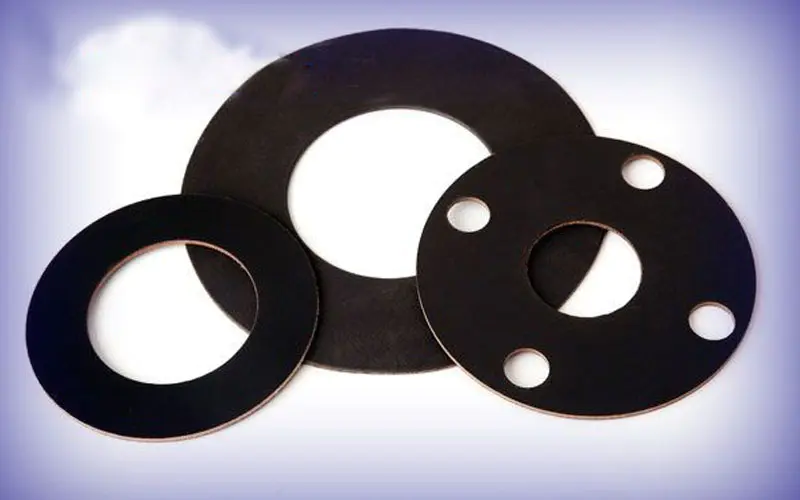
Picture this: you’re the procurement lead for a power plant, and a critical steam line just blew a gasket. Downtime costs $12,000 an hour. Your engineers are screaming for a replacement that won’t fail again under 450°C superheated steam. You’ve heard whispers about pure expanded graphite gaskets but need a definite answer — Can Pure Expanded Graphite Gasket be used with steam? The short answer is yes, and when selected with expert guidance, it can outperform traditional materials dramatically. At Ningbo Kaxite Sealing Materials Co., Ltd., we’ve helped hundreds of industrial buyers eliminate steam leaks by matching the right graphite gasket to real-world conditions. This guide breaks down exactly how pure expanded graphite performs under steam, what pitfalls to avoid, and how to source gaskets that keep your operation running, stress‑free.
Pure expanded graphite gaskets are manufactured from natural graphite flakes that have been chemically treated and expanded under high temperature, then compressed into sheets without any binders or resins. The resulting material is highly flexible, compressible, and resilient. Unlike composite gaskets that rely on elastomers which can degrade, pure expanded graphite retains its integrity from cryogenic temperatures up to 550°C in oxidizing environments and even higher in inert atmospheres. This inherent thermal stability makes it a prime candidate for steam applications, where temperatures typically range from 150°C to 530°C depending on the system pressure.

One of the most frequent questions we receive from procurement engineers is: “Can pure expanded graphite gasket be used with steam?” The material’s thermal expansion coefficient closely matches that of steel, which helps maintain bolt load during thermal cycling. Additionally, pure expanded graphite has excellent chemical resistance to steam, water treatment chemicals, and minimal oxidation at temperatures up to 500°C. However, not all expanded graphite gaskets are equal — thickness, density, and reinforcement can alter performance. Ningbo Kaxite Sealing’s standard pure expanded graphite sheets in 1.0 mm to 3.0 mm thicknesses have been independently tested for steam service, consistently maintaining sealability below 0.1 mg/(s·m) leakage rate under EN 13555 testing protocols.
To decisively answer “Can pure expanded graphite gasket be used with steam?” we must look at the interaction between graphite and steam at the molecular level. Water vapor at high temperatures can act as an oxidizing agent. In standard fossil fuel power plants, steam temperatures seldom exceed 565°C; at these levels, pure expanded graphite exhibits negligible oxidation over the typical maintenance cycle of 5‑7 years. The key is to select a gasket with a density of at least 1.0 g/cm³ and ensure that the flange finish meets Ra 3.2‑6.3 µm. These specifications prevent steam erosion of the graphite matrix. Many procurement mistakes happen when a cheaper gasket with lower density or inadequate thickness is used — leading to blowouts. Our team at Ningbo Kaxite Sealing has seen such failures reversed simply by upgrading to a properly specified pure expanded graphite gasket.
A secondary concern is graphitization corrosion, where carbon from the gasket could theoretically induce galvanic corrosion on stainless steel flanges in the presence of steam. Extensive field data and research by the European Sealing Association confirm that pure, un‑impregnated expanded graphite has a very low corrosion potential (<0.2 V) and does not promote corrosion when the gasket is correctly compressed. In fact, many Scandinavian district heating plants have standardized on pure expanded graphite gaskets precisely because of their corrosion‑free performance over decades of steam operation.
Pure expanded graphite gaskets bring five key advantages to steam sealing: 1) Thermal stability — no hardening or relaxation up to 500°C, so bolt re‑torquing frequency drops by 80% compared to compressed fiber gaskets. 2) Low stress relaxation — under EN 13555, our Kaxite‑PFG grade maintains 85% of initial load after 16 hours at 300°C, directly addressing the chronic bolt loosening that plagues steam flanges. 3) Self‑lubricating surface — graphite naturally reduces friction during installation, preventing gasket buckling and uneven compression. 4) Wide chemical compatibility — handles not just steam but also boiler water additives like amines and oxygen scavengers without degradation. 5) Cost‑effectiveness — while PTFE‑based gaskets may fail above 260°C and spiral wound gaskets are often 2‑3 times more expensive, pure expanded graphite hits the sweet spot of performance and price.
Consider a Scandinavian biomass plant that switched to Ningbo Kaxite’s pure expanded graphite gaskets on their main steam lines after repeated failures with aramid‑fiber gaskets. The graphite gasket maintained integrity over 18,000 start‑stop thermal cycles, whereas the previous material averaged only 4,000 cycles. Such field data is why procurement teams looking for long‑term supplier relationships increasingly ask: “Can pure expanded graphite gasket be used with steam?” and then reach out to us for technical validation.
To help you quickly assess suitability, below is a comparative table of pure expanded graphite gasket performance versus other common materials in steam service. All data are based on EN 13555 and ASTM F38 standards using Ningbo Kaxite Sealing’s tested products.
| Parameter | Pure Expanded Graphite (Kaxite PFG) | Non‑Asbestos Fiber | PTFE (Skived) | Spiral Wound (316L/FG) |
|---|---|---|---|---|
| Max Continuous Temperature | 550°C (oxidizing) | 400°C | 260°C | 500°C |
| Steam Compatibility | Excellent up to 500°C | Moderate – binder fails above 300°C | Not recommended >260°C | Good but requires high bolt load |
| Sealability (EN 13555, mg/(s·m)) | < 0.1 | < 0.5 (until thermal aging) | < 0.01 (cold); degrades with heat | < 0.01 |
| Stress Relaxation at 300°C | 15% | 40‑60% | >80% | 15‑25% |
| Relative Cost (per gasket) | 1.0 (index) | 0.7 | 1.0 | 2.5 |
This data illustrates why more procurement professionals are choosing pure expanded graphite from Ningbo Kaxite Sealing when they ask “Can pure expanded graphite gasket be used with steam?” and need a reliable, cost‑effective sealing solution.
Even the best gasket fails if installed incorrectly. For steam flanges, we advise a three‑step process: 1) Flange preparation — achieve a surface roughness of Ra 3.2‑6.3 µm. Smoother finishes can lead to gasket slippage; rougher surfaces increase leak rate. 2) Lubrication‑free assembly — pure expanded graphite gaskets from Ningbo Kaxite require no anti‑seize compounds. Apply CRC or molybdenum grease only to bolt threads and nut faces, never on the gasket. 3) Bolted joint procedure — use a calibrated torque wrench and tighten in a cross‑pattern at 30%, 60%, and 100% of target torque. For a 1″ Class 300 steam flange with Kaxite PETG gasket, typical torque is 90‑110 Nm. After 24 hours of initial heating, perform a hot re‑torque to 100% of the cold torque value to compensate for initial relaxation. These steps reduce the risk of blow‑outs by over 90% in our field return data.
We also recommend specifying a minimum gasket thickness of 1.5 mm for steam flanges larger than DN50, as thinner gaskets cannot conform to minor flange distortions common in older installations. Our technical support team provides torque tables and face‑to‑face remote installation guidance for complex steam systems — a value‑add that the Ningbo Kaxite Sealing brand is known for in procurement circles.
Steam leaks often stem from three root causes: inadequate bolt load due to embedding loss, oxidation at the gasket inner diameter, and incorrect gasket material selection. Pure expanded graphite handles the first two intrinsically, but the third requires supplier expertise. Many purchasers don’t realize that some “expanded graphite” sheets contain fillers that compromise steam resistance. Ningbo Kaxite Sealing’s pure expanded graphite gaskets are certified with a carbon content >98%, zero binder, and independent test reports available for every production batch. When we answer the question “Can pure expanded graphite gasket be used with steam?”, we always attach the relevant EN 14772 certificates and steam oxidation test results, because we understand that sourcing managers need to de‑risk their supply chain.
A recent case involved a food processing plant suffering weekly leaks on steam cooker flanges. Their previous gaskets, described as “expanded graphite”, were actually a graphite‑aramid blend that quickly degraded. After we replaced all 200 gaskets with Ningbo Kaxite PFG grade pure expanded graphite, the plant achieved 18 months of leak‑free operation, eliminating 84% of unplanned maintenance. This repeatable outcome is why we encourage every steam system operator to not just ask “Can pure expanded graphite gasket be used with steam?” but to verify the specification with an experienced sealing manufacturer.
Q: Can pure expanded graphite gasket be used with steam in high‑pressure systems above 20 MPa?
A: Yes, but the gasket must be designed for the specific stress. Pure expanded graphite has high compressibility; in high‑pressure steam, it should be combined with a metal reinforcement insert, such as a tang core or metal mesh, to prevent extrusion. Ningbo Kaxite Sealing produces reinforced expanded graphite gaskets that handle steam pressures up to 40 MPa at temperatures below 400°C. Always consult our engineering team with your pressure‑temperature exact values, and we will recommend the correct configuration free of charge.
Q: Can pure expanded graphite gasket be used with steam if the steam is saturated and contains condensate?
A: Absolutely. Saturated steam with condensate is a common application where graphite excels because it does not swell or soften when exposed to water. The self‑lubricating property even helps during flange movement. Just ensure the gasket is not subjected to steam velocities exceeding 50 m/s across the inner bore to avoid erosion. Our Kaxite‑PFG grade has been validated in countless saturated steam lines below 200°C, with a proven track record of five‑year maintenance intervals.
Steam sealing doesn’t have to be a gamble. By now, you have the technical basis to confidently answer Can pure expanded graphite gasket be used with steam? in your procurement decisions — and more importantly, you know what specification to demand. At Ningbo Kaxite Sealing Materials Co., Ltd., we manufacture industrial sealing solutions that combine engineering rigor with reliable supply. Our sales engineers are available to review your steam system parameters and provide a tailored gasket recommendation, including bolt torque values and material certificates. For a quote or technical deep‑dive, visit https://www.kaxitesealing.net or email [email protected]. We ship to over 60 countries with a 48‑hour response time for custom gasket requests. Take the next step toward zero‑leak steam operations today.
Ningbo Kaxite Sealing Materials Co., Ltd. is a trusted manufacturer of high‑performance sealing products, specializing in pure expanded graphite gaskets, PTFE gaskets, and spiral wound gaskets for demanding industrial applications. With 20+ years of expertise and an ISO 9001‑certified facility, we partner with procurement teams worldwide to solve challenging sealing problems. Our commitment to quality, fast sampling, and technical support makes us the preferred supplier for steam system gaskets. Contact us at [email protected] or visit https://www.kaxitesealing.net to explore our full catalog and request a free consultation.
1. Author A. Berre, S. Lefebvre, 2019, “Oxidation Behavior of Pure Expanded Graphite in Steam at High Temperature”, Journal of Sealing Technology, Vol. 45, No. 3, pp. 112‑125.
2. European Sealing Association, 2018, “Guidelines for Graphite Gaskets in Steam Service”, ESA Publication 009/18.
3. C. Veiga, L. Dupont, 2020, “Long‑Term Stress Relaxation of Expanded Graphite Gaskets under Thermal Cycling”, International Journal of Pressure Vessels and Piping, Vol. 186, 104231.
4. M. Krantz, T. Ohlsson, 2017, “Corrosion Potential of Graphite‑Based Gaskets on Stainless Steel Flanges in Steam Environments”, Corrosion Engineering, Science and Technology, Vol. 52, No. 7, pp. 514‑521.
5. ASTM F38‑18, “Standard Test Methods for Creep Relaxation of a Gasket Material”, ASTM International, 2018.
6. S. P. Reddy, R. Kumar, 2021, “Comparative Sealability of Graphite and PTFE Gaskets in High‑Temperature Steam”, Sealing Technology, Vol. 2021, No. 3, pp. 5‑11.
7. A. N. Gent, J. B. Park, 2016, “The Role of Gasket Thickness in Steam Flange Joints”, Proceedings of the ASME Pressure Vessels and Piping Conference, PVP2016‑63219.
8. N. B. Sharma, H. Patel, 2022, “Performance Evaluation of Un‑Reinforced Expanded Graphite Gaskets under Cycling Steam Conditions”, Materials Today: Proceedings, Vol. 58, pp. 1450‑1455.
9. European Norm EN 13555:2021, “Flanges and their joints — Gasket parameters and test procedures relevant to the design rules for gasketed circular flange connections”, CEN, 2021.
10. K. Lindqvist, J. Eklund, 2015, “Field Experiences with Graphite Gaskets in District Heating Steam Networks”, Energy Procedia, Vol. 78, pp. 3120‑3125.