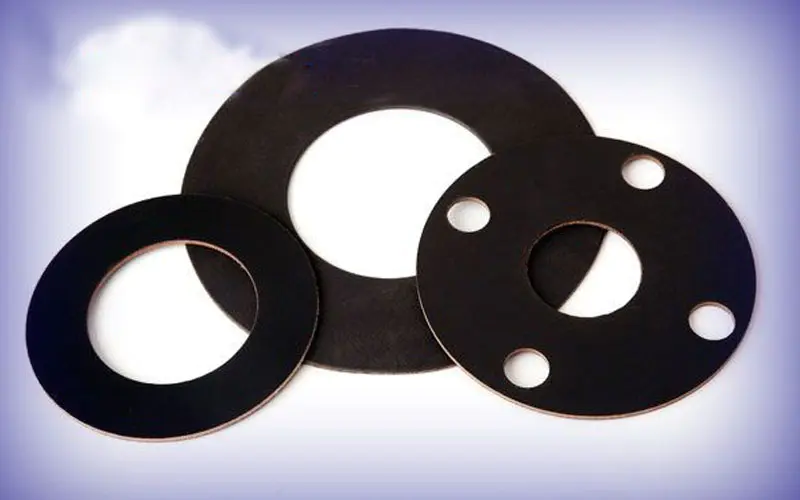
For over two decades, Kaxite Sealing has stood at the forefront of sealing technology, engineering solutions that meet the rigorous demands of modern industry. The heart of producing reliable, high-performance graphite reinforced gaskets lies in the precision and capability of the machinery used. Specialized machines for graphite reinforced gaskets are not merely production tools; they are sophisticated systems engineered to handle the unique properties of graphite—its compressibility, conformability, and strength—while seamlessly integrating reinforcing materials like stainless steel, aluminum, or composite cores. This guide delves into the critical technical parameters, operational features, and professional considerations surrounding these essential machines.
The manufacturing process for graphite reinforced gaskets typically involves precision cutting, laminating, and sometimes forming or punching. The primary machine configurations include:
Selecting the right machine requires a deep understanding of its specifications. Below is a detailed breakdown of key parameters for a standard CNC Rotary Die Cutting Machine designed for graphite reinforced materials.
| Feature | Description | Benefit |
|---|---|---|
| PLC Control System | Central programmable logic controller with touch-screen HMI (Human-Machine Interface). | Allows for storage of job recipes, easy setup, and monitoring of machine functions like speed, pressure, and feed length. |
| Vision Registration System | Optional camera system that reads printed marks on the material web. | Compensates for material stretch or minor misalignment, ensuring absolute cutting precision for critical applications. |
| Automatic Waste Matrix Removal | Integrated system that strips away the leftover skeleton material after cutting. | Significantly reduces manual labor, increases production speed, and keeps the work area clean from graphite dust. |
| Dust Extraction Ports | Built-in ports connected to industrial vacuum systems. | Essential for capturing fine graphite particles, protecting machine components, ensuring a safe working environment, and maintaining cut quality. |
| Tension Control System | Electronically controls the unwind and rewind tension of the material web. | Prevents material wrinkling, stretching, or tearing, which is crucial for delicate graphite layers. |
Machines from Kaxite Sealing are engineered with the specific challenges of graphite-based materials in mind:
Q: What is the main advantage of a CNC rotary die cutter over a flatbed press for graphite gasket production?
A: The primary advantage is speed and efficiency for medium to high-volume runs. CNC rotary cutters operate in a continuous roll-to-roll process, offering much higher output (often 5-10x faster) than the cyclical start-stop action of a flatbed press. They also provide superior registration accuracy for multi-pass operations and generate less dynamic force on the tooling, which can extend die life when cutting abrasive graphite materials.
Q: How does the machine handle the graphite dust generated during cutting, and why is this critical?
A: Professional-grade machines integrate dedicated dust extraction systems with high-static pressure vacuums and strategically placed hoods or ports at the point of cutting. This is critical for three reasons: operator health and safety (preventing inhalation of fine particles), machine maintenance (preventing abrasive dust from damaging bearings, guides, and electronic components), and product quality (keeping the cutting area clean to prevent dust from contaminating the gasket surface or affecting registration sensors).
Q: Can the same machine cut different types of reinforced graphite sheets, such as those with stainless steel insert vs. perforated core?
A: Yes, a well-engineered machine is highly versatile. However, key adjustments must be made. The cutting blade material and sharpness angle may need optimization—a harder carbide blade is preferred for stainless steel cores. The cutting pressure and anvil/hardness must be precisely calibrated; a perforated core requires different support than a solid metal core to prevent deformation. The machine's control system should allow easy saving and recall of these parameter sets for different materials.
Q: What are the key maintenance routines for these machines to ensure longevity and consistent cut quality?
A: A rigorous preventive maintenance schedule is essential. Daily tasks include cleaning all debris and graphite dust from the cutting area, rails, and feed mechanisms, and checking vacuum system filters. Weekly, lubrication of guide rails and bearings according to the manufacturer's specifications is needed. Monthly, inspection of cutting blade wear, verification of registration system calibration, and checking the tension control system for consistency are crucial. Blades should be sharpened or replaced proactively based on material volume, not just when cut quality degrades.
Q: When considering a machine from Kaxite Sealing, what operational data should I have ready to ensure it meets my production needs?
A: To ensure an optimal match, be prepared with: 1) The exact material specifications (type of graphite, reinforcement material, thickness range, and roll width), 2) Your target production volume (parts per shift/month) and desired cutting speed, 3) The complexity of the gasket shapes (intricate contours, small holes, and tight tolerances), 4) Any secondary in-line processes needed (e.g., laminating a second layer, applying adhesive, or kiss-cutting), and 5) Your factory's available utilities (electrical supply, compressed air pressure, and available space). This allows Kaxite Sealing engineers to recommend a machine with the precise configuration for your application.
Investing in a machine for graphite reinforced gaskets is a significant decision. Kaxite Sealing provides more than just equipment; we offer a production solution. Our process begins with a thorough analysis of your material and output goals. We then propose a machine configuration that may include custom unwind/rewind stands, specific dust extraction setups, or integration with pre-existing production lines. Every machine is backed by comprehensive training for your operators and maintenance technicians, ensuring you achieve optimal performance from day one. Furthermore, our global network of service engineers and ready inventory of wear parts, like specialized cutting blades and anvil covers, minimizes downtime and protects your investment for the long term. The precision and reliability of your graphite reinforced gaskets start with the machinery that creates them. By focusing on the detailed engineering parameters and operational needs outlined above, manufacturers can select a system that ensures quality, efficiency, and scalability.