Email Us
Products

Precision Gaskets in China for Your Industrial Machinery Needs

What Are Gaskets and Why Are They Critical?

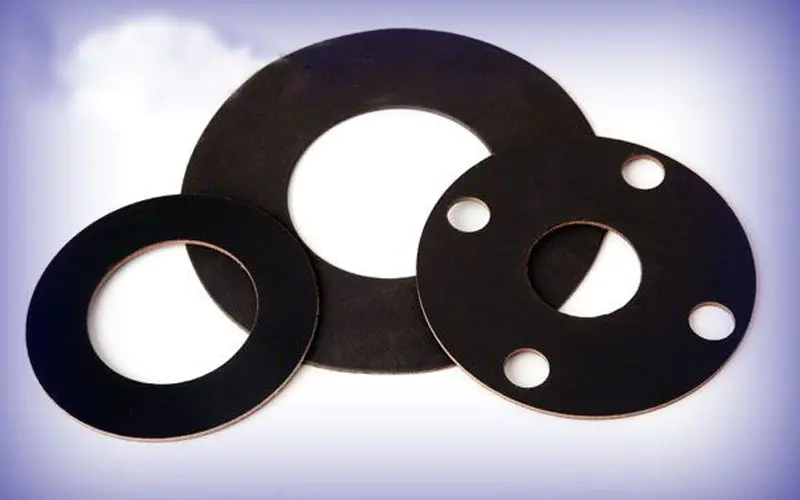
Gaskets are fundamental sealing components found in virtually every industry, from household appliances to spacecraft. They are precision-engineered materials placed between two or more mating surfaces to prevent leakage of fluids or gases under compression. A gasket fills the microscopic irregularities present on even the most finely machined flanges, creating a tight, leak-proof seal. Failure of a gasket can lead to catastrophic consequences, including system shutdowns, environmental contamination, safety hazards, and significant financial loss. Therefore, selecting the correct gasket type for your specific application—considering factors like temperature, pressure, media, and flange conditions—is not just a recommendation; it's a critical engineering requirement.

Key Selection Parameters for Industrial Gaskets

Choosing a gasket requires a detailed analysis of the operating conditions. Below are the primary parameters that must be evaluated. We recommend using this as a checklist for your next project.

  • Temperature Range: The minimum and maximum temperatures the gasket will be exposed to, both during operation and during potential thermal cycling.
  • Pressure (PSI/Bar): The internal pressure of the system. This includes both static pressure and any potential pressure spikes or pulsations.
  • Chemical Compatibility (Media): The specific gas, liquid, or chemical that the gasket will seal against. Resistance to corrosion, swelling, or degradation is paramount.
  • Flange Type & Surface Finish: The design of the flange (e.g., raised face, flat face, tongue-and-groove) and its surface texture (e.g., smooth, serrated) influence gasket selection and performance.
  • Compression & Recovery: The gasket's ability to deform under bolt load to fill imperfections (compressibility) and its ability to maintain seal under variable pressures and temperatures (recovery).
  • Creep Relaxation: The tendency of a gasket material to lose sealing force over time under constant temperature and pressure, which can lead to leaks.
  • Standards & Certifications: Compliance with industry standards such as API, ASME, ASTM, DIN, or TA-Luft is often mandatory for critical applications.

Our Premium Gasket Material Portfolio & Specifications

We manufacture and supply a comprehensive range of gasket materials to meet the most demanding specifications. The following table details the properties of our core material families.

Material Family Standard Grades Temp. Range (°F / °C) Max Pressure (PSI) Key Media Resistance Primary Applications
Compressed Non-Asbestos (CNA) NAF 1000, NAF 2000 HT, NAF 3000 CR -100°F to +1200°F / -73°C to +650°C Up to 3000 PSI Steam, hot oils, hydrocarbons, mild chemicals General industrial, petrochemical, power generation flanges
Expanded PTFE (ePTFE) Standard White, Chemically Resistant, FDA Compliant -450°F to +500°F / -268°C to +260°C Up to 2000 PSI Virtually all chemicals, acids, solvents (except molten alkali metals) Chemical processing, pharmaceutical, food & beverage, ultra-clean systems
Flexible Graphite Pure, Foil Laminated, Insertion Gaskets -400°F to +3000°F* / -240°C to +1650°C* (*in inert atm.) Up to 2200 PSI Hot gases, steam, hydrocarbons, fire-safe applications High-temperature heat exchangers, turbine casings, fire-safe API 607/6FA valves
Rubber Elastomers (FKM, EPDM, NBR) FKM (Viton®), EPDM, Nitrile (NBR), Silicone -40°F to +400°F / -40°C to +205°C (varies by type) Up to 1500 PSI Oils (NBR), ozone/weathering (EPDM), fuels/aromatics (FKM) Automotive, hydraulics, pumps, fuel systems, water treatment
Metal Jacketed (Soft Fill) 304SS/Graphite, 316SS/PTFE, Carbon Steel/Asbestos-Free -328°F to +1500°F / -200°C to +815°C Up to 2500 PSI High-pressure steam, corrosive media, severe service Pressure vessel manways, heat exchangers, high-pressure pipe flanges

Gaskets FAQ: Expert Answers to Common Questions

What is the main difference between a gasket and an O-ring?

A gasket is typically a static seal designed for flat or irregular surfaces like pipe flanges, while an O-ring is a dynamic or static seal that fits into a machined groove, creating a seal through radial compression. Gaskets are generally used for larger diameters and higher bolt loads, whereas O-rings are ideal for compact, groove-based designs in hydraulic and pneumatic systems.

How do I determine the correct gasket thickness for my application?

Gasket thickness is selected based on flange type, surface condition, and required sealing performance. For standard raised face flanges, thinner gaskets (1/16") provide better performance under high bolt load. For uneven or damaged flanges, a thicker, more compressible gasket (1/8" or 3/16") may be necessary to fill gaps. Always consult engineering standards (like ASME B16.20) and consider the gasket material's compressibility and recovery characteristics.

Can I reuse a gasket after disassembling a connection?

It is strongly discouraged and often against engineering codes to reuse a gasket. Once compressed, a gasket undergoes permanent deformation (creep relaxation) and loses its original sealing properties. Reinstallation may not achieve the required bolt load distribution, leading to a high probability of leakage. Always install a new, undamaged gasket of the correct specification during reassembly.

What causes a gasket to fail prematurely?

Premature gasket failure can result from several factors: incorrect material selection (chemical or thermal incompatibility), improper installation (uneven bolt torque, insufficient load), flawed flange conditions (warpage, poor surface finish, incorrect alignment), or exceeding the gasket's design parameters (temperature, pressure). A failure analysis should consider all these operational and mechanical factors.

What does "fire-safe" certification mean for a gasket?

A "fire-safe" gasket is designed and tested to maintain a seal during and after exposure to extreme fire conditions for a specified period. Standards like API 607 and API 6FA define test procedures involving direct flame impingement followed by a quench spray and a final leak test. Materials like certain flexible graphite and metal-jacketed designs are commonly certified. Using certified fire-safe gaskets is crucial for safety-critical applications in oil, gas, and chemical plants.

How important is bolt torque and tightening sequence for gasket performance?

It is absolutely critical. Achieving a uniform, proper bolt load across the entire flange face is essential for a reliable seal. An incorrect sequence (like tightening bolts in a circle) can warp the flange, creating gaps. Always use a cross-pattern tightening sequence (star pattern) in multiple incremental steps, following the equipment manufacturer's or gasket supplier's specified torque values. Using calibrated torque wrenches is recommended for critical joints.

Advanced Gasket Types and Configurations

Beyond standard sheet and spiral wound gaskets, specialized configurations solve unique engineering challenges. Kammprofile Gaskets feature a solid metal core with concentric grooves and a soft sealing layer (like graphite), offering excellent resilience and high-pressure capability. Ring Type Joint (RTJ) Gaskets are precision-machined metal rings that seal in a groove, used for ultra-high pressure in oil and gas wellheads and valves. Double-Jacketed Gaskets provide an extra layer of protection in highly corrosive services. Each type requires specific flange designs and installation protocols for optimal performance. Our engineering team can assist in specifying the correct advanced gasket for your severe-service application, ensuring reliability under the most extreme conditions of temperature, pressure, and corrosive media.

View as  
 
Kammprofile Gasket with Loose Outer Ring

Kammprofile Gasket with Loose Outer Ring

Kaxite manufactures kammprofile (serrated) gaskets with a removable loose outer ring — a machined solid metal core with concentric serrations on both faces, clad with flexible graphite or PTFE, and enclosed by a separate locating ring that centers the gasket on the flange and limits compression without welding it to the sealing element. The loose ring can be replaced or re-used while the sealing core is refurbished, which keeps the whole assembly serviceable instead of scrapping it after a single maintenance cycle. Standard core materials: SS304, SS316L, SS321, SS347, Monel 400, Inconel 625/825, Hastelloy C276, titanium, copper. Built to ASME B16.20, ASME B16.5, EN 1514-6, DIN, JIS or your drawing. MOQ 10 pcs, 7–15 day lead time.
Corrugated Gaskets

Corrugated Gaskets

Kaxite manufactures corrugated metal gaskets — a concentric waveform ring punched from stainless steel, carbon steel, Monel, Inconel or titanium, then clad with expanded graphite, PTFE, ceramic or mica — for flanges where bolt load is limited but temperature and diameter are not. The corrugation creates multiple sealing lines, so the gasket seals at far lower bolt stress than a flat or spiral wound alternative, while compensating for flange rotation, thermal cycling and the handling difficulties of large non-metallic gaskets on flue gas ducts. Standard thickness 1.5 / 2.0 / 3.0 mm, corrugation pitch 2–8 mm, DN 10–3000, built to DIN EN 1514-4, ASME B16.5 or your drawing. MOQ 50 pcs, lead time 7–15 days.
Stamping Jacket Gasket

Stamping Jacket Gasket

Kaxite manufactures punched metal-jacketed gaskets — a graphite, PTFE or ceramic core fully enclosed by a soft iron, carbon steel, 304/316L stainless, copper, brass, nickel, titanium or Monel jacket — for heat exchangers, boiler flues, gas mains, pump casings and valve bonnets. Partition bars, tie bars and non-circular outlines are built to your drawing. Factory-direct pricing, trial orders from 10 pcs, 7–15 day lead time, and material test certificates shipped with every batch.
Double Jacket Gasket

Double Jacket Gasket

Kaxite manufactures double jacket gaskets with a soft pliable core surrounded by a metal jacket that fully or partially encloses the filler. Partition bars can be integrated or welded into the gasket. Jacket materials listed are soft iron, low carbon steel, stainless steel, nickel, copper, aluminium, brass, titanium and Monel; filler materials are expanded graphite, ceramic and PTFE. Published tolerances: thickness +0.8 mm / -0.0 mm; OD and ID for NPS 1/2 through NPS 24 +1.5 mm / -0.0 mm. Class coverage rules: no Class 400 for NPS 1/2-3 (use Class 600); no Class 600 for NPS 1/2-2-1/2 (use Class 1500); no Class 2500 for NPS 14 and larger. Typical applications: heat exchangers, gas mains, boiler and flues, pumps and valve bonnets. Typical industry planning ranges: MOQ 10-50 pcs, sample lead time 5-10 working days, bulk lead time 10-20 working days off-season. OEM/ODM covers custom NPS/Class, jacket alloy, filler type and logo marking. Final terms are confirmed per drawing in the formal quotation.
Lens Ring Joint Gasket

Lens Ring Joint Gasket

Kaxite manufactures lens ring joint gaskets to API 6A, ASME B16.20, DIN 2693-67, JPI-7S-23-72 and DIN 2696-1999. The lens ring seals by line contact: the spherical lens face presses against the conical flange face, deforms plastically at the contact line and turns it into a sealing belt. The page lists a working window of 10-32 MPa, a temperature range of -196 to 1000°C, a gasket factor of m=5.50-6.50 and a minimum pre-tightening pressure of y=126.6-182.8 MPa. The lens ring is a pressure-energized gasket, like the double-cone gasket, with large expansion and contraction compensation. Because the spherical face contacts the flange cone, it easily leaves a pressing mark and the interchangeability of individual rings is poor. The ring hardness must be 15-20 HB lower than the mating flange face. Materials listed include soft iron, low carbon steel, SS410, SS304, SS316, SS347, F5, F11, copper, aluminium, Inconel 600, Inconel 625, Incoloy 800, Incoloy 825, Monel 400, titanium, Nickel 200, Hastelloy C276 and Zirconium 702. Solid lens ring uses forgings, rolled materials and pipes; blind lens ring uses forgings. MOQ, sample lead time, bulk lead time, OEM/ODM scope and certification scope are not stated in the body and should be confirmed on inquiry.
BX Ring Joint Gasket

BX Ring Joint Gasket

Kaxite manufactures BX ring joint gaskets on CNC equipment to ASME B16.20 and API 6A. BX is only for 6BX flanges and 16BX hubs, and is listed for 5,000-20,000 lbs pressure classes. The page publishes a BX tolerance block: ring width +0.20 / -0.00 mm, hole size ±0.5 mm, ring height +0.20 / -0.00 mm, ring OD +0.00 / -0.15 mm, 23° bevel ±0° 15', and ring radius 8-12% of ring height. Materials listed include carbon steel and soft iron, 304/304L, 316/316L/316Ti, 310, 321, 3CR12, Duplex, Monel 400, Nickel 200, Inconel 600/625/X-750, Incoloy 800/825, Hastelloy B2/C276, Titanium, Zirconium and Copper, with PTFE for inner rings only. Flange standards cover API 605 (ASME B16.47 series B), ASME/ANSI B16.5, BS 1560, BS 4504, BS 10, DIN, French NF, JIS and MSS SP 44. MOQ, sample lead time, bulk lead time, OEM/ODM scope and certification scope are not stated in the body and should be confirmed on inquiry.
Address
No 432 Zhenhai Middle Road, Luotuo Street, Zhenhai District, Ningbo City, Zhejiang China
X
We use cookies to offer you a better browsing experience, analyze site traffic and personalize content. By using this site, you agree to our use of cookies. Privacy Policy
RejectAccept