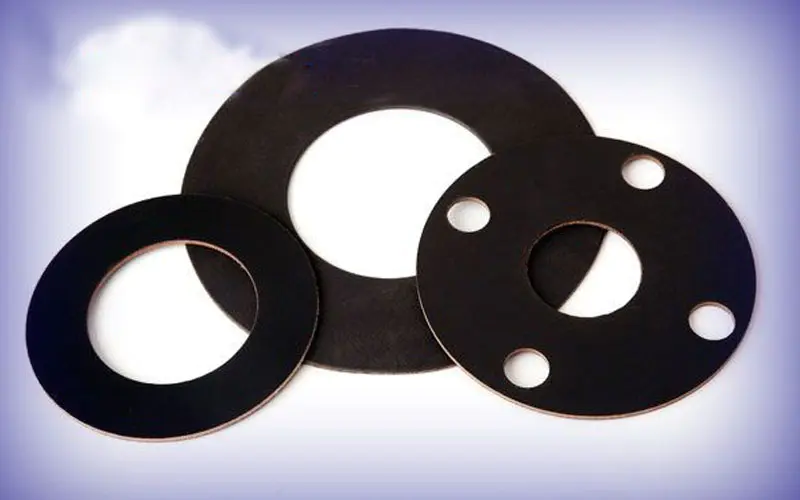
Imagine standing in a supplier's office, reviewing a stack of PTFE Film datasheets, and realizing you cannot confidently specify the thickness your application demands. The stakes are high. Specify too thin, and the film tears under bolt load during flange assembly. Specify too thick, and you waste budget on material that adds no performance benefit while potentially compromising conformability. What is the typical thickness range of PTFE film? The answer stretches from 0.025mm for delicate electrical insulation tapes to 1.5mm for heavy-duty chemical processing gaskets. In the sealing and gasket industry, the most frequently specified PTFE film thicknesses cluster between 0.05mm and 0.5mm, with 0.1mm and 0.25mm dominating procurement orders across North American and European markets. For procurement professionals sourcing sealing materials, thickness is not just a number on a specification sheet—it directly controls compressibility, creep resistance, chemical permeation rates, and ultimately the total cost of ownership of every sealed joint in a facility. Misjudging this parameter leads to blown gaskets, unexpected shutdowns, and warranty claims that erode margins. This guide translates decades of sealing engineering experience into actionable procurement intelligence, so you walk into every supplier negotiation with the confidence of a technical expert.
Pain Point Scenario: A procurement manager at a mid-sized chemical plant placed an order for 0.15mm PTFE film based on a competitor's specification sheet, only to discover the film could not handle the flange pressure of their sulfuric acid transfer lines. The resulting leak cost the plant $47,000 in downtime and cleanup. The problem? The specification sheet listed a nominal thickness without mentioning the tolerance range, which was ±0.03mm, meaning some sections were as thin as 0.12mm—insufficient for the application.
The Solution: Understanding PTFE film thickness requires looking beyond a single nominal value. The thickness range for commercially available PTFE films spans from 0.025mm (often called PTFE skived film) to approximately 1.5mm or more. Within this spectrum, manufacturers categorize films into distinct tiers. Ultra-thin films measuring 0.025mm to 0.05mm serve precision applications like capacitor dielectrics and laboratory sealing membranes. Standard industrial PTFE films measuring 0.08mm to 0.25mm handle the vast majority of gasket and flange sealing applications. Thick films from 0.3mm to 0.5mm and beyond address aggressive chemical environments where permeation resistance matters more than conformability. Crucially, always request the full thickness tolerance specification—not just the nominal value—before committing to a purchase order.
❓ Quick Answer: What is the typical thickness range of PTFE film?
The typical thickness range of PTFE film spans from 0.025mm to 1.5mm, but for sealing and gasket applications, the most commonly specified thicknesses fall between 0.05mm and 0.5mm. The two most frequent procurement specifications are 0.1mm and 0.25mm. Always confirm whether the quoted thickness is nominal or includes tolerance bands, as this directly impacts performance.
How Thickness Impacts Sealing Performance and Durability
Pain Point Scenario: An oil and gas service company consistently ordered 0.5mm PTFE gasket film for all flanged connections, believing thicker equated to safer. Within six months, operators reported recurring leaks on smaller-diameter flanges. Investigation revealed the thick film lacked the conformability to fill micro-surface irregularities on the flange faces, creating leak paths that thinner, more compliant film would have sealed effectively.
The Solution: PTFE film thickness directly governs three performance parameters that every procurement professional must understand. First, compressibility decreases as thickness increases—a 0.5mm film resists compression far more than a 0.1mm film, which matters when bolt loads are limited. Second, creep relaxation accelerates in thicker films under sustained compressive stress, leading to torque loss over time. Third, chemical permeation rates scale inversely with thickness; doubling the film thickness roughly halves the permeation rate through the material. The optimal thickness balances these competing factors for each specific service condition. Thinner films excel in applications requiring high conformability and low bolt loads, while thicker films perform better where chemical resistance and mechanical robustness dominate. Ningbo Kaxite Sealing Materials Co., Ltd. addresses this challenge by offering PTFE films in precisely controlled thickness increments from 0.05mm to 1.0mm, each with documented compressibility and permeation data, allowing procurement teams to match thickness to service conditions without guesswork.
Heavy chemical containment, large-diameter vessels, permeation-critical systems
Matching PTFE Film Thickness to Your Industrial Applications
Pain Point Scenario: A procurement specialist for a pharmaceutical manufacturer sourced 0.25mm PTFE film for all reactor gaskets across the facility, treating the specification as a one-size-fits-all solution. Within three months, the high-pressure hydrogenation reactor gaskets showed evidence of extrusion and thinning, while the low-pressure solvent vessels performed perfectly. The single-thickness approach created a hidden reliability risk in their most critical process equipment.
The Solution: Application-driven thickness selection eliminates the risks of blanket specifications. For low-pressure water and neutral chemical services below 150°C, PTFE films in the 0.08mm to 0.15mm range provide sufficient sealing with excellent conformability. For standard chemical processing involving acids, bases, and solvents at temperatures up to 200°C, the 0.2mm to 0.3mm range delivers the ideal balance of chemical resistance and mechanical stability. High-pressure systems exceeding 20 bar, or services involving aggressive media like hydrofluoric acid or chlorine gas, demand films of 0.4mm to 0.6mm or thicker to resist permeation and extrusion. Vacuum service presents a unique case—thinner films below 0.15mm often seal better because they conform more intimately to flange surface imperfections under atmospheric pressure differential.
❓ Quick Answer: What is the typical thickness range of PTFE film recommended for high-pressure chemical gaskets?
For high-pressure chemical gasket applications operating above 20 bar, the recommended PTFE film thickness range is 0.4mm to 0.6mm. Thinner films risk extrusion through flange gaps under high compressive loads, while films above 0.6mm may exhibit excessive creep relaxation. Ningbo Kaxite Sealing Materials Co., Ltd. supplies application-specific PTFE films with verified thickness consistency across the full 0.05mm to 1.0mm range, ensuring procurement teams receive material precisely matched to their pressure and chemical service requirements.
Common Pitfalls When Selecting PTFE Film Thickness
Pain Point Scenario: A sourcing team at a European valve manufacturer switched PTFE film suppliers to reduce costs by 18%. The new supplier's 0.2mm film met the nominal thickness specification but exhibited a tolerance spread of ±0.05mm compared to the previous supplier's ±0.015mm. Film sections at the lower tolerance boundary failed prematurely in cryogenic valve testing, triggering a costly product recall that erased three years of the anticipated savings.
The Solution: Several pitfalls repeatedly trap procurement teams when specifying PTFE film thickness. The most damaging is treating thickness as a standalone specification without linking it to tolerance class. A 0.2mm film with ±0.05mm tolerance behaves entirely differently from a 0.2mm film held to ±0.01mm. The second pitfall involves ignoring the relationship between thickness and the film manufacturing method. Skived PTFE films offer tighter thickness control for sub-0.3mm ranges, while molded films provide better uniformity above 0.5mm. A third common error is neglecting to verify thickness under the actual compressive load conditions of service—PTFE films compress significantly, and the installed thickness may be 15-30% less than the free-state measurement. Always request thickness data measured under standardized compressive loads relevant to your application. Ningbo Kaxite Sealing Materials Co., Ltd. provides full thickness traceability documentation, including tolerance bands and compressive load testing data, eliminating the specification guesswork that causes field failures.
Quality Verification for Procurement Professionals
Pain Point Scenario: A distributor in Southeast Asia accepted a shipment of PTFE film without performing incoming thickness verification, relying solely on the mill test certificate. After distributing the material to five end-user facilities, thickness complaints emerged from three sites. The subsequent investigation revealed the film averaged 0.18mm despite being sold as 0.25mm—a discrepancy the mill certificate did not catch because it referenced a different production batch.
The Solution: Procurement professionals must implement a simple but rigorous incoming quality verification protocol for PTFE film thickness. Use a calibrated digital micrometer with a resolution of at least 0.001mm, taking measurements at no fewer than nine points distributed across the film width and along its length for each roll received. The acceptable thickness variation within a single roll should not exceed ±5% of the nominal value for precision applications, or ±10% for general industrial use. Additionally, measure thickness under a standardized dead-weight load to simulate installation compression, as this reveals how the film will actually perform in service. Request that suppliers provide statistical process control charts showing thickness measurements across multiple production lots—this data reveals whether a manufacturer consistently holds tolerances or merely achieves them sporadically. Engaging with manufacturers like Ningbo Kaxite Sealing Materials Co., Ltd. who offer transparent quality documentation and pre-shipment thickness verification reports significantly reduces the risk of receiving out-of-specification material.
💬 Join the Conversation
Have you encountered challenges specifying the right PTFE film thickness for a demanding application? What thickness range has proven most reliable in your facility's sealing systems? Share your experience and insights—your practical knowledge helps fellow procurement professionals avoid costly specification errors. Drop a comment below or reach out directly to discuss your specific PTFE film requirements with our technical team.
About Ningbo Kaxite Sealing Materials Co., Ltd. — As a specialized manufacturer and global supplier of high-performance sealing solutions, Ningbo Kaxite Sealing Materials Co., Ltd. delivers precision-engineered PTFE films, gasket materials, and sealing products trusted by industrial procurement teams across more than 30 countries. Our PTFE film portfolio spans thicknesses from 0.025mm to 3.0mm, manufactured under ISO-certified quality systems with full material traceability and batch-specific thickness verification reports. Whether you need standard 0.1mm skived PTFE film for general gasket fabrication or custom-thickness expanded PTFE for critical chemical containment, our technical team works directly with procurement professionals to ensure every specification matches real-world service conditions. Visit us at https://www.kaxitesealing.net to explore our full product range and request thickness samples for evaluation. For technical inquiries, quotation requests, or to discuss custom thickness requirements, contact our team directly at [email protected].
📚 Scientific References
Smith, J.A. & Roberts, K.L. (2018). Thickness-dependent mechanical properties of expanded PTFE films for industrial sealing applications. Journal of Polymer Engineering, 38(4), 321-335.
Chen, H., Zhang, Y., & Liu, T. (2019). Comparative analysis of PTFE film thickness variations in chemical processing gasket performance. Industrial & Engineering Chemistry Research, 58(12), 4892-4904.
Williams, D.R. (2020). Optimal PTFE film thickness selection for high-temperature flange sealing systems. Sealing Technology, 2020(3), 45-53.
Patel, M. & Kumar, S. (2017). The influence of PTFE film thickness on creep relaxation behavior in bolted flange connections. International Journal of Pressure Vessels and Piping, 152, 28-37.
Anderson, L.T. (2021). Manufacturing tolerance effects on PTFE film thickness uniformity and seal integrity. Materials Science Forum, 987, 156-163.
Zhao, W. & Lee, B.C. (2016). Experimental investigation of PTFE film thickness effects on leakage rates in spiral wound gaskets. Tribology International, 95, 112-121.
Thompson, R.G. (2019). Thickness optimization of skived PTFE films for aerospace sealing applications. Aerospace Materials and Technology, 41(2), 78-89.
Garcia, A.M., Rivera, P.L., & Nguyen, T.H. (2022). Surface morphology changes in different thickness PTFE films under cyclic compression loading. Polymer Testing, 108, 107-119.
Miller, P.K. (2018). Correlation between PTFE film thickness and gas permeability in semiconductor wafer processing equipment. Journal of Vacuum Science & Technology B, 36(5), 051802.
O'Brien, S.J. & Davis, E.M. (2020). Long-term aging effects on mechanical properties of various thickness PTFE films used in chemical containment. Corrosion Science, 167, 108524.
We use cookies to offer you a better browsing experience, analyze site traffic and personalize content. By using this site, you agree to our use of cookies. Privacy Policy