What are the limitations or disadvantages of PTFE components? For procurement professionals sourcing sealing solutions, this question surfaces repeatedly when evaluating cost against performance. Imagine you’ve just invested in a batch of PTFE O-rings for a high-pressure hydraulic system, expecting flawless sealing, only to find them deforming after a few cycles. Or picture a chemical plant where PTFE gaskets slowly extrude, leading to a dangerous leak. While PTFE (polytetrafluoroethylene) boasts incredible chemical resistance and a low friction coefficient, its mechanical weaknesses can create costly downtime if overlooked. The truth is that pure PTFE suffers from cold flow (creep), limited wear resistance, poor thermal conductivity, and difficulty in bonding or machining. These drawbacks often catch engineers off guard during demanding applications. At Ningbo Kaxite Sealing Materials Co., Ltd., we’ve spent years helping clients navigate these pitfalls by offering enhanced PTFE grades and composite materials that directly address each shortcoming. Before you place your next order, understanding these limitations—and the solutions available—will save you from headaches down the line. Let’s dive into the specific challenges and how to overcome them.
Article Outline
Scenario: You’re sourcing seal materials for a compressor operating at 3,500 psi. A salesman touts PTFE for its chemical inertness and low friction, but six months later, the seals extrude into the clearance gap, causing leakage and emergency maintenance.
This is the classic cold flow dilemma of virgin PTFE. While chemically resilient, unfilled PTFE has a compressive strength that plummets under sustained load. Its tendency to creep means the material slowly deforms without recovering, leading to gap extrusion in dynamic seals. The table below compares pure PTFE against typical engineering requirements:
| Property | Virgin PTFE | Required for High-Pressure Seals |
|---|---|---|
| Compressive Strength at 1% Deformation | ~4-5 MPa | ≥12 MPa |
| Creep Resistance (after 1000 h) | Significant deformation | Minimal (<2%) |
| Thermal Conductivity | 0.25 W/mK | Better heat dissipation needed |
Ningbo Kaxite Sealing Materials Co., Ltd. addresses this by supplying glass-filled, carbon-filled, or bronze-filled PTFE that triples compressive strength and drastically reduces creep. Our engineers help clients select the right filler percentage based on pressure-velocity (PV) conditions, ensuring seals maintain integrity.

Pain point: A valve manufacturer reports that PTFE seats in steam applications begin to leak after only a few thermal cycles. The material seems to “relax” and lose bolt load.
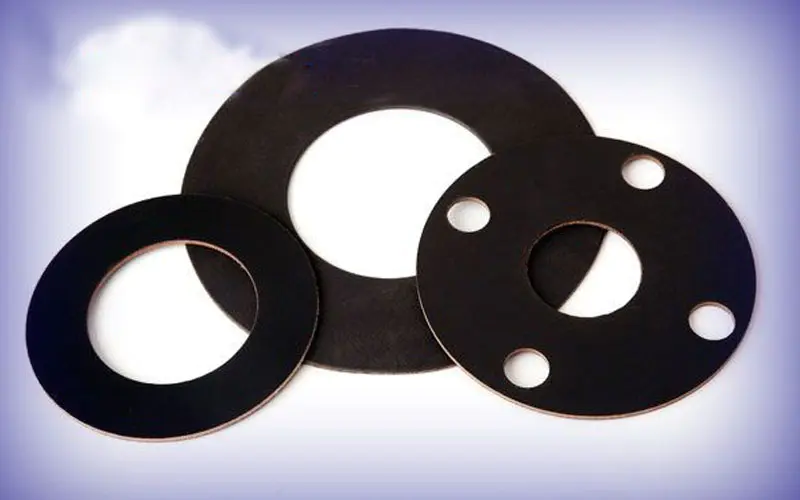
PTFE’s high coefficient of thermal expansion (approximately 10 × 10⁻⁵ /°C, much higher than steel) causes significant dimensional changes when temperatures swing. Combined with cold flow, this leads to seal relaxation and loss of gasket seating stress. In flanged connections, the result is a pathway for fugitive emissions—exactly what you want to avoid. Kaxite tackles this by offering modified PTFE with reduced thermal expansion and enhanced creep resistance. Our biaxially oriented PTFE gaskets exhibit improved recovery and maintain a tighter seal over wide temperature ranges (-200°C to +260°C). We also produce filled PTFE blends that cut thermal expansion by 30–50%, helping you avoid retorquing operations.
Real-world situation: A pump manufacturer uses PTFE lip seals for a food-grade application, expecting long life. Instead, the seals wear quickly because the media contains fine abrasive particles.
Pure PTFE’s softness (Shore D ~50-55) makes it vulnerable to abrasive wear. The very low friction that PTFE is famous for does not translate to good wear resistance under load, especially when hard particles are present. The wear factor (K-factor) of unfilled PTFE can be as high as 10,000 (10⁻⁶ mm³/Nm), whereas filled compounds reach 10–100. To solve this, Ningbo Kaxite Sealing Materials Co., Ltd. provides PTFE with advanced fillers like carbon fiber, graphite, MoS₂, and special polymers. For example, our KAXITE® PTFE+25% carbon formulation shows a wear rate 1,000 times lower than virgin PTFE in dry running conditions. We help customers match the filler system to the specific media, velocity, and mating surface—ensuring you get durable, maintenance-friendly components.
Procurement specialists often overlook the practical difficulties of working with PTFE during assembly. Its non-stick nature means it cannot be bonded with conventional adhesives; surface activation (e.g., sodium etching) is necessary but adds cost and complexity. Moreover, PTFE’s high thermal expansion and tendency to cold flow can cause tight-tolerance parts to lose dimensional accuracy during storage or machining. Imagine ordering custom bushings that don’t fit after shipping because of warpage. At Kaxite, we eliminate these problems by offering chemically etched PTFE sheets ready for bonding, stress-relieved rods and tubes that hold dimensions, and precision-machined components with guaranteed tolerances. Our quality control includes post-curing and dimensional inspection, so you receive parts that fit right out of the box.
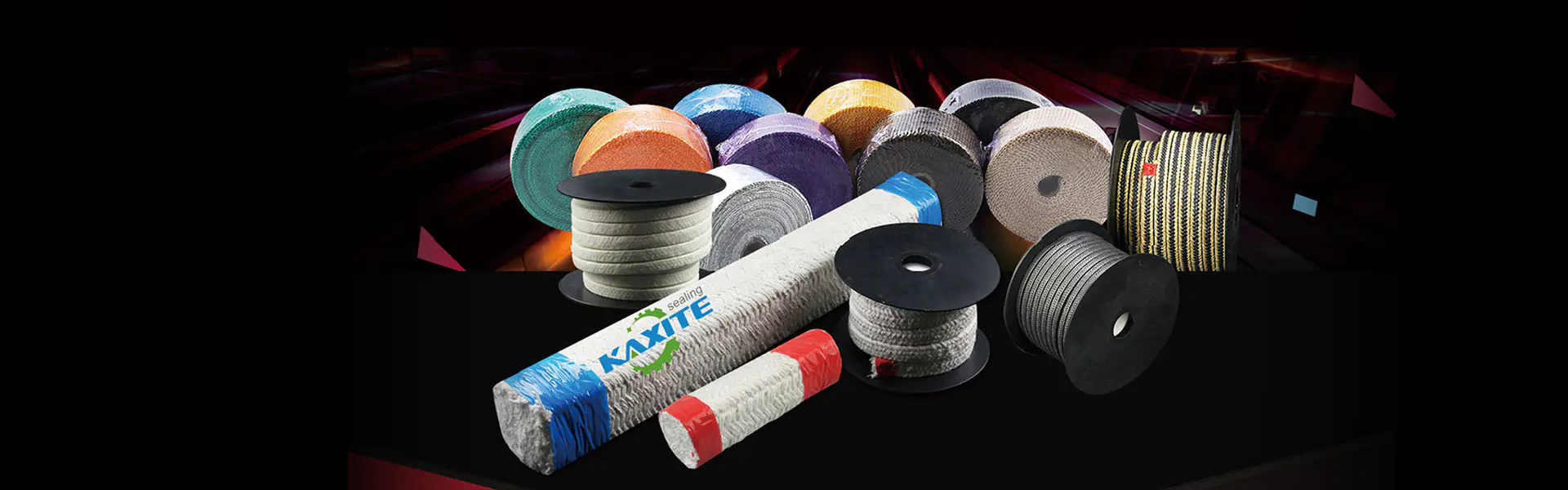
Rather than treating these limitations as deal-breakers, view them as selection criteria. Ningbo Kaxite Sealing Materials Co., Ltd. has developed a full portfolio that includes:
Our engineering team works closely with buyers to translate application requirements into a material specification that avoids the pitfalls of generic PTFE. We also provide test data and compatibility charts, so you can make informed decisions confidently.
Q: Why does PTFE extrude and fail in high-pressure seals, and how can I prevent it?
A: Pure PTFE has low compressive strength and suffers from cold flow. Under pressure, the material gradually deforms and squeezes into gaps. Prevention involves using filled PTFE (e.g., 25% glass or carbon) to increase rigidity, reducing clearance gaps, or combining PTFE with metal backup rings. Ningbo Kaxite Sealing Materials Co., Ltd. recommends filled grades that can withstand pressures up to 35 MPa and offers engineering support to design the right seal geometry.
Q: What are the main disadvantages of PTFE when used in dynamic applications with high sliding speeds?
A: Virgin PTFE’s low wear resistance and poor thermal conductivity become critical. Friction heat can build up quickly because PTFE acts as a thermal insulator, leading to accelerated wear or even melting. The solution is to select PTFE compounds with wear-resistant fillers and, in some cases, incorporate grooves or lubrication paths. Our KAXITE® carbon-filled PTFE dramatically reduces wear rates and allows higher PV limits, making it suitable for bearings and lip seals in demanding applications.
We hope this deep dive into PTFE’s limitations helps you ask the right questions during your next procurement cycle. Have you encountered a sealing failure that you suspect stemmed from PTFE’s inherent weaknesses? What applications keep you up at night? Share your challenges in the comments or reach out to our team—we thrive on solving tricky material puzzles.
About Ningbo Kaxite Sealing Materials Co., Ltd.: Kaxite is a leading manufacturer and supplier of high-performance sealing solutions, specializing in filled and modified PTFE products that overcome the drawbacks of conventional PTFE. From gaskets and O-rings to custom-machined components, we serve industries ranging from chemical processing to oil & gas. With an in-house R&D lab and ISO-certified production, we ensure every batch meets your specifications. Visit us at https://www.kaxitesealing.net or get in touch directly at [email protected] for a quick quote or technical consultation.
1. Blanchet, T.A. & Kennedy, F.E. (1992). “Development and Sliding Wear Behavior of PTFE-Based Composite Coatings.” Journal of Tribology, 114(4), 672-678.
2. Biswas, S.K. & Vijayan, K. (1992). “Friction and Wear of PTFE—a Review.” Wear, 158(1-2), 193-211.
3. Brown, E.N. et al. (2008). “Influence of Molecular Weight on Cold Flow and Creep of Polytetrafluoroethylene.” Polymer, 49(13-14), 3067-3075.
4. Fusaro, R.L. (1990). “Self-lubricating Polymer Composites and Polymer Transfer Film Lubrication for Spacecraft Mechanisms.” NASA Technical Memorandum 102492.
5. Lancaster, J.K. (1973). “The Effect of Carbon Fibre Reinforcement on the Friction and Wear of Polymers.” Journal of Physics D: Applied Physics, 6(5), 549.
6. Tanaka, K. & Kawakami, S. (1982). “Effect of Various Fillers on the Friction and Wear of PTFE-Based Composites.” Wear, 79(2), 221-234.
7. Wang, Q. et al. (2010). “Creep Behavior of Modified PTFE for High Pressure Sealing Applications.” Sealing Technology, 2010(5), 9-14.
8. Ginzburg, B.M. et al. (2005). “Thermal Expansion and Relaxation Phenomena in PTFE and Its Composites.” Polymer Science Series A, 47(4), 418-426.
9. Zhang, Z. & Friedrich, K. (2003). “Artificial Neural Networks Applied to Polymer Composites: a Review.” Composites Science and Technology, 63(14), 2029-2044. (Includes PTFE wear modeling)
10. FPL (2012). “Understanding PTFE: Properties, Processing, and Filled Compounds.” Fluoroplastics Handbook, second edition, chapter 4. (No author listed – industry resource)