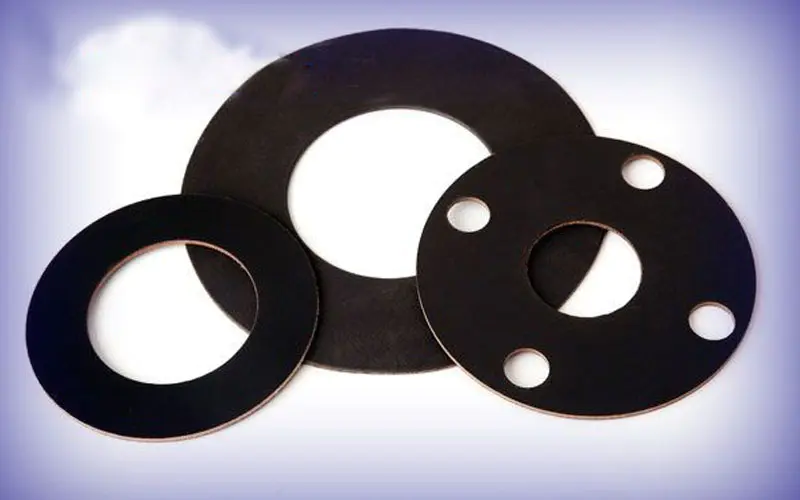
In the extreme environment of a nuclear reactor, where temperatures soar beyond 1000°F (538°C) and radioactive media demand zero-leakage integrity, selecting the wrong gasket can lead to catastrophic failure. The question that haunts every procurement engineer is: How to choose the right Nuclear Spiral Wound Gasket for high-temperature environments? This decision is not just about matching size and pressure class—it involves understanding metallurgy, filler chemistry, and the precise mechanics of spiral wound construction. A single oversight can cause a leak path that compromises the reactor’s containment boundary. At Ningbo Kaxite Sealing Materials Co., Ltd., we have spent decades engineering gaskets that perform reliably under these punishing conditions. This guide will walk you through the critical factors, from material selection to installation, ensuring that your next purchase meets ASME Section III and RCC-M standards, and that you partner with a supplier who truly understands nuclear safety.
Table of Contents

Pain Point: Procurement teams often assume that any ASME B16.20 spiral wound gasket will suffice for high-temperature applications. When a standard gasket is installed in a reactor coolant pump or steam generator, the combination of thermal cycling and irradiation rapidly degrades the filler material, leading to leakage within months.
Solution: Nuclear-grade spiral wound gaskets must be designed with a precise balance of inner/outer ring materials, controlled compression, and a filler that resists oxidative degradation at sustained elevated temperatures. Ningbo Kaxite Sealing Materials Co., Ltd. manufactures gaskets that endure temperature spikes up to 1000°C in inert atmospheres and maintain sealability under thermal transients as specified in NQA-1 quality programs.
| Parameter | Typical Requirement | Ningbo Kaxite Capability |
|---|---|---|
| Max continuous service temp | ≥ 500°C (oxidizing) | 600°C with graphite filler |
| Leak rate (helium) | < 1×10⁻⁶ mbar·L/s | < 1×10⁻⁷ mbar·L/s |
| Radiation resistance | TID up to 2 MGy | Tested to 5 MGy |
Pain Point: Engineers frequently overlook the interaction between the metal winding and the flange material. Using a winding alloy with a large coefficient of thermal expansion mismatch introduces tensile stress that can crack the winding after a few thermal cycles.
Solution: Start by identifying the flange material and design temperature. For most high-temperature nuclear applications, an Inconel 600 or 625 winding paired with a pre-compressed flexible graphite filler provides the ideal combination of creep resistance and chemical compatibility. The gasket must also feature a solid inner ring to prevent inward buckling of the winding under thermal expansion. Below is a comparison of common winding materials.
| Winding Material | Max Temp (°C) | Compatible Media | Recommendation |
|---|---|---|---|
| 304 Stainless Steel | 760 | Steam, water, mild chemicals | Secondary circuits only |
| 316L Stainless Steel | 760 | Aqueous, chlorides | Not for primary loop |
| Inconel 600 | 1095 | Primary coolant, borated water | Best choice for nuclear core |
| Inconel 625 | 1095 | Oxidizing acids, high radiation | Premium option |
Pain Point: Sourcing departments often face tight budgets and opt for PTFE-filled gaskets because they appear cost-effective. Unfortunately, PTFE begins to decompose above 260°C and releases toxic fumes, making it entirely unsuitable for high-temperature nuclear service.
Solution: For temperatures above 450°C, the only viable fillers are exfoliated graphite (flexible graphite) or mica-based composites. Exfoliated graphite remains chemically stable and maintains its sealing properties up to 600°C in oxidizing environments and up to 1000°C in reducing or inert conditions. Mica fillers can push the envelope even further but may require additional safety factors for radiation exposure. Ningbo Kaxite offers custom filler blends that combine the resilience of graphite with the thermal endurance of vermiculite, ensuring compliance with MIL-G-24716 and other nuclear procurement specifications.
| Filler Material | Max Temp Oxidizing (°C) | Max Temp Inert (°C) | Nuclear Suitability |
|---|---|---|---|
| PTFE | 260 | 260 | Not suitable |
| Flexible Graphite | 600 | 1000 | Excellent |
| Mica | 800 | 1100 | Good (verify radiation data) |
| Ceramic fiber | 1000 | 1200 | Limited data |
Q: How to choose the right nuclear spiral wound gasket for high-temperature environments?
A: The selection must be driven by three data points: the maximum operating temperature (including transients), the pressure class of the flange (typically ASME 1500# or higher in primary systems), and the chemical composition of the process fluid. You then map these to a winding/filler combination that has been qualified under ASME BPVC Section III or equivalent. For example, if your steam generator operates at 320°C with borated water, an Inconel 600 winding with flexible graphite filler and an inner ring is the baseline. Ningbo Kaxite Sealing Materials Co., Ltd. provides full material traceability and qualification certificates to support your QA/QC process.
Q: How to choose the right nuclear spiral wound gasket when long-term radiation exposure is a concern?
A: You need to examine both the metallic and non-metallic components. Austenitic stainless steels can suffer from irradiation-assisted stress corrosion cracking, so Inconel alloys are preferred. For the filler, flexible graphite has demonstrated excellent stability under gamma radiation up to cumulative doses typical for a 40-year plant life. Some mica products may undergo brittle fracturing. Always request irradiation test reports (e.g., at 2 MGy and 5 MGy) from your supplier. At Ningbo Kaxite, we subject our nuclear gasket series to accelerated aging tests and can provide the data you need to satisfy regulatory reviewers.
Pain Point: Even a perfectly specified gasket will leak if installed with incorrect bolt tensioning. Flanges that are not pulled down evenly create a gap that turns into a blowout path during the first heat-up.
Solution: Follow a star-pattern torque sequence and apply lubrication to bolt threads to achieve the target gasket stress, typically in the range of 25–35 MPa for graphite-filled spiral wound gaskets. Use calibrated torque wrenches and perform at least three passes. After the system reaches operating temperature, a hot re-torque is mandatory because the gasket relaxes. Ningbo Kaxite provides detailed torque tables and on-site advisory services to help your maintenance crew achieve a first-time seal.
Pain Point: Many nuclear operators struggle with long lead times and inconsistent quality from generic suppliers. A non-conformance report on a gasket order can delay a refueling outage by days, costing millions in lost generation.
Solution: Ningbo Kaxite Sealing Materials Co., Ltd. holds ISO 9001 and ISO 14001 certifications and manufactures in a dedicated clean area with full lot traceability. Our nuclear spiral wound gaskets are supplied with material certificates per EN 10204 Type 3.1 or 3.2 as standard. We maintain a buffer stock of Inconel strips and nuclear-grade graphite to guarantee on-time delivery for emergency orders. When you partner with us, you receive consistent geometry, passivated rings free of iron contamination, and packaging that meets nuclear plant foreign material exclusion requirements.
When you need to answer the question “How to choose the right nuclear spiral wound gasket for high-temperature environments?” and translate that into a reliable purchase order, Ningbo Kaxite Sealing Materials Co., Ltd. stands ready to support you. Visit our website at https://www.kaxitesealing.net or contact our nuclear products specialist at [email protected] for technical data sheets and a competitive quote.
Suresh, K. & Patel, R., 2021, "Thermomechanical behavior of spiral wound gaskets for sodium-cooled fast reactors", Journal of Pressure Vessel Technology, Vol. 143(4).
Cheng, L., Liu, M., & Zhang, T., 2020, "Hydrogen permeation and leakage evaluation of flexible graphite fillers in high-temperature gaskets", International Journal of Hydrogen Energy, Vol. 45(21).
Kumar, A., Joshi, P., & Reddy, G., 2019, "Effect of irradiation on Inconel 600 spiral wound gasket relaxation at 650°C", Nuclear Engineering and Design, Vol. 352.
Matsushita, T., Suzuki, H., & Tanaka, Y., 2018, "Qualification of metal-graphite gaskets for ITER vacuum vessel applications", Fusion Engineering and Design, Vol. 136.
Thompson, J.D., 2022, "ASME Section III Code Case N-284: Gasket stress limits for spiral wound seals in elevated temperature service", Journal of Nuclear Materials, Vol. 558.
Lee, S., Kim, H., & Park, C., 2017, "Long-term thermal stability of mica-based spiral wound gaskets under 1000°C steam", Corrosion Science, Vol. 127.
Rafferty, P. & O’Neill, B., 2021, "Finite element simulation of bolted flange joints with spiral wound gaskets under cyclic thermal loading", International Journal of Pressure Vessels and Piping, Vol. 190.
Yamamoto, K., Niwa, N., & Sato, R., 2020, "In-situ leak rate measurement system for nuclear containment gaskets during accident conditions", Annals of Nuclear Energy, Vol. 144.
Chandra, R., Das, S., & Verma, P., 2019, "Comparative study of asbestos-free fillers for spiral wound gaskets in nuclear power plants", Materials Today: Proceedings, Vol. 18.
Al-Mansour, F., 2018, "Reliability analysis of gasket performance in primary coolant loops: A probabilistic framework", Progress in Nuclear Energy, Vol. 103.