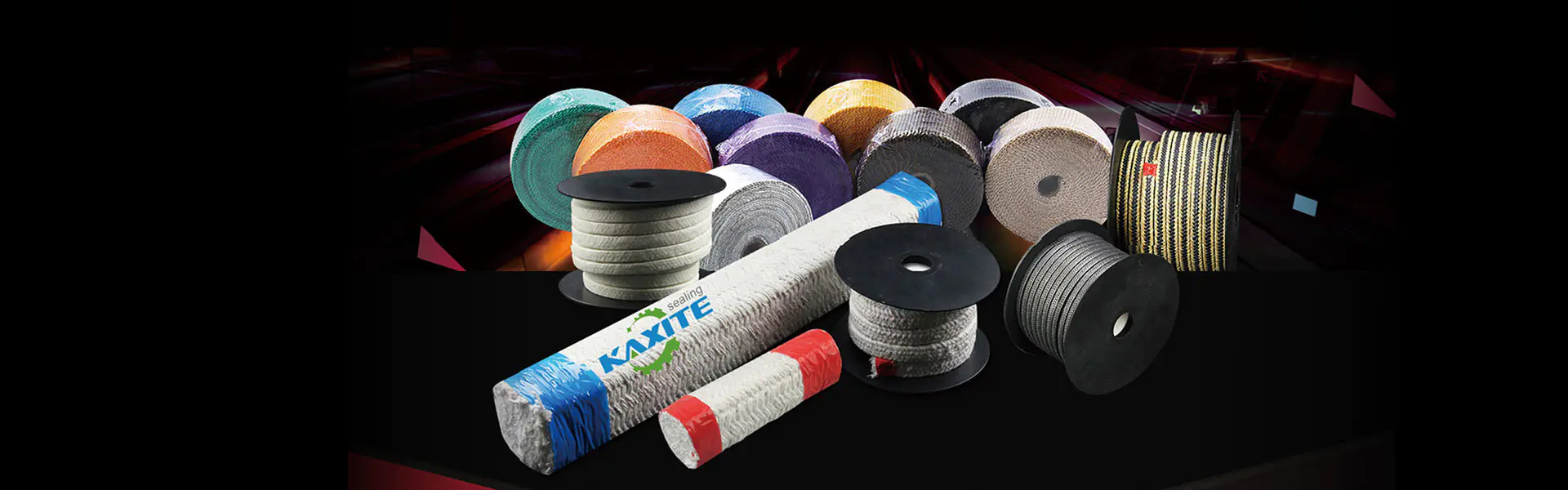
The quest for reliable, durable, and precisely manufactured sealing elements is a cornerstone of industrial operation. At the heart of producing high-quality braided packing for sealing applications lies a critical piece of equipment: the braiding machine. Machines for braiding packing are not just tools; they are engineered systems that directly influence the performance, consistency, and cost-effectiveness of the final sealing product. This detailed guide delves into the technical world of packing braiders, exploring their operation, key parameters, and how partnering with a technology leader like Kaxite Sealing can optimize your production line.
Packing braiding machines are specialized textile machinery designed to interlace multiple strands of yarn, often combined with metallic wires or other reinforcing materials, into a dense, cohesive, and typically square or rectangular cross-section braid. This process, known as maypole braiding, involves carriers moving in a serpentine pattern around a central forming point, weaving the strands over and under one another. The specific arrangement—the number of carriers, the take-up speed, and the braid angle—determines the packing's density, flexibility, and structural integrity. Modern machines integrate precise tension control systems, electronic monitoring, and programmable logic controllers (PLCs) to ensure repeatability and minimal material waste, which are essential for meeting the stringent demands of sealing applications in pumps, valves, and rotating equipment.
Selecting the optimal machines for braiding packing requires a deep understanding of your production needs and material specifications. Below is a breakdown of the essential parameters that define a machine's capability and output.
| Specification Category | Model KX-BP-24 | Model KX-BP-48 | Model KX-BP-96 | Model KX-BP-144 (Heavy Duty) |
|---|---|---|---|---|
| Number of Carriers | 24 | 48 | 96 | 144 |
| Braid Diameter Range | 3 mm - 12 mm | 6 mm - 25 mm | 10 mm - 50 mm | 20 mm - 80 mm |
| Max Take-up Speed | 40 m/min | 35 m/min | 25 m/min | 18 m/min |
| Braiding Angle Range | 30° - 50° | 30° - 50° | 30° - 50° | 30° - 50° |
| Yarn Package | Standard Cone | Standard Cone | Large Cheese/Cone | Heavy-Duty Bobbin |
| Control System | PLC with Basic HMI | PLC with Advanced HMI | PLC with Advanced HMI & Data Logging | PLC with Advanced HMI, Data Logging, & Remote Monitoring |
| Main Motor Power | 2.2 kW | 3.7 kW | 5.5 kW | 11 kW |
| Typical Application | Light-duty pump packing, general industrial seals | General industrial packing, mid-range valve stems | High-pressure pump packing, chemical service, steam applications | Extreme service: large valve stems, marine stern tubes, heavy industrial |
Kaxite Sealing has established itself as a premier provider not only of superior sealing products but also of the advanced manufacturing technology behind them. Our range of machines for braiding packing embodies our commitment to precision, durability, and innovation. We understand that the machine is the first step in the quality chain. Therefore, Kaxite Sealing machines are designed with robustness, user-friendly operation, and minimal maintenance downtime in mind. From the rigid, vibration-resistant frame to the precision-machined horn gears and the intuitive KX-Control software suite, every component is selected and assembled to deliver consistent, high-output production of packing that meets global standards. Our technical support team works closely with clients to specify the perfect machine model—be it a versatile 48-carrier unit or a powerhouse 144-carrier system—ensuring it integrates seamlessly into your operation and is capable of working with diverse materials from graphite-impregnated yarns to aramid fibers and Inconel wires.
Q: What is the main advantage of a higher carrier count on a braiding machine?
A: A higher carrier count allows for a greater number of yarns to be interlaced into the braid structure. This results in a denser, more compact final product with superior sealing capabilities, higher mechanical strength, and better resistance to extrusion under pressure. It is essential for manufacturing packing intended for severe service conditions, such as high-pressure steam valves or aggressive chemical applications.
Q: How important is tension control during the braiding process?
A> Tension control is paramount. Inconsistent tension across the various yarns leads to a flawed braid characterized by uneven density, poor shape consistency, and potential weak spots. Modern machines from Kaxite Sealing incorporate individual or zone tension monitoring and feedback systems. This ensures every strand contributes equally to the braid's structure, guaranteeing uniform quality, optimal material usage, and a packing that performs reliably in the field.
Q: Can one machine braid different types of materials, like combining PTFE yarn with copper wire?
A: Yes, most industrial-grade packing braiders are designed to handle multiple material types simultaneously. This is crucial for producing composite packing, where different materials provide complementary properties (e.g., lubricity from PTFE and thermal conductivity/strength from metal wires). The machine must have the appropriate carrier tension settings and guides to accommodate materials with differing diameters, lubricities, and tensile strengths without breakage or excessive wear.
Q: What are the key maintenance routines for a packing braiding machine to ensure longevity?
A: Regular preventive maintenance is critical. Key routines include daily cleaning of fiber dust and debris to prevent part wear; weekly lubrication of all moving parts like horn gears, carriers, and guide rails as per the manufacturer's schedule; monthly inspection and calibration of tension devices and sensors; and biannual checks for gear wear, bearing play, and alignment of the machine bed. Following Kaxite Sealing's detailed maintenance protocol significantly extends machine life and prevents unplanned production stoppages.
Q: How does the braiding angle affect the performance of the finished packing?
A: The braiding angle is a critical design parameter. A lower braiding angle (e.g., closer to 30 degrees) produces a tighter, denser, and less flexible braid with higher axial tensile strength. A higher angle (e.g., closer to 50 degrees) creates a more flexible and resilient braid that can conform better to irregular sealing surfaces but may have slightly lower density. The optimal angle is chosen based on the application's need for flexibility versus extrusion resistance and strength.
Q: Why should I consider a machine with a PLC and HMI system over a traditional mechanical machine?
A: A Programmable Logic Controller (PLC) and Human-Machine Interface (HMI) system transform the braiding process. It allows for the storage of precise "recipes" for different products, ensuring absolute consistency between batches. It enables real-time monitoring of speed, tension, and length, alerting operators to deviations. It simplifies changeovers, reduces setup errors, and provides valuable production data for efficiency analysis. This level of automation, a standard in Kaxite Sealing machines, is essential for modern, quality-focused manufacturing.
Q: What support does Kaxite Sealing offer after the purchase of a braiding machine?
A: Kaxite Sealing believes in a long-term partnership. Our comprehensive after-sales support includes detailed installation supervision and commissioning, thorough on-site operator and maintenance technician training, a readily available inventory of genuine spare parts, and access to remote technical assistance. Our engineers can often diagnose and help resolve issues via connected systems, ensuring your production remains up and running with minimal disruption.