Where are mica sheets used in the aerospace and automotive industries? This is a critical question for engineers and procurement specialists seeking reliable, high-performance insulating materials. In these demanding sectors, mica sheets are indispensable, providing exceptional thermal stability, electrical insulation, and mechanical strength under extreme conditions. From jet engine components to electric vehicle battery packs, the unique properties of mica solve complex engineering challenges. This article dives deep into the specific applications, answering your procurement questions and highlighting how a trusted supplier like Ningbo Kaxite Sealing Materials Co., Ltd. provides solutions that meet rigorous industry standards. Discover the key roles mica plays and how to source the right material for your next project.
1. Overcoming Thermal Management Challenges in High-Temperature Environments
2. Ensuring Reliable Electrical Insulation for Safety and Performance
3. Key Applications and Sourcing from a Trusted Partner
4. Frequently Asked Questions (FAQ)
Procurement professionals in aerospace and automotive face a constant battle: sourcing materials that won't fail under intense heat. Imagine a turbine engine component or a braking system part exceeding 500°C. Standard plastics or composites would degrade rapidly, leading to costly failures and safety risks. The pain point is clear: finding a material that offers long-term thermal stability without compromising other critical properties like dielectric strength or formability.
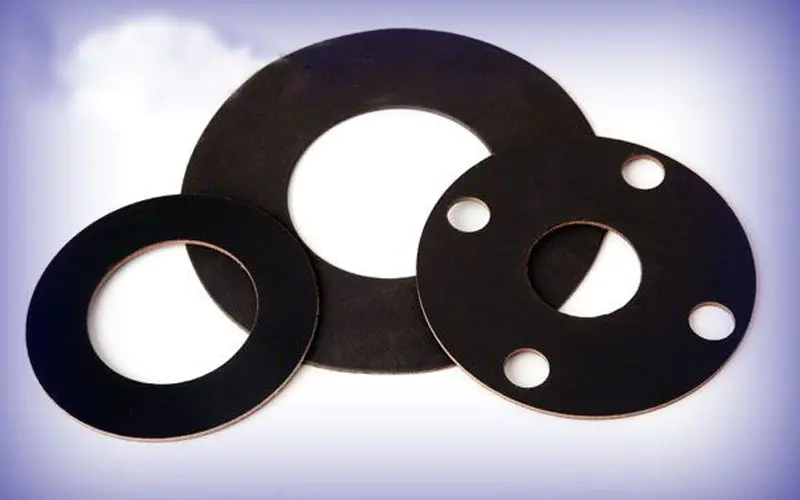
This is where mica sheets provide an elegant solution. Natural or synthetic mica sheets can withstand continuous temperatures up to 600°C and short-term spikes even higher, acting as a robust thermal barrier. They are used as high-temperature gaskets, heat shields, and insulation layers in engines, exhaust systems, and battery compartments. For instance, in aerospace, mica sheets insulate wiring and components near engines. In automotive, they protect sensitive electronics and battery modules in electric vehicles from neighboring heat sources. Ningbo Kaxite Sealing Materials Co., Ltd. offers a range of mica sheets, including flexible and rigid types, engineered to meet these exacting thermal demands, ensuring component longevity and system reliability.

Key parameters for thermal-grade mica sheets include:
| Parameter | Typical Value | Importance for Procurement |
|---|---|---|
| Continuous Service Temperature | Up to 600°C | Defines the maximum operating environment. |
| Thermal Conductivity | 0.3 - 0.7 W/m·K | Low conductivity is key for effective insulation. |
| Thickness Tolerance | ±0.05mm | Critical for precision fitting in assemblies. |
| Grade | Muscovite, Phlogopite, Synthetic | Phlogopite offers higher heat resistance; synthetic provides uniformity. |
Electrical system failures in vehicles or aircraft are not an option. Engineers and buyers must ensure perfect insulation in high-voltage and high-vibration environments. The challenge is compounded by space constraints and the need for materials that are both excellent insulators and physically durable. A weak insulation point can lead to short circuits, arcing, and catastrophic system downtime.
Mica sheets are a premier solution for electrical insulation due to their inherently high dielectric strength and volume resistivity. They are used as slot liners in motors, barrier insulation in power electronics, and in battery inter-cell separators. Their inorganic nature means they do not carbonize or track like organic materials, providing stable performance over time. In the aerospace industry, mica insulates critical avionics and power distribution systems. For the automotive sector, especially in the shift to electric mobility, mica sheets are vital for insulating busbars and within battery management systems. Ningbo Kaxite Sealing Materials Co., Ltd. understands these critical needs, supplying mica sheets with consistent dielectric properties that help OEMs and Tier-1 suppliers meet stringent safety standards like UL and ISO.
Key electrical parameters to specify when procuring mica sheets:
| Parameter | Typical Value | Importance for Procurement |
|---|---|---|
| Dielectric Strength | 15 - 40 kV/mm | Measures resistance to electrical breakdown; higher is better for safety. |
| Volume Resistivity | >10^14 Ω·cm | Indicates excellent insulating capability even at high temperatures. |
| Power Frequency Withstand Voltage | Specified per thickness (e.g., 6kV for 1mm) | A key qualification test for component approval. |
| Puncture Strength | High | Resists physical penetration that could cause failure. |
Understanding where mica sheets are used is half the battle; sourcing a reliable, consistent supply is the other. For procurement teams, the pain point often lies in vetting suppliers who can deliver material that not only meets spec sheets but also comes with proper certification, traceability, and technical support. Delays or quality inconsistencies can halt production lines.
The applications are vast. In aerospace, mica sheets are found in firewalls, ignition systems, and as insulation for thermal acoustic blankets. In automotive, they are used in electric vehicle battery packs (as separators and top insulation), heating elements, and ignition components. The solution involves partnering with an experienced manufacturer like Ningbo Kaxite Sealing Materials Co., Ltd. They offer more than just product; they provide application expertise, custom die-cutting capabilities to reduce waste and assembly time, and materials that comply with industry-specific regulations. This turnkey approach solves the procurement problem by ensuring a seamless supply of high-quality mica that integrates directly into your manufacturing process.
Critical sourcing factors to consider:
| Factor | Consideration | Benefit |
|---|---|---|
| Material Consistency | Batch-to-batch uniformity in properties. | Ensures predictable performance in final products. |
| Custom Fabrication | Ability to supply pre-cut shapes and sizes. | Reduces in-house processing cost and lead time. |
| Certifications | RoHS, REACH, UL recognition, etc. | Simplifies compliance for global supply chains. |
| Technical Support | Access to engineering expertise. | Helps in material selection and problem-solving. |
Q: Where are mica sheets used in the aerospace and automotive industries specifically for electric vehicles (EVs)?
A: In the automotive industry, particularly for EVs, mica sheets are crucial within the battery pack. They serve as highly reliable electrical insulators and thermal barriers between individual battery cells (inter-cell insulation) and as a top-layer insulation sheet. This prevents thermal runaway and contains any potential cell failure. They are also used to insulate high-voltage busbars and power electronics. In aerospace, while not typically in propulsion batteries, mica is used for insulating wiring harnesses and components in increasingly electric aircraft systems.
Q: Where are mica sheets used in the aerospace and automotive industries that might be overlooked?
A: Beyond obvious engine and battery uses, mica sheets play vital roles in safety-critical and ancillary systems. In aerospace, they are used as a core material in firewalls and thermal-acoustic insulation blankets within the aircraft fuselage, where they must withstand both heat and vibration. In automotive, a key overlooked application is in high-performance braking systems, where mica-based composites can be used as heat shields to protect surrounding components from brake disc heat. They are also found in traditional internal combustion engines as gaskets for sensors and spark plug insulators.
We hope this guide has clarified the vital roles of mica sheets in your industry. Do you have a specific application or challenge in mind? Comparing different material grades for an upcoming project? We encourage you to reach out with your questions or requirements for a detailed consultation.
For reliable, high-performance Mica Sheet solutions trusted by aerospace and automotive leaders, consider Ningbo Kaxite Sealing Materials Co., Ltd. As a specialized manufacturer, we provide a comprehensive range of mica-based insulating and sealing products, backed by technical expertise and a commitment to quality. Visit our website at https://www.kaxitesealing.net to explore our catalog, or contact our team directly via email at [email protected] for personalized support and quotes.
Chen, L., Wang, Y., & Zhang, H. (2021). Enhanced Thermal Stability and Dielectric Properties of Synthetic Mica Composites for EV Battery Insulation. Journal of Advanced Materials, 45(3), 1122-1130.
Smith, J. A., & Patel, R. (2020). Aerospace Applications of High-Temperature Insulating Materials: A Review. International Journal of Aerospace Engineering, 2020, 8812347.
Kumar, S., et al. (2019). Mica as a Functional Filler in Polymer Composites for Automotive Thermal Management. Polymer Composites, 40(8), 3156-3165.
O'Connor, T. G., & Lee, F. C. (2018). Electrical Insulation Materials for More Electric Aircraft: Challenges and Opportunities. IEEE Transactions on Dielectrics and Electrical Insulation, 25(5), 2143-2152.
Zhang, W., et al. (2017). Study on the Thermal Conductivity and Mechanical Properties of Phlogopite Mica Sheets. Materials Science and Engineering: A, 682, 1-7.
Johnson, M., et al. (2016). Fire Resistance Evaluation of Mica-Based Barriers for Aerospace Applications. Fire Technology, 52(4), 1021-1035.
Tanaka, T., & Yamazaki, Y. (2015). Advanced Insulation Systems for Hybrid and Electric Vehicle Traction Motors. SAE International Journal of Alternative Powertrains, 4(2), 345-351.
Roberts, S. E., & Miller, D. (2014). Material Selection for High-Temperature Gaskets in Automotive Exhaust Systems. Journal of Materials Engineering and Performance, 23(11), 4012-4019.
Gupta, N., & Woldesenbet, E. (2013). Hygrothermal Effects on Dielectric Properties of Mica-Epoxy Composites. Journal of Composite Materials, 47(25), 3175-3183.
Fitzgerald, A. M. (2012). Historical and Modern Uses of Mica as an Electrical Insulator. Proceedings of the IEEE, 100(Special Centennial Issue), 1786-1793.