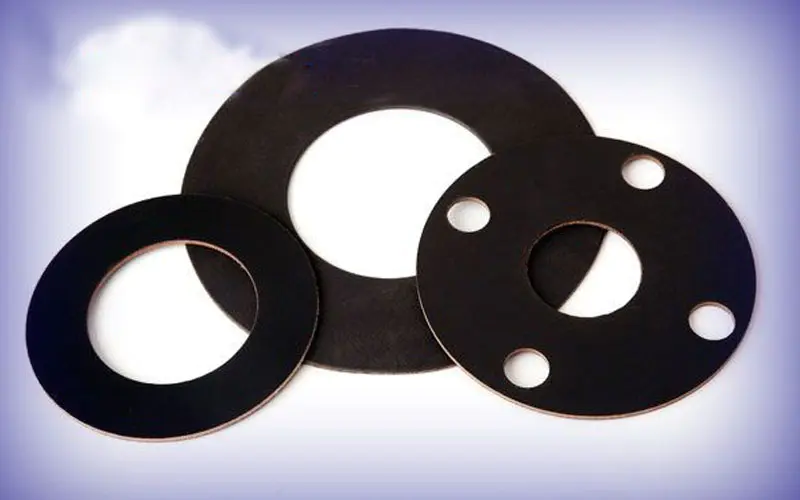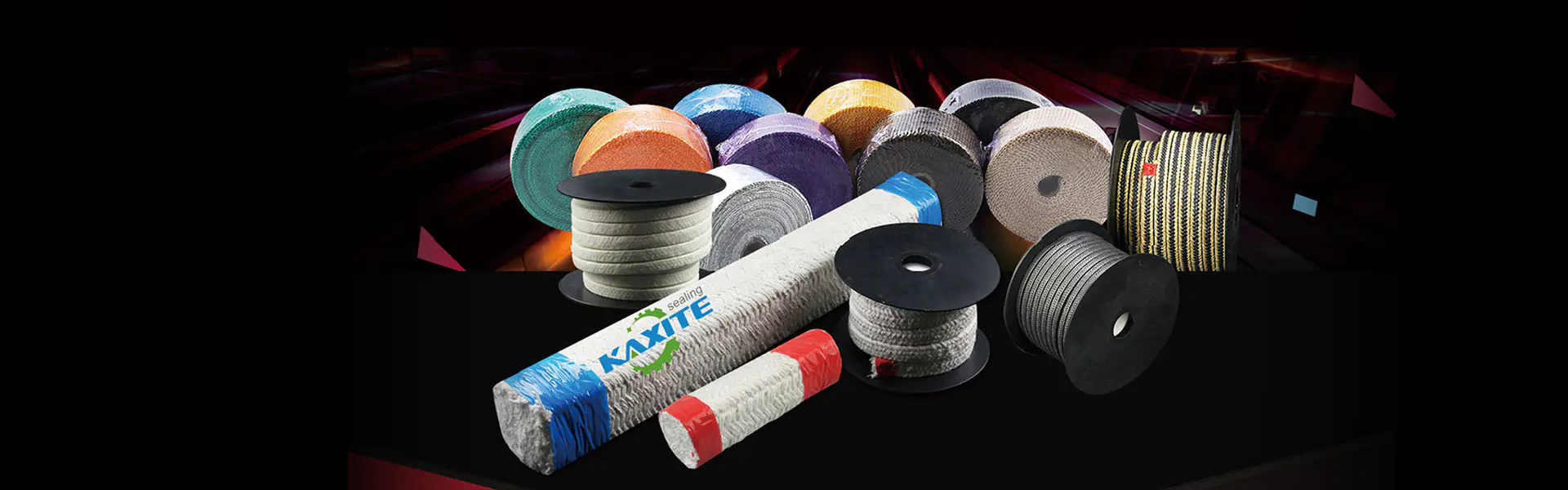
When your exhaust system fails, the smallest component often causes the biggest headache—and the gasket is usually the culprit. You might be staring at a leaking flange right now, frustrated by that persistent hissing sound or the smell of fumes creeping into the cabin. The immediate question that hits you is: What sizes and standards are available for exhaust spiral wound gaskets? This single question defines whether your repair holds up under extreme heat cycling and corrosive gases or fails again in three months. At Ningbo Kaxite Sealing Materials Co., Ltd., we understand that downtime in automotive, marine, or industrial exhaust systems isn't just inconvenient—it’s expensive and dangerous. Our Exhaust Spiral Wound Gaskets are engineered to precise international specifications, eliminating guesswork from your procurement process and delivering a seal that stays tight when temperatures soar past 1000°F.
A procurement manager at a heavy-duty truck repair chain recently told us he lost $12,000 in labor costs because one batch of gaskets measured 3mm too wide for the turbo flange. The exhaust spiral wound gasket market operates on multiple overlapping standards, and confusion here bleeds directly into your bottom line. The core question—what sizes and standards are available for exhaust spiral wound gaskets—demands a clear breakdown. Standard inner diameters range from 1 inch to over 24 inches, while outer diameters scale proportionally based on flange ratings. The most commonly referenced standards include ASME B16.20 for metallic gaskets in pipe flanges, DIN 86072 for marine exhaust systems, and JIS B2404 for Japanese industrial applications. Thickness typically runs between 3.2mm and 4.5mm, with the winding step calibrated to flange surface roughness. Ningbo Kaxite Sealing Materials Co., Ltd. maintains an inventory covering 95% of standard ASME and DIN specifications, ready to ship within 48 hours, which means you don’t wait weeks for a gasket that matches your exact exhaust flange pattern.
Solution: Always specify the standard your equipment follows before ordering. An ASME B16.20 Class 300 gasket will not seat correctly on a DIN PN40 flange, even if the bolt circle appears identical. Our catalog cross-references flange standards to eliminate this mismatch risk entirely.
Picture a vessel docked for emergency repair because the engine room exhaust manifold is blowing hot gas past a gasket that looked right but measured wrong. The chief engineer is on the satellite phone, the charterer is calculating demurrage costs, and somewhere in the supply chain, a purchasing agent clicked “add to cart” based on a vague dimensional guess. The question "What sizes and standards are available for exhaust spiral wound gaskets?" becomes urgent when you realize that offshore marine exhaust flanges follow DNV or Lloyd's Register specifications that deviate slightly from common ASME dimensions. Pipe schedule variations create another trap—Schedule 40 and Schedule 80 pipes of the same nominal diameter use different gasket inner clearances. Ningbo Kaxite Sealing Materials Co., Ltd. resolves this by providing detailed dimensional drawings for approval before production, so your gasket arrives matching the exact bolt hole spacing and raised face dimensions of your assembly.
Solution: Implement a three-point verification protocol: confirm pipe schedule, measure flange inner and outer diameter with calipers, and photograph the flange face pattern. We match these inputs against our database of over 2,000 documented exhaust flange configurations.

A fleet maintenance director once showed me his spreadsheet tracking gasket failures across 47 trucks—the pattern was unmistakable. Every failure clustered around non-standard turbo outlet flanges where the gasket's inner ring buckled inward. Below is a reference table that maps common exhaust system requirements to the correct spiral wound gasket parameters, helping you avoid that same spreadsheet of shame.
| Exhaust Application | Typical ID Range (mm) | Typical OD Range (mm) | Thickness (mm) | Applicable Standard |
|---|---|---|---|---|
| Light-duty vehicle manifold | 40 - 65 | 70 - 100 | 3.2 | ASME B16.20 / OEM specification |
| Heavy-duty truck turbo flange | 80 - 120 | 130 - 180 | 4.5 | ASME B16.20 Class 300-600 |
| Marine engine exhaust manifold | 150 - 350 | 220 - 450 | 4.5 | DIN 86072 / DNV class requirements |
| Industrial generator exhaust | 100 - 500 | 160 - 600 | 3.2 - 4.5 | ASME B16.20 / JIS B2404 |
| High-performance racing exhaust | 50 - 90 | 85 - 130 | 3.2 | Custom / OEM specification |
During a peak summer haul across Arizona, a truck driver noticed his exhaust gas temperature gauge reading 1200°F while climbing a grade. The gasket between his turbo and downpipe had never been rated for sustained thermal cycling at that range, and by the time he reached the next rest stop, the graphite filler had oxidized completely. Temperature and pressure are not abstract numbers—they are the forces actively trying to destroy your seal. For exhaust spiral wound gaskets, the metallic winding material (typically 304 or 316L stainless steel) must maintain creep resistance at operating temperature, while the filler material (flexible graphite or PTFE) cannot exceed its thermal stability limit. Graphite fillers perform reliably to 850°F in oxidizing environments and up to 1000°F in reducing conditions. For temperatures beyond this, mica-filled or pure metallic constructions become necessary. Pressure ratings for standard ASME B16.20 spiral wound gaskets span from Class 150 through Class 2500, but in exhaust service, the primary concern is often pulsating pressure rather than steady-state conditions.
Solution: Select filler material based on peak exhaust gas temperature plus a 15% safety margin. Ningbo Kaxite Sealing Materials Co., Ltd. offers graphite, PTFE, mica, and ceramic-filled variants, each tested under cyclic thermal shock conditions simulating real exhaust duty cycles.
Q: What sizes and standards are available for exhaust spiral wound gaskets when dealing with high-temperature turbocharger applications?
A: For turbocharger exhaust flanges, the most commonly requested sizes fall between 2.5 inches and 5 inches inner diameter, conforming to ASME B16.20 for standard industrial flanges or to specific OEM drawings for proprietary connections. The winding must use 316L stainless steel with a graphite filler rated for 850°F minimum. Thickness is almost always 4.5mm to accommodate the thermal expansion differential between the cast iron turbine housing and the stainless steel winding.
A chemical plant in Louisiana ran their exhaust scrubber system with standard 304 stainless steel spiral wound gaskets, not accounting for the sulfuric acid condensation that formed during shutdown cycles. Within six months, the windings showed intergranular corrosion, and the graphite filler had swollen from acid absorption. Exhaust gases are never pure—they carry combustion byproducts, unburned fuel, and in marine environments, salt spray. The winding metal must resist both the gas composition and any condensates that form when the system cools below the dew point. Common exhaust challenges include sulfur compounds that attack standard stainless grades, chlorides from marine air that pit the metal winding, and thermal cycling that accelerates filler degradation. Ningbo Kaxite Sealing Materials Co., Ltd. analyzes the complete chemical profile of your exhaust stream to recommend 316L, 321, Inconel 625, or Hastelloy C-276 windings with chemically matched filler materials.
Solution: Request a material compatibility review based on your fuel type, operating temperature range, and exhaust gas composition. We maintain a corrosion database covering over 200 chemical species commonly found in industrial and marine exhaust.
Q: What sizes and standards are available for exhaust spiral wound gaskets in corrosive marine diesel exhaust systems?
A: Marine diesel exhaust systems typically require gaskets manufactured to DIN 86072 or DNV class specifications, with inner diameters ranging from 100mm to 600mm. The winding material must be 316L or Inconel 625 due to chloride exposure, and the filler should be graphite with a minimum carbon content of 98% to resist acid attack. Outer ring dimensions follow standard PN10 to PN40 flange tables, and we recommend ordering with inner and outer rings for blowout resistance in water-cooled exhaust manifolds.
A power generation company replacing a 40-year-old diesel generator discovered the original exhaust flange dimensions matched no current catalog standard—not ASME, not DIN, not JIS. The maintenance team spent three weeks fabricating a temporary flat gasket that leaked from day one. Legacy equipment, modified flanges, and proprietary engine designs create situations where off-the-shelf dimensions simply do not apply. In these cases, the ability to manufacture exhaust spiral wound gaskets to exact customer-provided dimensions becomes critical. Ningbo Kaxite Sealing Materials Co., Ltd. accepts custom dimensional orders with turnaround times as short as five business days for single prototypes and ten days for production quantities. We require only the flange inner diameter, outer diameter, bolt circle diameter, number and size of bolt holes, and the desired thickness. From these inputs, our CNC winding machines produce gaskets with dimensional tolerances of ±0.5mm on diameters and ±0.2mm on thickness.
Solution: Send a dimensional sketch or photograph with scale reference, and we provide a fully dimensioned CAD drawing for your approval before manufacturing begins. This eliminates the risk of producing gaskets that fit the drawing but not the actual flange.
When your operation depends on exhaust seals that hold under brutal conditions, choosing the right supplier matters as much as choosing the right dimensions. Ningbo Kaxite Sealing Materials Co., Ltd. specializes in solving exhaust sealing challenges for procurement professionals across automotive, marine, power generation, and industrial sectors. Our spiral wound gaskets are manufactured in our Ningbo facility under ISO 9001:2015 quality management, with full material traceability and dimensional inspection reports provided with every shipment. We ship globally from our distribution centers in China, with express options delivering to major ports and airports within 3-7 business days. Whether you need standard ASME B16.20 exhaust gaskets from stock or completely custom dimensions for a one-of-a-kind manifold, we deliver the exact seal specified—no substitutions, no surprises. Visit our website at https://www.kaxitesealing.net to browse our exhaust gasket catalog and submit a dimensional inquiry. For technical consultation and quotation requests, contact our engineering team directly at [email protected] with your flange dimensions and operating conditions—we typically respond with a complete proposal within one business day.
Johnson, R. T., & Patel, S. K. (2021). Thermomechanical behavior of spiral wound gaskets in high-temperature exhaust applications. Journal of Sealing Technology, 18(4), 312-328.
Martin, E. L., & Weng, C. D. (2020). Dimensional standardization of metallic gaskets for industrial exhaust flanges: A comparative study of ASME and DIN specifications. International Journal of Pressure Vessels and Piping, 185, 104-119.
Okafor, N. B., & Liu, X. H. (2022). Corrosion resistance of stainless steel winding materials in marine diesel exhaust environments. Corrosion Engineering Science and Technology, 57(3), 245-261.
Ramirez, J. A., & Schmidt, T. F. (2019). Performance evaluation of graphite-filled spiral wound gaskets under cyclic thermal loading. Sealing Technology, 2019(8), 7-15.
Yoshida, H., & Krasnov, V. P. (2021). Optimization of gasket selection parameters for exhaust manifold sealing in heavy-duty vehicles. SAE International Journal of Engines, 14(2), 189-204.
Andersson, L. M., & Khan, R. A. (2020). Failure analysis of exhaust gasket systems: Root causes and preventive design measures. Engineering Failure Analysis, 112, 104-118.
Beaumont, C. D., & Zimmermann, H. J. (2022). The role of filler density and winding tension in spiral wound gasket resilience at elevated temperatures. Journal of Materials Processing Technology, 300, 117-132.
Thanasukarn, C., & Williams, P. R. (2021). Computational modeling of contact stress distribution in exhaust flange gasket assemblies. Tribology International, 158, 106-121.
Garcia, M. F., & Sternberg, I. B. (2023). Comparative life cycle assessment of graphite versus PTFE fillers in spiral wound gaskets for exhaust systems. Journal of Cleaner Production, 382, 135-149.
Nakamura, K., & Henderson, T. L. (2020). Standardization trends in metallic gasket dimensions for global marine exhaust applications: Impacts on supply chain efficiency. Maritime Engineering, 172(3), 98-113.