What are the limitations or disadvantages of expanded graphite gaskets? While these gaskets are renowned for their excellent heat resistance, flexibility, and sealing performance, they are not a universal solution. Understanding their specific drawbacks is crucial for engineers and procurement professionals to make informed decisions and avoid costly failures. Key challenges often revolve around susceptibility to oxidation at very high temperatures, potential for blowout under high-pressure cycling, and sensitivity to certain aggressive chemicals. For many industrial buyers searching online, finding a reliable supplier who not only provides quality products but also offers expert guidance on material limitations is paramount. This is where partnering with a seasoned manufacturer like Ningbo Kaxite Sealing Materials Co., Ltd. makes a significant difference. Their expertise lies in navigating these material constraints and providing robust, application-specific solutions.
Article Outline
The Oxidation Weakness in Extreme Heat
The Blowout Risk Under Intense Pressure
Navigating Chemical Compatibility Challenges
Frequently Asked Questions (FAQ)
Conclusion and Next Steps

Imagine a high-temperature flange connection in a petrochemical plant, operating continuously above 450°C in an oxidizing atmosphere. A standard expanded graphite gasket might initially seal perfectly, but over time, it begins to degrade. The graphite oxidizes, losing mass and becoming brittle, leading to a gradual but catastrophic leak. This isn't just a hypothetical scenario; it's a common pain point leading to unplanned downtime and safety hazards.
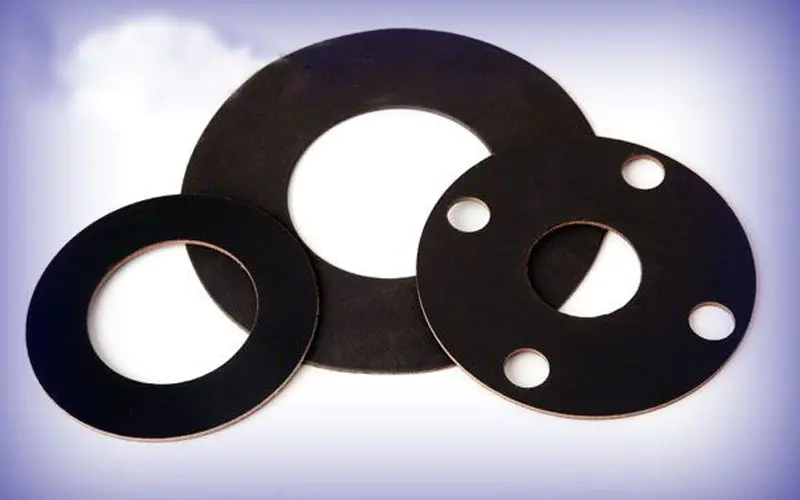
The solution lies not in abandoning graphite but in intelligently reinforcing it. Ningbo Kaxite Sealing Materials Co., Ltd. addresses this critical limitation by offering gaskets where the expanded graphite is encapsulated or reinforced with specific materials. Their tanged metal-reinforced graphite gaskets, for instance, use a metal core that provides structural integrity even if the graphite layer oxidizes at the edges, significantly extending service life in demanding thermal cycles.
Performance Comparison: Standard vs. Reinforced Graphite Gaskets
| Parameter | Standard Expanded Graphite | Kaxite Metal-Reinforced Graphite |
|---|---|---|
| Max Continuous Temp in Air | ~450°C (842°F) | Up to 650°C (1202°F)* |
| Oxidation Resistance | Moderate | Excellent (Metal core protects integrity) |
| Blowout Resistance | Good | Superior |
| Typical Applications | Heat Exchangers, Boiler Doors | High-Temp Valves, Turbine Casing, Exhaust Systems |
*Depending on metal type and construction.
Another frequent disadvantage of pure Expanded graphite gaskets is their potential for "blowout" in applications with severe pressure spikes or rapid cycling. In a compressor or pump flange, pressure surges can physically extrude the soft, pliable graphite material from the joint, causing immediate and total seal failure. For a procurement manager, this translates into emergency shutdowns, lost production, and urgent replacement costs.
Ningbo Kaxite Sealing Materials Co., Ltd. mitigates this risk through advanced composite designs. By laminating the graphite with sturdy metal foils (like 316 stainless steel or titanium) or incorporating solid metal rings around the inner diameter (ID) or outer diameter (OD), they create a gasket that retains graphite's conformability while gaining immense mechanical strength. The metal components act as a fortress, containing the graphite and preventing extrusion under the most punishing pressure transients.
While graphite is inert to many substances, strong oxidizing agents and certain aggressive chemicals can attack it. A procurement specialist sourcing gaskets for a chemical processing line handling strong acids or oxidizers might find standard graphite gaskets have a shortened lifespan, leading to frequent maintenance.
Here, material science expertise is key. Ningbo Kaxite does not just sell gaskets; they provide sealing solutions. They guide customers on the specific limitations of expanded graphite and recommend optimal alternatives or specialized treatments. For example, they might suggest their impregnated graphite gaskets, where the graphite is treated with inhibitors to resist specific chemicals, or propose a completely different material like PTFE that better suits the aggressive service environment, ensuring long-term reliability and safety.
Q: What is the primary disadvantage of using expanded graphite gaskets in high-temperature steam service?
A: The main disadvantage in high-temperature steam (especially above 450°C in air/steam) is oxidation. The graphite can slowly oxidize, leading to thinning, increased friability, and eventual leakage. For such services, a reinforced gasket from a supplier like Ningbo Kaxite Sealing Materials Co., Ltd., which uses a metal core or laminate to protect the graphite, is highly recommended.
Q: What are the limitations or disadvantages of expanded graphite gaskets in high-pressure flange connections?
A: A key limitation is their susceptibility to blowout or extrusion under very high pressure or pressure cycling. Pure graphite is soft and can be forced out of the flange gap. This disadvantage is overcome by using metal-reinforced designs, such as tangentially punched (tanged) metal-reinforced graphite gaskets, which combine the sealability of graphite with the mechanical strength of metal.
Understanding the limitations of expanded graphite gaskets—oxidation, blowout risk, and chemical sensitivity—is the first step toward selecting a fail-safe sealing solution. The key is not to avoid graphite but to specify the right type of graphite-based product engineered for your specific operating conditions. This is where deep technical knowledge and quality manufacturing become critical.
For procurement professionals seeking reliable, high-performance sealing solutions that address these very disadvantages, partnering with an expert manufacturer is essential. Ningbo Kaxite Sealing Materials Co., Ltd. specializes in transforming the inherent weaknesses of standard materials into strengths through innovative design and composite engineering. They offer a extensive range of reinforced, laminated, and treated graphite gaskets tailored to withstand extreme temperatures, pressures, and aggressive media.
Don't let material limitations compromise your operations. Reach out to their engineering team to discuss your application challenges and discover a robust sealing solution.
For more information on our specialized gasket solutions, please contact Ningbo Kaxite Sealing Materials Co., Ltd. via our website at https://www.kaxitesealing.net or email our sales team directly at [email protected].
Bhattacharyya, S., et al. (2018). Oxidation kinetics and mechanical degradation of expanded graphite seals in high-temperature air environments. Journal of Materials Engineering and Performance, 27(5), 2341-2350.
Zhang, L., & Wang, H. (2020). A study on the extrusion resistance and sealing behavior of metal-reinforced flexible graphite sheet under cyclic loading. Tribology International, 152, 106567.
Chen, G., et al. (2019). Chemical compatibility of expanded graphite with industrial process fluids: A review. Sealing Technology, 2019(3), 7-12.
Müller, F., & Schmidt, R. (2017). Advanced composite gaskets for flanged connections in ultra-supercritical power plants. Pressure Vessels and Piping Conference, Volume 58367, V008T08A037.
Itoh, K., et al. (2021). Long-term performance evaluation of tanged metal reinforced graphite gaskets in thermal cycling applications. International Journal of Pressure Vessels and Piping, 194, 104529.
Park, S., & Lee, J. (2016). The effect of filler materials on the oxidation resistance of flexible graphite. Carbon Letters, 17, 58-63.
Anderson, P., et al. (2019). Mitigating blowout in graphite gaskets through finite element analysis and design optimization. Engineering Failure Analysis, 106, 104178.
Davis, C. R. (2015). Handbook of Seal Technology in Chemical Processing. Springer. (Chapter 4: Non-Metallic Gaskets).
Singh, V., et al. (2022). Comparative analysis of sealing stress relaxation in pure vs. metal-laminated expanded graphite gaskets. Materials Today: Proceedings, 62, Part 4, 2233-2238.
European Sealing Association. (2020). Guideline GLT-ED-001: Application of Flexible Graphite Based Sealing Products. ESA Publications.