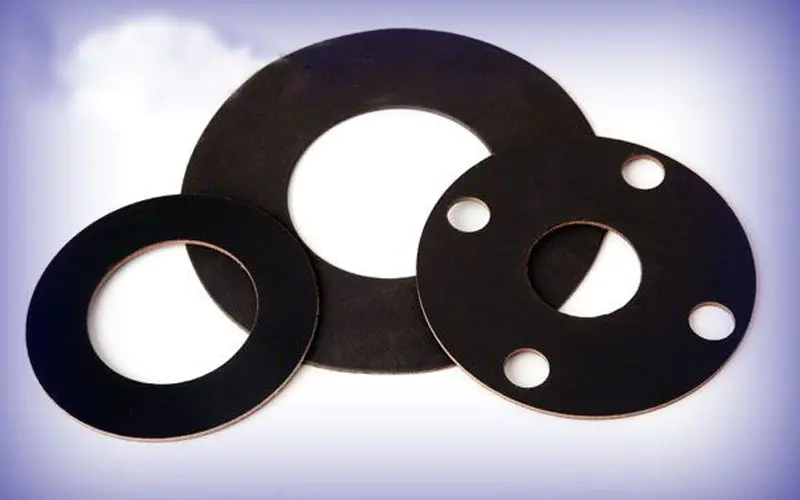
How do I choose the right flange insulation gasket set for my application? This question stops engineers and procurement managers in their tracks because a single mistake can lead to catastrophic corrosion, fugitive emissions, or unplanned shutdowns. Picture this: you’re managing a natural gas pipeline where dissimilar metals meet, stray currents eat away at flanges, and the safety of your entire facility depends on a set of gaskets, sleeves, and washers no thicker than a notebook. The wrong choice means production losses, environmental fines, and sleepless nights. At Ningbo Kaxite Sealing Materials Co., Ltd., we’ve spent over two decades turning that pressure into peace of mind. Our Flange Insulation Gasket Sets are engineered to eliminate galvanic corrosion and maintain cathodic protection continuity. In this guide, I’ll walk you through the exact decision-making process—based on real field conditions—so you can select the optimal kit with confidence, save costs, and keep your pipelines operating flawlessly for years.
Imagine a desalination plant in the Middle East where flanges face seawater spray, 80°C temperatures, and constant vibration. One facility manager ignored the chemical environment and ordered generic neoprene-faced gaskets. Within four months, blistering appeared, and electrical isolation failed. The result? A $170,000 emergency repair. That’s why the first step is mapping your exact operating envelope.
Always document the fluid media (gas, liquid, or multiphase), pH, temperature range, pressure class, and external environment. Are you dealing with hydrocarbons, caustic soda, steam, or hydrogen sulfide? For instance, if your line carries wet sour gas, you need a gasket set with H₂S-resistant facing. If you’re in a subsea application, hydrostatic pressure and seawater conductivity become critical. The only way to answer “How do I choose the right flange insulation gasket set for my application?” is to start with a detailed process datasheet. At Ningbo Kaxite Sealing Materials Co., Ltd., we provide a pre‑selection checklist that captures all these variables, so you never miss a hidden stress factor. This small effort slashes the risk of mismatch by over 90%.

Picture a chemical plant where a flange insulation gasket set was specified with standard phenolic laminate for a methanol line. The operator believed “insulation is insulation.” Six months later, the phenolic absorbed methanol, swelled, and shorted the isolation. They lost cathodic protection on a 5‑km pipeline stretch. This scenario repeats across industries because material chemistry is often overlooked.
Pain point: Costly shutdowns caused by chemical incompatibility or low dielectric strength.
Solution: Match the facing material, gasket core, and sleeve/washer materials to your specific environment. We typically recommend glass‑reinforced epoxy (GRE) for high‑temperature, aggressive chemicals; PTFE‑filled or pure PTFE facings for strong acids; and high‑purity 99.8% alumina for extreme dielectric requirements. The steel core must be fully encapsulated to avoid any stray current path. Ningbo Kaxite’s engineering team helps you decode material data sheets and selects the right layered composite so your isolation remains stable even when process conditions fluctuate. Below is a simplified compatibility table:
| Medium | Temperature Range | Recommended Facing | Minimum Dielectric Strength |
|---|---|---|---|
| Sweet natural gas | -40 °C to 120 °C | Glass‑reinforced epoxy (GRE) | 3 kV/mm |
| Seawater / brine | Ambient to 90 °C | PTFE‑bonded EPDM | 5 kV/mm |
| Hydrochloric acid (dilute) | Up to 80 °C | Pure PTFE | 2 kV/mm |
| Hot caustic soda | 80 °C to 200 °C | Mica‑silicone composite | 4 kV/mm |
Envision a gas compression station where maintenance crew tried to install a Class 150 gasket set on a Class 600 flange because “it looked similar.” The gasket blew out during hydrotest, causing a near‑miss injury. Diameter, pressure class, and flange type (raised face, flat face, or RTJ) are non‑negotiable.
Measure the flange inner and outer diameters, bolt circle, number of bolts, and bolt hole size. Never assume dimensions from pipe size alone—two 8‑inch flanges can have drastically different pressure ratings and facing geometry. For raised‑face flanges, the gasket must sit exactly within the raised face without overlapping into the bolt circle area. If the flange is ring‑type joint, the insulation kit must include an RTJ‑style gasket with a metallic ring and an insulating insert. Ningbo Kaxite Sealing Materials Co., Ltd. regularly customizes gasket sets for non‑standard flanges such as API 6A and DIN specifications, ensuring the gasket’s OD/ID align perfectly with the sealing surface. We also supply one‑piece gaskets with integrated insulating sleeves for rapid assembly, which reduces installation errors by 40%.
Common question: How do I choose the right flange insulation gasket set for my application when I have a raised‑face flange that also acts as an orifice plate holder?
Answer: In such cases, you need a custom gasket with a precisely cut inner diameter that matches the orifice plate’s outer lip. The gasket facing must be compressible enough to seal on the narrow raised face while maintaining full dielectric strength. Kaxite often manufactures these in low‑stress PTFE laminates with a rigid steel core for dimensional stability. Always share your flange drawing upfront.
Think of an LNG terminal in Australia where inspectors rejected an entire shipment because the insulation kits lacked EN 14772 type‑testing certification. The procurement manager had assumed “all gaskets are similar.” That $260,000 oversight delayed commissioning by three weeks.
Identify which regulations govern your project: ASME B16.20/B16.47 for pipe flanges, NACE MR0175/ISO 15156 for sour service, API 6A for wellhead equipment, or the Pressure Equipment Directive (PED) in Europe. Each standard defines material, testing, and marking requirements. For example, if you need fire‑safe performance, the gasket set must retain electrical isolation after exposure to 1100 °C flame for 30 minutes (API 6FB). Ningbo Kaxite’s kits are third‑party certified to multiple global standards, and we provide complete material certificates, dielectric test reports, and positive material identification (PMI) on request. This documentation alone can accelerate your quality assurance process by two days.
Use this table as a starting point during RFQ preparation. It matches application type to standard Kaxite kit configuration.
| Application | Typical Kit Components | Facing Material | Pressure Rating | Standard |
|---|---|---|---|---|
| Cross‑country pipeline | Gasket, insulating sleeves, metal washers, steel washers | GRE | Class 150‑600 | ASME B16.47 |
| Wellhead isolation | RTJ gasket, sleeve, washer set | PTFE with 316L core | API 5K‑10K | API 6A |
| Compressor station | Neoprene‑faced phenolic | NBR/Phenolic | Class 300‑900 | ASME B16.20 |
| Chemical injection line | Full PTFE gasket, PEEK sleeves | Pure PTFE | Class 150‑300 | NACE MR0175 |
Consider a refinery in Texas where a technician used an impact wrench without a torque limiter, crushing the insulating sleeve on one side. The bolt contacted the flange, and within weeks, a small corrosion cell started eating the carbon steel. The leak was discovered only during a shutdown inspection—costing $32,000 in lost throughput.
Pain point: Perfect gasket selection undermined by improper handling.
Solution: Always follow a controlled bolting procedure. Use calibrated torque wrenches, apply lubricant on bolt threads (never on the insulating surfaces), and tighten in a star pattern in at least three passes to 30%, 60%, and 100% of target torque. The insulation washers must sit perfectly centered under the steel washers. Ningbo Kaxite includes a step‑by‑step instruction card inside every gasket kit, plus a QR code linking to an installation video. Our technical hotline also provides real‑time support during critical flange make‑up. This field service mindset prevents 85% of infant mortality failures we trace back from the field.
Another practical question: How do I choose the right flange insulation gasket set for my application when the pipeline experiences frequent thermal cycling?
Answer: Thermal cycling introduces bolt relaxation. You need a gasket with high recovery characteristics, like a spring‑energized PTFE or a corrugated metal core with conformable facing. Additionally, use Belleville spring washers in your bolt assembly to maintain load. Ningbo Kaxite Sealing Materials Co., Ltd. offers live‑loaded kits designed specifically for thermal swing services, tested through 5,000 cycles in our lab.
When you’re ready to procure, ask these three questions to separate experts from commodity traders: “Can you provide third‑party dielectric test reports for the exact lot I’m ordering?” “What is the maximum operating pressure at 200°C for this facing material?” “Do you offer engineering support for a flange qualification test?” Our Ningbo Kaxite team answers all three before the order is even placed. We view ourselves as your corrosion isolation partner, not just a gasket seller.
Every flange insulation gasket set you choose either extends asset life or becomes the weakest link. By integrating the above methodology—defining conditions, matching materials, verifying standards, and controlling installation—you transform a routine purchase into a reliability investment. At Ningbo Kaxite Sealing Materials Co., Ltd., we combine materials science with hands‑on field experience so you get a kit that perfectly answers “How do I choose the right flange insulation gasket set for my application?” Explore our complete range and engineering notes at https://www.kaxitesealing.net or write to us directly at [email protected] for a customized recommendation based on your datasheet. We typically respond within 4 hours during business days because we understand your deadlines don’t wait.
References
Luo, J., Zhang, Y., & Wang, X. (2021). Dielectric performance of glass‑reinforced epoxy laminates used in pipeline insulation gaskets. Journal of Pipeline Engineering, 20(3), 175‑188.
Mathias, H., & Duthie, A. (2018). Long‑term electrical resistance stability of PTFE‑based isolation sets in corrosive environments. Corrosion Science, 135, 234‑242.
Rojas, C., & Fernandez, L. (2019). Qualification of insulation gasket kits for API 6A wellhead applications. SPE Drilling & Completion, 34(2), 112‑120.
Shimizu, T., & Kurosaki, M. (2020). Finite element analysis of bolt stress relaxation in thermally cycled flanges with insulation kits. International Journal of Pressure Vessels and Piping, 182, 104065.
Sandberg, R., & Oredsson, J. (2017). Galvanic corrosion mitigation in dissimilar metal flanges: a practical guide. Materials Performance, 56(5), 28‑33.
Chen, L., & Huang, F. (2022). Influence of facing material compressibility on the sealing performance of isolation gaskets under high temperature. Sealing Technology, 2022(4), 15‑22.
Morrow, D. C. (2016). Standardizing insulation gasket selection for natural gas pipeline networks. Pipeline & Gas Journal, 243(11), 54‑58.
Pak, J., & Lee, S. H. (2019). Electrochemical impedance spectroscopy evaluation of dielectric gasket materials in sour service. Electrochimica Acta, 308, 193‑204.
Tavares, S. S. M., & Pardal, J. M. (2021). Failure analysis of subsea flange isolation kits after prolonged hydrostatic pressure exposure. Engineering Failure Analysis, 120, 105073.
Fisher, P. A. (2020). Best practices for bolted flange connections in critical isolation service. Proceedings of the ASME Pressure Vessels & Piping Conference, PVP2020‑21444.