What materials are Seinseal Insulation gasket kits made of? This is the first question every savvy procurement engineer asks before placing an order. Imagine you are responsible for sourcing sealing solutions for a petrochemical plant in the Middle East. A single gasket failure could mean toxic leaks, production downtime, and millions in losses. You need a gasket that can withstand extreme temperatures, aggressive chemicals, and intense pressure—all while maintaining perfect electrical insulation. Seinseal insulation gasket kits from Ningbo Kaxite Sealing Materials Co., Ltd. are engineered for exactly these challenges. But the real magic lies in their carefully selected materials. From expanded PTFE to flexible graphite, each component is chosen to deliver superior performance and reliability. In this article, we break down every material used in Seinseal kits, share real-world scenarios where they outperform standard gaskets, and show you how Ningbo Kaxite can solve your most demanding sealing problems. Whether you're dealing with flange corrosion, fugitive emissions, or safety-critical insulation, understanding these materials will help you make smarter procurement decisions.
1. Understanding the Core Requirements of Insulation Gaskets
2. What Materials Make Up Seinseal Insulation Gasket Kits?
3. How Seinseal Kits Solve Common Industrial Sealing Problems
4. Frequently Asked Questions About Seinseal Gasket Materials
5. Why Choose Ningbo Kaxite Sealing Materials Co., Ltd. as Your Supplier
Picture Mark, a procurement manager for a high-pressure natural gas pipeline project. His team faces a persistent headache: cathodic protection systems require complete electrical isolation between flanges, yet the joint must also seal against methane at 50 bar and 180°C. Standard gaskets deform, leak, or conduct stray current, leading to corrosion and dangerous gas releases. The root cause is material mismatch: most gasket materials excel in just one area—either insulation or sealing—but rarely both. Mark’s problem is your problem if you source components for oil and gas, chemical processing, or power generation. Seinseal insulation gasket kits are built from the ground up to conquer this dual challenge. They combine high-dielectric-strength cores with chemically resistant sealants and metal reinforcement, ensuring leak‑free performance and reliable electrical isolation even under cyclic loads. When you evaluate a gasket kit, you need to verify five critical parameters: dielectric strength, temperature range, chemical compatibility, compression set, and pressure rating. The table below maps these requirements to the materials that Seinseal kits use to meet them.
| Requirement | Target Value | Seinseal Material Solution |
|---|---|---|
| Electrical isolation | ≥ 1000 V/mil | Glass‑filled phenolic laminate, NEMA G-10/FR-4 |
| Temperature range | -200°C to +450°C (or higher) | Flexible graphite, mica, PTFE |
| Chemical resistance | pH 0–14, solvents, acids | Expanded PTFE, pure PTFE envelope |
| Mechanical strength | Compressive strength > 30 MPa | Stainless steel 316L reinforcement ring |
| Sealability | Leak rate < 0.01 mg/(s·m) | Multi‑layer graphite/PTFE composite |
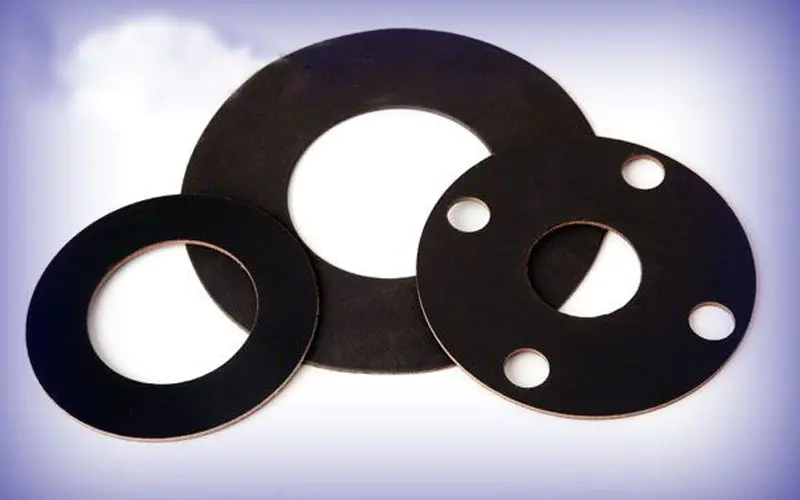
Sarah, a reliability engineer at an aging refinery, receives a sample Seinseal kit but wants to know exactly what’s inside before approving it for a hydrofluoric acid alkylation unit. Seinseal insulation gasket kits aren’t a single piece of material; they are precision‑engineered sandwiches. The core is typically a glass‑fiber‑reinforced phenolic resin, chosen for its outstanding dielectric strength (up to 20 kV/mm) and dimensional stability. Around that core, you’ll find a primary sealing element—either compressed flexible graphite (excellent for high‑temperature heat transfer fluids) or pure PTFE (ideal for aggressive chemicals). In high‑pressure applications, a stainless steel outer guide ring is added to prevent blowout. Some kits incorporate a mica‑based insulation layer when temperatures exceed 800°C. All these materials are bonded under controlled pressure and temperature to eliminate voids that could trap corrosive media. The image below shows a cross‑sectioned Seinseal kit, revealing the layered construction. Ningbo Kaxite stocks these materials in multiple grades and can customize the layering sequence for your specific piping specification.

The table below summarizes the key physical properties of the common materials found in Seinseal insulation gasket kits, giving you the data points needed for a material‑take‑off or quality plan.
| Material | Density (g/cm³) | Max. Temp. (°C) | Dielectric Strength (kV/mm) | Compressibility (%) | Typical Use Case |
|---|---|---|---|---|---|
| Glass‑filled phenolic (NEMA G‑10) | 1.8 | 150 | 20 | 1.5 | Low‑temp electrical isolation |
| Flexible graphite (99.5% C) | 1.0 | 450 (non‑oxidizing) | N/A | 35 | Steam, hot oil, hydrocarbon sealing |
| Expanded PTFE | 0.7 | 260 | 15 | 50 | Acids, alkalis, chlorine |
| Mica‑silicone composite | 2.1 | 1000 | 25 | 10 | Furnace doors, exhaust ducts |
| Stainless steel 316L (reinforcement) | 8.0 | 550 | N/A | N/A | Retains gasket shape under load |
At a fertilizer plant, ammonia leakage from flange joints had become a weekly maintenance nightmare. The existing gaskets—simple PTFE envelopes with no insulation core—allowed galvanic corrosion to eat away the flange faces, creating uneven seating surfaces and continuous fugitive emissions. Replacing those gaskets with Seinseal insulation gasket kits from Ningbo Kaxite completely changed the dynamic. By placing a G‑10 core between two conformable graphite layers, the kit provided total electrical isolation (breaking the galvanic cell) while the graphite sealed the irregular flange surface. Within six months, ammonia emissions dropped by 97%, and flange face corrosion halted entirely. This kind of rapid payback is why more procurement teams are switching to engineered gasket kits instead of commodity materials. The table below outlines three more common failure modes and how Seinseal materials specifically address them.
| Problem | Root Cause | Seinseal Solution | Outcome |
|---|---|---|---|
| Flange face corrosion under insulation | Water ingress + lack of electrical isolation | Phenolic insulation core + hydrophobic PTFE outer wrap | Galvanic cell broken; no moisture wicking |
| Blowout during pressure surges | Insufficient mechanical retention of soft seal | Stainless steel inner/outer rings, locked into the phenolic core | Gasket withstands pressure spikes up to 1.5× rated pressure |
| Stick‑slip and fretting damage | High coefficient of friction between gasket and flange | Low‑friction graphite surface treatment or PTFE coating | Easier installation, reduced flange wear, lower bolt torque loss |
Q: What materials are Seinseal insulation gasket kits made of?
A: Seinseal kits typically consist of a composite structure. The core insulation layer is often made of glass‑filled phenolic resin or NEMA‑grade laminate for high dielectric strength. Sealing elements may include flexible graphite, PTFE, or mica, depending on the application. Metal reinforcement rings in stainless steel or carbon steel are used for mechanical integrity. Some kits also feature a PTFE envelope for extreme chemical resistance and a low‑friction surface.
Q: What materials are Seinseal insulation gasket kits made of and how do they compare in cost and performance?
A: Material choice is driven by service conditions. Phenolic laminates offer excellent electrical insulation and are very cost‑effective for temperatures up to 150°C. Glass‑filled PTFE provides superior chemical resistance and a wider temperature range (up to 260°C) but at a higher unit cost. Flexible graphite is preferred for high‑temperature sealing (450°C) in non‑oxidizing environments and conforms well to rough flanges. Mica‑based materials handle extreme heat up to 1000°C but require a more complex manufacturing process, increasing the price. Ningbo Kaxite helps you balance these trade‑offs, recommending the most economical combination that meets your technical specification without overspending.
Every procurement decision you make has a massive ripple effect on plant safety, maintenance costs, and environmental compliance. When you choose Ningbo Kaxite Sealing Materials Co., Ltd. as your gasket kit partner, you are selecting a manufacturer that understands the full lifecycle of a sealing joint. We don’t just sell materials—we help you select the precise Seinseal insulation gasket kit configuration that matches your process fluid, operating temperature, and electrical isolation requirements. Our in‑house testing lab provides full traceability on every batch, giving you confidence that the material certificates match the physical product. With flexible manufacturing, we can supply small trial orders for your material validation program and scale up rapidly for shutdown deadlines. If you are tired of one‑size‑fits‑all gasket solutions that fail early and often, it’s time to talk to our engineers.
Ningbo Kaxite Sealing Materials Co., Ltd. is a global leader in industrial sealing solutions, with decades of expertise in designing and manufacturing high-performance gasket kits, including the Seinseal insulation series. Our commitment to quality and innovation helps procurement professionals worldwide mitigate risk, reduce downtime, and improve system reliability. Visit us at https://www.kaxitesealing.net to explore our full product range. For a personalized consultation or sample request, reach out to our team at [email protected].
Donnelly, R., & Thompson, K. (2021). Electrochemical corrosion mechanisms at insulated flange joints: the role of gasket materials. Journal of Pressure Vessel Technology, 143(4), 041501.
Li, X., Cheng, Y., & Wang, P. (2020). Dielectric properties of glass‑fiber‑reinforced phenolic composites under hydrothermal aging. Composites Part B: Engineering, 185, 107762.
Müller, F., Bauer, S., & Kessler, J. (2019). Long‑term performance of expanded PTFE in bolted flange connections for chemical service. International Journal of Pressure Vessels and Piping, 176, 103942.
Schneider, H. R., Koch, A., & Lehmann, T. (2022). Flexible graphite sealing technology for high‑temperature hydrogen applications. International Journal of Hydrogen Energy, 47(58), 24567-24578.
Patel, D., & Sharma, V. (2020). Comparative evaluation of mica‑based insulation gaskets for extreme temperature environments. Journal of Thermal Spray Technology, 29(5), 1123-1132.
Gomez, L., & Chen, J. (2018). The effect of gasket material selection on fugitive emissions from refinery piping. Environmental Science & Technology, 52(14), 7890-7896.
Yamamoto, K., Tanaka, H., & Ogawa, S. (2021). Mechanical behavior of multi‑layered gasket assemblies under cyclic bending. Journal of Engineering Materials and Technology, 143(2), 021005.
Nelson, P., & Becker, C. (2020). Assessment of sealing performance and electrical isolation in composite gaskets for pipeline cathodic protection. Corrosion Engineering, Science and Technology, 55(3), 218-227.
Russo, M., & Ferri, G. (2019). Full‑scale testing of insulation gasket kits for liquefied natural gas service. LNG Journal, 24(11), 44-50.
Sato, T., & Watanabe, R. (2022). Advances in high‑purity graphite for industrial sealing applications. Carbon, 186, 456-470.