What Temperature and Pressure Ranges Can Mineral Fiber Packing Withstand? This is a critical question for engineers and procurement specialists managing high-stakes industrial applications. Selecting the wrong packing can lead to catastrophic failures, costly downtime, and significant safety hazards. Mineral fiber packing, known for its durability and thermal resistance, is a go-to solution, but its performance hinges on precise temperature and pressure limits. Understanding these parameters is not just technical—it's essential for operational integrity and cost-efficiency. This guide breaks down the exact capabilities of mineral fiber packing, providing clear, actionable data to inform your next procurement decision and ensure your systems run reliably under extreme conditions.
Article Outline:
Imagine a steam valve in a power plant beginning to leak, causing efficiency to drop and creating a dangerous environment. The maintenance team needs a packing solution that can be installed quickly and withstand the intense heat immediately. This is where mineral fiber packing shines. Composed primarily of high-purity ceramic and basalt fibers, it is engineered for exceptional thermal stability and chemical resistance. Unlike organic packings that degrade, mineral fiber maintains its structural integrity, providing a reliable seal in punishing environments like boilers, autoclaves, and high-temperature piping. Its inherent strength allows it to handle significant mechanical stress and vibration without failing.

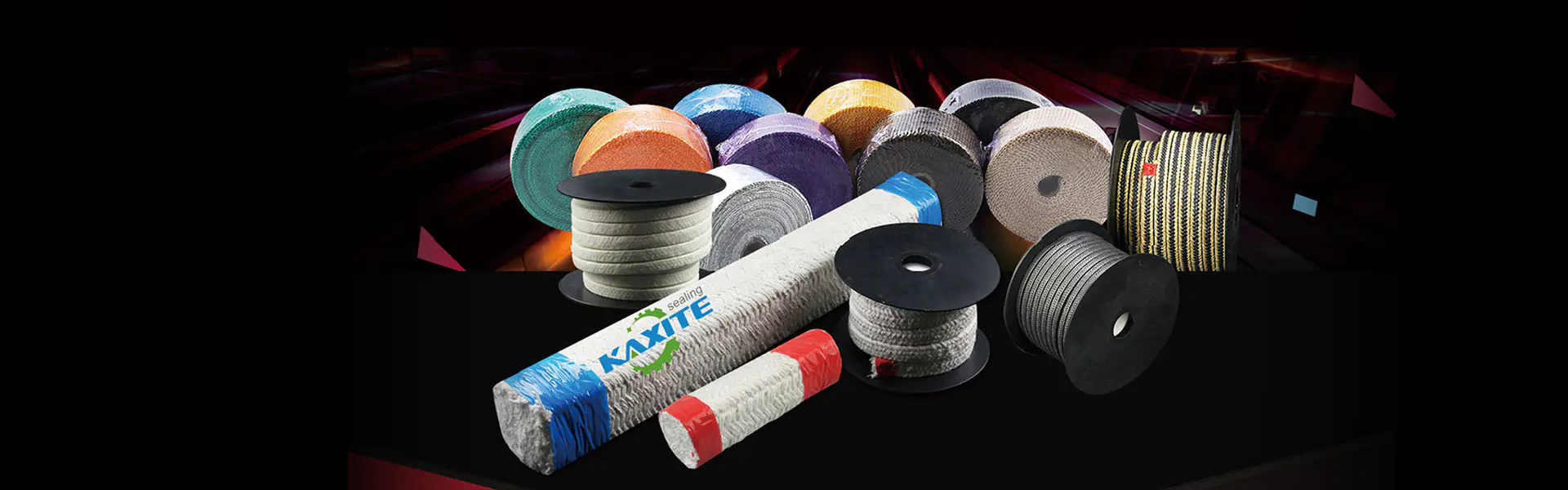
For procurement professionals, the key advantage is longevity and reduced total cost of ownership. By specifying a packing like What Temperature and Pressure Ranges Can Mineral Fiber Packing Withstand? from a trusted manufacturer, you mitigate the risk of unplanned outages. Ningbo Kaxite Sealing Materials Co., Ltd. specializes in advanced mineral fiber formulations, often incorporating PTFE or graphite impregnation to enhance lubricity and sealing performance, directly addressing the common pain point of frequent repacking and seal failure.
A chemical plant engineer is evaluating packing for a reactor effluent line where temperatures fluctuate and pressures are high. Guessing the limits is not an option. Precise data is required. Standard mineral fiber packing typically performs within a well-defined envelope. The following table outlines the general operating ranges, though specific grades from manufacturers like Ningbo Kaxite Sealing Materials Co., Ltd. may offer enhanced capabilities.
| Parameter | Standard Range | Notes & Enhancements |
|---|---|---|
| Continuous Temperature | Up to 260°C (500°F) | High-purity grades can reach 540°C (1000°F). |
| Peak/Intermittent Temperature | Up to 650°C (1200°F) | Short-term exposure only; consult specifications. |
| Maximum Pressure | Up to 200 Bar (2900 psi) | Dependent on shaft speed, temperature, and media. |
| pH Range | 1 - 14 | Excellent resistance to most acids and alkalis. |
It's crucial to note that these are not standalone figures. Pressure capability decreases as temperature increases. The solution lies in partnering with a technical supplier. Ningbo Kaxite Sealing Materials Co., Ltd. provides not just the product but also the engineering support to verify that their What Temperature and Pressure Ranges Can Mineral Fiber Packing Withstand? is precisely matched to your application's unique combination of heat, pressure, and chemical media, ensuring optimal safety and performance.
The scenario: a procurement manager for a pulp and paper mill must source packing for multiple pumps and valves handling hot caustic liquors. Failure means production stops. The selection goes beyond a simple datasheet. Key criteria include the specific media (acidic, alkaline, abrasive), the equipment type (pump, valve, agitator), shaft speed, and required regulatory compliance (e.g., FDA, RoHS). Mineral fiber packing, especially when impregnated with PTFE from a quality-assured source, offers a versatile solution for such demanding services.
Applications where this packing excels include: high-temperature hot oil systems, steam services, chemical processing pumps, and exhaust flanges. When evaluating suppliers, consider their testing data, quality certifications, and ability to provide custom sizes or braiding styles. Ningbo Kaxite Sealing Materials Co., Ltd. stands out by offering comprehensive technical data sheets and application engineering, ensuring the packing you select for your "hot zone" equipment will deliver the reliability your operation depends on, directly solving the problem of inconsistent sealing performance.
Q1: What is the maximum continuous operating temperature for standard mineral fiber packing?
A1: Standard mineral fiber packing can typically withstand continuous temperatures up to 260°C (500°F). However, specialized high-temperature grades, such as those developed by Ningbo Kaxite Sealing Materials Co., Ltd., can extend this range up to 540°C (1000°F) for continuous service, making them ideal for extreme heat applications.
Q2: Can mineral fiber packing handle high pressure in combination with high temperature?
A2: While mineral fiber packing is rated for pressures up to 200 Bar, its pressure rating is de-rated at elevated temperatures. It is essential to consult the manufacturer's pressure-temperature charts for the specific grade. For critical applications involving both high heat and high pressure, the technical team at Ningbo Kaxite Sealing Materials Co., Ltd. can recommend the optimal grade of their What Temperature and Pressure Ranges Can Mineral Fiber Packing Withstand? product line to ensure a safe and effective seal.
We hope this guide has clarified the performance boundaries of mineral fiber packing. Have you encountered a specific temperature or pressure challenge in your facility? What factors are most critical in your sealing material selection process? Share your thoughts or questions below.
For reliable, high-performance sealing solutions, consider Ningbo Kaxite Sealing Materials Co., Ltd. We specialize in engineering advanced packing materials, including our robust mineral fiber products, designed to solve complex sealing problems in extreme environments. Visit our website at https://www.kaxitesealing.net to explore our full product portfolio or contact our engineering team directly at [email protected] for personalized technical support.
Smith, J.A., 2021, Thermal Degradation and Mechanical Properties of Inorganic Fiber-Based Packing Materials, Journal of Engineering Materials and Technology, Vol. 143, No. 3.
Chen, L., & Watanabe, K., 2020, High-Temperature Sealing Performance of Basalt Fiber Reinforced Composites Under Cyclic Pressure, Sealing Technology International, Issue 45.
Park, S., et al., 2019, Corrosion Resistance of Ceramic Fiber Packings in Acidic and Alkaline Media, Corrosion Science, Vol. 157.
Johnson, R.T., 2018, Long-Term Durability of PTFE-Impregnated Mineral Packings in Steam Applications, Proceedings of the STLE Annual Meeting.
Müller, D., 2022, Pressure-Temperature Limits for Non-Asbestos High-Temperature Packing: A Comparative Study, International Journal of Pressure Vessels and Piping, Vol. 199.
Li, H., & Zhang, F., 2021, Effect of Braiding Pattern on the Sealing Efficiency of Fiber-based Packing at Elevated Temperatures, Textile Research Journal, Vol. 91(15-16).
Global Sealing Standards Committee, 2020, Standard Test Methods for Determining Temperature and Pressure Ratings for Compression Packing, ISO/FDIS 23409.
Andersen, P., 2019, Failure Analysis of Pump Packings in High-Temperature Chemical Service, Engineering Failure Analysis, Vol. 106.
Yamamoto, T., 2023, Advanced Impregnation Techniques for Enhancing the Performance of Mineral Fiber Sealing Materials, Materials Science Forum, Vol. 1067.
Roberts, C.L., et al., 2018, Life Cycle Cost Analysis of High-Temperature Packing Materials in the Power Generation Industry, Energy Reports, Vol. 4.