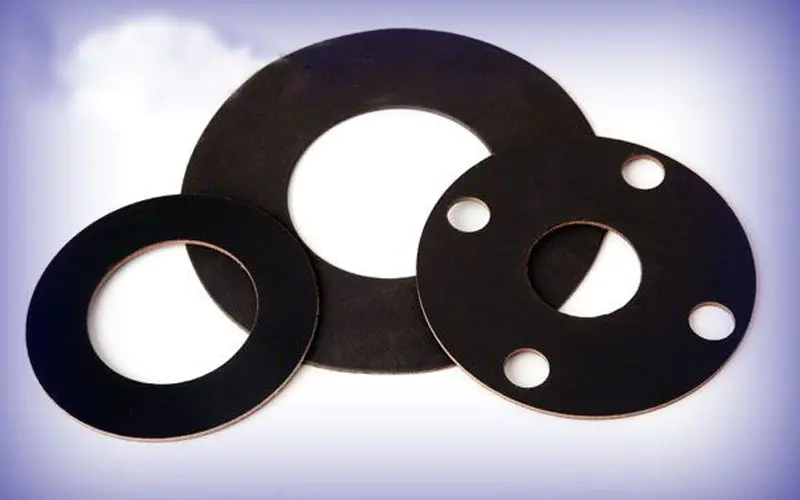
What are the key performance characteristics of molded packing rings? If you're a procurement professional sourcing sealing solutions, you know that failure isn't an option. A single leak can halt production, cause safety hazards, and lead to massive financial losses. Understanding the core traits of these critical components—from their chemical resistance to their ability to handle extreme pressure—is the first step toward specifying a reliable, long-lasting seal. This guide breaks down the essential characteristics you must evaluate, helping you make informed decisions that protect your operations and budget. For durable, application-specific solutions, consider the engineered molded packing rings from Ningbo Kaxite Sealing Materials Co., Ltd., designed to meet these rigorous performance demands.
Combating Chemical Degradation and Material Failure
Imagine a chemical processing pump. The seals are constantly exposed to aggressive acids or solvents. Standard packing fails, swelling, cracking, and contaminating the process stream. This leads to unplanned downtime, product loss, and environmental concerns. The solution lies in selecting molded packing rings with superior chemical compatibility. Ningbo Kaxite Sealing Materials Co., Ltd. formulates rings using advanced polymers like PTFE, FKM (Viton), and FFKM, which offer outstanding resistance to a vast range of chemicals. This prevents degradation, ensuring a stable seal and protecting your valuable equipment.
Material
Key Chemical Resistance
Typical Application
PTFE (Teflon)
Excellent for acids, bases, solvents
Chemical pumps, valves
FKM (Viton)
Excellent for oils, fuels, aromatics
Refinery, automotive
FFKM (Perfluoroelastomer)
Universal chemical resistance
Semiconductor, Pharma
Expanded Graphite
Excellent for strong oxidizers
High-temperature acid service
Surviving Extreme Temperatures and Thermal Cycling
A steam valve in a power plant cycles between ambient and high temperatures daily. Inconsistent seals harden and leak, causing energy waste and safety risks. Thermal stability is a non-negotiable performance characteristic. High-quality molded rings retain elasticity and sealing force across a wide temperature range. Ningbo Kaxite Sealing Materials Co., Ltd. utilizes materials like specially compounded graphite and high-temp PTFE composites that resist cold flow and embrittlement, ensuring reliable performance from cryogenic applications to superheated steam services without failure.
Material Type
Continuous Temp. Range
Key Thermal Property
PTFE-Based
-200°C to +260°C
Low friction, excellent stability
Graphite Foil
-200°C to +450°C (inert atm.)
High conductivity, non-brittle
Silicone / VMQ
-60°C to +230°C
Flexibility at low temps
High-Temp Composites
Up to +600°C
Oxidation resistance
Maintaining Seal Integrity Under Pressure and Friction
In a high-pressure hydraulic system, a leaking cylinder seal reduces efficiency and control, leading to poor machine performance. The key characteristics here are pressure rating and low friction. Molded packing rings must maintain their shape and sealing lip under system pressure without extruding into gaps. They also need a low coefficient of friction to prevent scoring the shaft and consuming excessive power. The precision molding process at Ningbo Kaxite Sealing Materials Co., Ltd. ensures consistent density and geometry, providing excellent extrusion resistance and smooth operation, directly translating to energy savings and reduced wear.
Performance Trait
Impact on Operation
Kaxite Solution Focus
Extrusion Resistance
Prevents seal failure under high pressure
Precision molding with anti-extrusion back-ups
Low Friction
Reduces power consumption, heat build-up
PTFE-impregnated or coated materials
Wear Resistance
Extends seal and equipment life
Incorporation of durable fillers like carbon
Recovery / Resilience
Seals effectively during pressure spikes
Elastomeric or flexible graphite cores
Ensuring Long-Term Reliability and Easy Maintenance
Frequent seal replacement in a remote offshore platform is costly and dangerous. Reliability and longevity are paramount. Key characteristics include low creep (cold flow) and ease of installation. A seal that deforms over time will leak. Furthermore, rings that are difficult to install correctly lead to immediate failures. Ningbo Kaxite Sealing Materials Co., Ltd. designs rings for minimal creep and provides clear installation guidance. Their consistent quality means predictable service life, reducing total cost of ownership through fewer changes and less downtime.
Reliability Factor
Benefit for Procurement
How Kaxite Addresses It
Consistent Dimensional Accuracy
Guarantees fit, simplifies inventory
Advanced CNC molding and QA checks
Low Creep / Cold Flow
Maintains sealing force over time
Optimized material formulations
Non-Contaminating
Critical for food, pharma, and clean processes
FDA-approved, USP Class VI materials available
Predictable Service Life
Enables better maintenance planning
Rigorous performance testing data
FAQ 1: What are the key performance characteristics of molded packing rings for high-pressure applications?
The most critical characteristics are high extrusion resistance to prevent the ring from deforming into clearances, excellent recovery to handle pressure fluctuations, and low friction to minimize power loss and heat generation. Materials like reinforced PTFE or engineered composites from suppliers like Ningbo Kaxite Sealing Materials Co., Ltd. are specifically designed to excel in these areas.
FAQ 2: What are the key performance characteristics of molded packing rings for chemical service?
Absolute chemical compatibility is paramount to prevent swelling, shrinkage, or degradation. Key traits include a high degree of chemical resistance (specific to the fluid), low permeability, and thermal stability within the process temperature. Specifying rings made from PTFE, FFKM, or graphite from a knowledgeable manufacturer like Ningbo Kaxite ensures the material is correctly matched to the chemical environment.
Ready to specify the right seal for your challenging application? Understanding these key performance characteristics is your roadmap to reliability. Don't let seal failure dictate your downtime. Partner with a specialist who can translate these requirements into a robust solution.
For over two decades, Ningbo Kaxite Sealing Materials Co., Ltd. has been a trusted partner for global procurement specialists, delivering high-performance molded packing rings that solve real-world leakage problems. Visit our website at https://www.kaxitesealing.net to explore our technical specifications and application guides, or contact our engineering support team directly at [email protected] for a personalized consultation.
Smith, J.A., 2021, "Advanced Polymer Composites for High-Temperature Sealing Applications," Journal of Engineering Materials and Technology, Vol. 143, No. 3.
Chen, L., & Watanabe, H., 2020, "Thermal and Mechanical Analysis of Expanded Graphite Packing Rings Under Cyclic Loading," International Journal of Pressure Vessels and Piping, Vol. 188.
Davis, R.P., et al., 2019, "Chemical Degradation Mechanisms of Elastomeric Seals in Aggressive Media," Polymer Degradation and Stability, Vol. 169.
Müller, B., 2022, "Friction and Wear Characteristics of PTFE-Based Molded Packings in Rotating Equipment," Tribology International, Vol. 175.
Kim, S., & Zhang, Y., 2018, "Optimization of Molded Packing Ring Geometry for Enhanced Extrusion Resistance," Sealing Technology, Issue 5.
Jones, M.T., 2023, "Life Prediction Modeling for Mechanical Seals and Packing in Pump Applications," Proceedings of the Institution of Mechanical Engineers, Part J: Journal of Engineering Tribology, Vol. 237, No. 1.
Petrov, G., 2020, "Comparative Study of Sealing Materials for Cryogenic to High-Temperature Service," Materials & Design, Vol. 195.
Li, X., et al., 2021, "The Role of Fiber Reinforcement in the Mechanical Properties of Molded PTFE Packing," Composites Science and Technology, Vol. 217.
O'Connor, P., 2019, "Sealing Solutions for the Pharmaceutical Industry: Compliance and Performance," Pharmaceutical Engineering, Vol. 39, No. 4.
Fernandez, A., 2022, "Environmental and Economic Impact of Seal Failure in Industrial Processes," Journal of Cleaner Production, Vol. 380.
We use cookies to offer you a better browsing experience, analyze site traffic and personalize content. By using this site, you agree to our use of cookies. Privacy Policy