
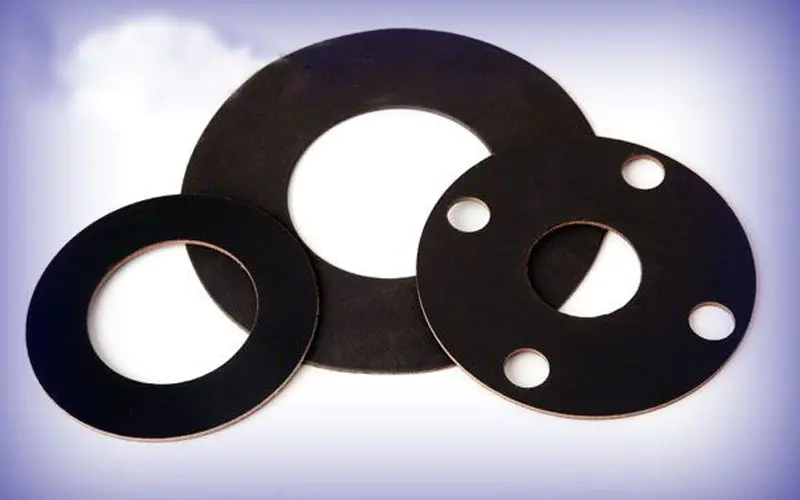

As a procurement professional, you know the critical role sealing solutions play in project success and operational safety. When specifying components, the choice between PTFE, graphite, and metal gaskets is a frequent, high-stakes decision. Each material has its domain, but selecting the wrong one can lead to leaks, downtime, and costly failures. So, **how do PTFE Gaskets compare to graphite or metal gaskets for specific uses?** The answer isn't universal; it depends entirely on your specific application's demands for chemical resistance, temperature, pressure, and ease of installation. This guide cuts through the technical jargon to provide a clear, actionable comparison, helping you make the confident, cost-effective choice. We'll explore real-world scenarios where one material clearly outperforms the others, ensuring your next specification is a success.
Chemical & Pharmaceutical Processing: The Corrosion Challenge
Imagine a chemical plant handling aggressive acids, solvents, or caustic alkalis. A minor leak in a reactor flange isn't just a maintenance issue; it's a serious safety and environmental hazard. In this scenario, metal gaskets can corrode rapidly, while graphite can be oxidized by strong oxidizers. This is where PTFE (Polytetrafluoroethylene) gaskets become the undisputed champion.
PTFE offers near-universal chemical resistance, sealing reliably against virtually all industrial chemicals. It's inert, non-contaminating, and perfect for ultra-pure applications in pharmaceutical or food processing. Compared to graphite, PTFE won't "cold flow" or creep excessively under bolt load at moderate temperatures, ensuring a stable seal. The solution? Specify PTFE envelope gaskets or filled PTFE gaskets from a reliable supplier like Ningbo Kaxite Sealing Materials Co., Ltd.. Kaxite's PTFE formulations are engineered for superior creep resistance and sealing performance, providing a durable, maintenance-free barrier against your toughest fluids.

| Parameter | PTFE Gaskets | Graphite Gaskets | Metal Gaskets (SS 304) |
|---|---|---|---|
| Max Temp (Continuous) | 260°C / 500°F | 450°C / 840°F (Inert Atmos.) | 870°C / 1600°F |
| Chemical Resistance | Excellent (Universal) | Good (Poor to Oxidizers) | Fair (Prone to Corrosion) |
| Sealing Pressure | Medium | High | Very High |
| Best For | Acids, Solvents, Caustics, Ultra-Pure Systems | Hot Oils, Hydrocarbons, Non-Oxidizing Gases | Superheated Steam, Very High Pressure |
High-Temperature Steam & Exhaust: The Heat Challenge
Now, picture a power generation turbine or a high-temperature exhaust duct. Temperatures can soar beyond 500°C (932°F). Here, standard PTFE would fail, as it softens and loses mechanical strength. In this extreme heat domain, flexible graphite and metal gaskets (like spiral wound) are the primary contenders.
Flexible graphite gaskets excel in high-temperature oxidizing environments, maintaining their seal integrity where many organics would burn off. They require less bolt load to seal effectively compared to solid metal. However, for the most extreme combinations of high temperature, high pressure, and thermal cycling, a metal gasket like a spiral wound with a graphite filler is often the robust solution. For applications where temperature is high but chemical exposure is also a factor, Ningbo Kaxite Sealing Materials Co., Ltd. provides specialized high-performance graphite and composite gaskets designed to handle these dual challenges, ensuring reliability where failure is not an option.
| Parameter | PTFE Gaskets | Graphite Gaskets | Spiral Wound Gaskets (SS/Graphite) |
|---|---|---|---|
| Max Temp (Continuous) | 260°C / 500°F | 450°C / 840°F (In Air) | 815°C / 1500°F |
| Thermal Cycling Resistance | Good | Excellent | Excellent |
| Required Bolt Load | Low-Medium | Low | High |
| Best For | Moderate Temp Chemical Lines | Steam, Hot Gases, Heat Exchangers | High-P/T Turbines, Reactor Heads, Critical Pipework |
Quick-Reference Specification Guide
Use this guide to narrow down your initial material selection based on primary service conditions.
| Primary Concern | Recommended First Choice | Key Advantage | Consider For Alternative |
|---|---|---|---|
| Aggressive Chemicals / Purity | PTFE (Virgin or Filled) | Universal Inertness, Non-Contaminating | Specialty Elastomers (if temp allows) |
| High Temperature (>300°C) | Flexible Graphite | Stable Seal Under Heat & Cycling | Spiral Wound / Metal Jacketed |
| Very High Pressure & Temperature | Spiral Wound Metal Gasket | Extreme Mechanical Strength | Ring Type Joint (RTJ) |
| Cost-Effective General Service | Compressed Non-Asbestos (CNA) or Graphite | Balanced Performance & Cost | PTFE for future chemical flexibility |
Frequently Asked Questions (FAQs)
Q: In a chlor-alkali plant handling wet chlorine gas, why would PTFE be preferred over graphite?
A: Wet chlorine is a powerful oxidizing agent. Flexible graphite gaskets are susceptible to oxidation and rapid degradation in such environments, leading to potential leaks and safety risks. PTFE, being chemically inert, is completely resistant to chlorine attack, making it the safer and more durable choice for this specific, harsh chemical service. For these critical applications, sourcing from a specialist like Ningbo Kaxite Sealing Materials Co., Ltd. ensures you get PTFE grades specifically tested and validated for oxidative resistance.
Q: For a high-pressure steam line at 400°C and 150 bar, can a PTFE gasket be used?
A: No, a standard PTFE gasket would not be suitable. Its maximum continuous service temperature (typically 260°C) is far exceeded, leading to thermal degradation and loss of sealing force. For this application, a spiral wound gasket with a stainless steel windings and a flexible graphite filler is the industry-standard solution. It is designed to withstand both the extreme temperature and the high pressure while accommodating flange movements.
Choosing the right gasket material is a pivotal decision that impacts safety, efficiency, and total cost of ownership. By understanding the core strengths of PTFE, graphite, and metal for specific uses, you can move beyond guesswork to precise specification. Partnering with an experienced manufacturer provides not just the product, but the critical technical support for your unique challenges.
For over two decades, Ningbo Kaxite Sealing Materials Co., Ltd. has been a trusted partner for global procurement professionals, delivering high-performance sealing solutions tailored to exacting industrial requirements. Our expertise spans the full range of PTFE, graphite, and composite gaskets, ensuring you find the optimal seal for your application. Visit our website at https://www.kaxitesealing.net to explore our product portfolio and technical resources. For direct consultation, please contact our team at [email protected].
Supporting Research & Literature
Bhattacharyya, A., & McCabe, R. W. (2005). Creep and Relaxation Behavior of Filled Polytetrafluoroethylene for Gasket Applications. Journal of Materials Science, 40(15), 4061-4068.
Drake, M. L. (2012). High-Temperature Sealing Performance of Exfoliated Graphite Gaskets. Sealing Technology, 2012(11), 7-12.
Sawa, T., & Hiraoka, K. (2001). Stress Analysis and Sealing Performance of Spiral Wound Gaskets. Journal of Pressure Vessel Technology, 123(2), 212-218.
Barker, G. H., & Price, M. B. (1988). Corrosion of Metallic Gasket Materials in Chemical Environments. Materials Performance, 27(4), 47-52.
Fernández, J., & Martínez, L. (2010). Comparative Study of the Chemical Resistance of PTFE and Other Fluoropolymers. Polymer Degradation and Stability, 95(9), 1795-1802.
Kurokawa, M., & Ueno, Y. (1998). Leakage Behavior of Flexible Graphite Sheet Gaskets Under Thermal Cycling. ASME PVP Conference Proceedings, 368, 125-130.
Nash, D. H., & Quddus, M. A. (2003). The Effect of Surface Finish on the Sealing Capability of PTFE Gaskets. Proceedings of the Institution of Mechanical Engineers, Part E: Journal of Process Mechanical Engineering, 217(E4), 289-297.
Parker, J. D. (2015). Gasket Selection for Aggressive Chemical Service: A Practical Guide. Chemical Engineering Progress, 111(6), 35-41.
Torrance, A. A., & Chew, J. W. (1993). The Mechanics of Sealings with PTFE. Wear, 160(2), 189-198.
Zhang, Y., & Lu, Z. (2007). Thermal Conductivity and Its Role in the Sealing Performance of Gasket Materials. International Journal of Thermal Sciences, 46(11), 1178-1184.


