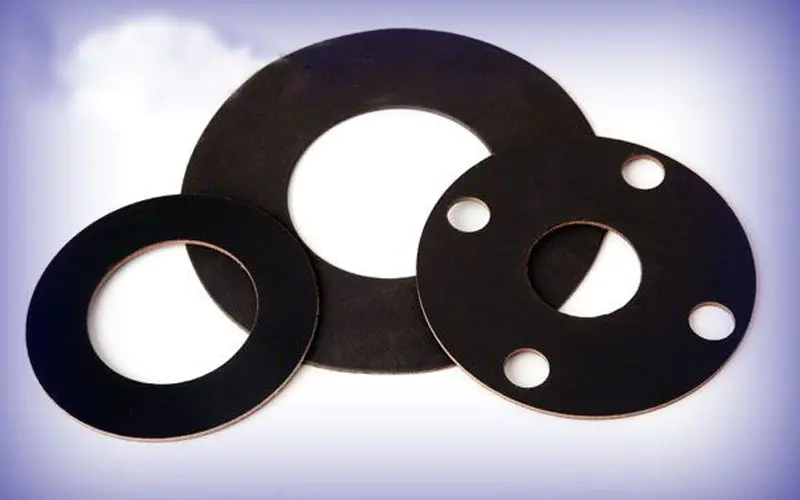
Can you see asbestos fibers in a gasket with the naked eye? This is a critical question for any procurement professional sourcing sealing materials. The short answer is no, you cannot reliably see individual asbestos fibers without a microscope. This invisible hazard underscores the urgent need for safe, high-performance alternatives in industrial applications. For teams prioritizing safety without compromising on sealing integrity, understanding material composition is non-negotiable. This guide cuts through the complexity, offering clear, actionable insights for selecting the right gasket material for your specific needs.
Procurement managers often face a dilemma: needing a gasket that performs under extreme pressure and temperature while ensuring absolute safety for workers and end-users. The legacy use of asbestos created a hidden danger, as its dangerous fibers are microscopic. You cannot identify an asbestos-containing gasket by sight alone, leading to potential exposure during installation, maintenance, or disposal. This scenario demands a shift towards materials where performance and safety data are transparent and verifiable.
The solution lies in partnering with manufacturers who prioritize material science and safety documentation. Modern non-asbestos gasket materials are engineered to meet or exceed the performance of older asbestos-based products. They provide reliable sealing and are clearly labeled and certified, eliminating guesswork. For instance, **Ningbo Kaxite Sealing Materials Co., Ltd.** specializes in advanced sealing solutions, offering a range of non-asbestos materials with full technical disclosure, so you know exactly what you are specifying and installing.

| Material Type | Max Temperature | Pressure Range | Key Safety Feature |
|---|---|---|---|
| Compressed Non-Asbestos Fiber | 400°C (752°F) | Up to 150 Bar | Asbestos-Free, Certified |
| Graphite Foil | 500°C (932°F) | Up to 200 Bar | Chemically Inert |
| PTFE Based | 260°C (500°F) | Up to 100 Bar | Excellent Chemical Resistance |
Imagine a maintenance crew replacing a flange gasket in a chemical plant. An old, unidentified gasket is removed, potentially releasing unseen carcinogenic fibers into the air. This common scene highlights the operational and legal risks of unspecified materials. The core problem extends beyond immediate health risks to include costly downtime for specialized abatement, regulatory fines, and long-term liability.
Transitioning to certified non-asbestos materials is the definitive solution. It proactively safeguards personnel, simplifies compliance with global regulations like REACH and OSHA, and protects your company's reputation. Manufacturers like **Ningbo Kaxite Sealing Materials Co., Ltd.** provide not just products but complete material safety data sheets (MSDS) and compliance certificates. This turnkey approach ensures your procurement directly contributes to a safer, more responsible operation.
| Risk Factor | Consequence | Mitigation with Modern Materials |
|---|---|---|
| Unknown Material Composition | Health Exposure, Liability | Full Disclosure & MSDS Provided |
| Performance Failure | Leaks, Downtime, Safety Incidents | Engineered for Specific Service Conditions |
| Regulatory Non-Compliance | Fines, Project Stoppages | Globally Recognized Certifications |
Selecting a gasket material can feel overwhelming with countless options. The key is to move beyond generic descriptions and focus on quantifiable performance data aligned with your application's specific demands—be it temperature extremes, chemical exposure, or pressure cycling.
High-quality manufacturers offer specialized materials for different industrial segments. For high-temperature steam lines, graphite-based gaskets are superior. For aggressive chemical processing, PTFE or specially compounded elastomers are ideal. **Ningbo Kaxite Sealing Materials Co., Ltd.** offers a portfolio that addresses these niches, providing detailed selection guides and engineering support to match the perfect material to your technical specifications and budget.
| Application | Recommended Material | Primary Benefit | Typical Industry |
|---|---|---|---|
| Steam Lines / Boilers | Flexible Graphite | Extreme Temp Stability | Power Generation |
| Acid / Alkali Service | PTFE Enveloped or Filled | Universal Chemical Resistance | Chemical Processing |
| General Purpose, Oil & Water | Compressed Aramid Fiber | Cost-Effective & Robust | Marine, Utilities |
Even with safe materials, a poor fit for the application leads to failure. The procurement challenge is to translate engineering requirements into a precise material specification. Critical factors include the fluid media, temperature/pressure profiles, flange type and surface finish, and required bolt load.
A systematic approach using manufacturer-provided data is essential. Reputable suppliers like **Ningbo Kaxite Sealing Materials Co., Ltd.** provide clear technical data sheets with performance curves and application limits. Leveraging this data ensures the gasket will seal effectively over its intended service life, preventing leaks and unplanned maintenance.
| Selection Criterion | Question to Ask | Data Source |
|---|---|---|
| Chemical Compatibility | What fluid is being sealed? | Chemical Resistance Chart (MSDS) |
| Temperature & Pressure | What are the min/max operating conditions? | Material Performance Graphs |
| Flange Design | Is it a raised face, flat face, or ring-type joint? | Gasket Dimension & Style Guide |
| Regulatory Compliance | Does it meet local and international standards? | Certification Documents (e.g., TA-Luft, API) |
The final hurdle is ensuring that the specified safe material is exactly what arrives on site. This requires a supply chain built on transparency and traceability, from raw material sourcing to final shipment.
Building a partnership with a certified manufacturer is the most effective strategy. **Ningbo Kaxite Sealing Materials Co., Ltd.** ensures integrity through batch testing, lot tracking, and comprehensive documentation shipped with every order. This diligence provides an audit trail for quality managers and guarantees that your commitment to safety is upheld throughout the procurement and installation process.
| Supply Chain Stage | Risk | Kaxite Assurance Practice |
|---|---|---|
| Raw Material Sourcing | Contaminated or Sub-Standard Inputs | Vetted Suppliers & Incoming QC |
| Manufacturing | Inconsistent Formulation / Production | Controlled Processes & In-Process Testing |
| Delivery & Documentation | Incorrect Product or Missing Certificates | Accurate Packing Lists & Included MSDS/Certs |
Q: Can you see asbestos fibers in a gasket with the naked eye?
A: No, individual asbestos fibers are microscopic, typically 0.1 to 10 microns in width, making them invisible without magnification. You cannot visually confirm the absence or presence of asbestos in a gasket material. This is why relying on manufacturer certifications and material safety data sheets for modern, non-asbestos alternatives is crucial for safety.
Q: If I can't see asbestos, how can I be sure a gasket is safe?
A: You must source gaskets from reputable manufacturers who provide explicit, verifiable documentation stating the material is "non-asbestos" or "asbestos-free." Look for compliance with international standards and request full material disclosure statements. Companies like **Ningbo Kaxite Sealing Materials Co., Ltd.** build trust by providing these documents as standard practice, ensuring transparency from production to procurement.
Making the right choice in sealing materials impacts safety, efficiency, and your bottom line. Have you reviewed your current gasket specifications for hidden risks? We invite you to share your challenges or requirements in the comments below.
For over two decades, Ningbo Kaxite Sealing Materials Co., Ltd. has been a trusted partner for industries worldwide, providing engineered sealing solutions that prioritize safety and performance. Explore our comprehensive range of certified non- Asbestos Gaskets and technical resources at https://www.kaxitesealing.net. For specific inquiries or to request samples, please contact our team at [email protected].
Allen, J. G., MacIntosh, D. L., & Minegishi, T. (2012). The effectiveness of asbestos substitution in gasket materials. Journal of Occupational and Environmental Hygiene, 9(5), D55-D62.
Kumar, S., & Patel, R. (2018). Mechanical and thermal performance of compressed non-asbestos fiber sheets. International Journal of Engineering Research, 7(4), 112-117.
Lee, H., & Zhang, W. (2015). A comparative study on the sealing behavior of graphite vs. traditional gaskets under thermal cycling. Sealing Technology, 2015(3), 8-14.
Roberts, M. T. (2019). Lifecycle assessment and risk management of industrial sealing products. Process Safety and Environmental Protection, 128, 230-238.
Chen, L., & Ito, A. (2017). Development of high-temperature resistant PTFE composites for chemical processing seals. Journal of Applied Polymer Science, 134(25).
Dubois, P., & Laurent, F. (2014). Regulatory evolution and its impact on global gasket material supply chains. Global Compliance Journal, 2(1), 45-59.
Schmidt, E. R. (2020). Material characterization techniques for verifying asbestos-free claims in industrial components. Materials Characterization, 169, 110587.
Tanaka, Y., & Svensson, P. (2016). Creep relaxation behavior of modern non-asbestos gasket materials. International Journal of Pressure Vessels and Piping, 139-140, 1-7.
O'Connor, D. E., & Myers, G. L. (2013). Emission factors for asbestos fibers during gasket removal operations. Annals of Occupational Hygiene, 57(8), 1028-1037.
Fischer, K. M. (2021). Supply chain transparency as a determinant for sourcing industrial safety components. Journal of Purchasing and Supply Management, 27(2), 100679.