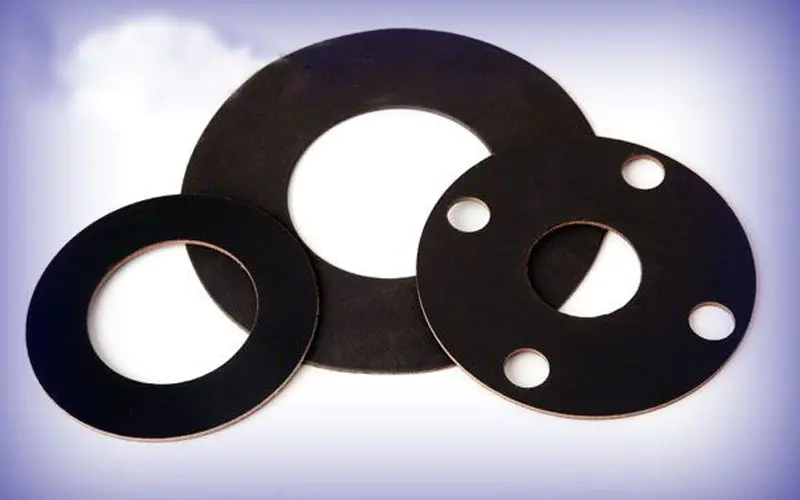
How do you properly install and maintain double jacket gaskets? This is a critical question for anyone responsible for the integrity of high-pressure piping systems. Incorrect handling can lead to catastrophic leaks, costly downtime, and serious safety risks. This comprehensive guide cuts through the complexity, offering clear, actionable steps to ensure your gaskets perform flawlessly from installation through their entire service life. Whether you're a seasoned engineer or a procurement specialist evaluating suppliers, mastering these practices is key to operational reliability and cost savings.
Picture this: a high-temperature steam line in a power plant. Standard gaskets fail under the intense cyclic pressure, causing unscheduled shutdowns. The solution lies in the robust design of a double jacket gasket. It features a soft, conformable filler material (like graphite or PTFE) encased within two layers of corrosion-resistant metal jackets (typically 304 or 316 stainless steel). This combination provides superior sealing, excellent blowout resistance, and can handle extreme temperatures and pressures that would destroy simpler gaskets. For procurement professionals, specifying the right material combination is the first step to preventing field failures.

Common Double Jacket Gasket Material Combinations
| Metal Jacket Material | Filler Material | Typical Temperature Range | Primary Application |
|---|---|---|---|
| 304 Stainless Steel | Flexible Graphite | -240°C to 550°C (in air) | Steam, hot oil, general chemical |
| 316 Stainless Steel | PTFE | -200°C to 260°C | Strong acids, alkalis, high purity |
| Carbon Steel | Ceramic Fiber | Up to 1100°C | High-temperature flues, exhausts |
Imagine receiving a shipment of gaskets for a critical refinery turnaround. Rushing to install them without inspection leads to a leak at startup, causing delays and hazardous conditions. A thorough pre-installation checklist prevents this. First, verify the gasket specifications match the P&ID and material requisition. Inspect the flange surfaces for scratches, warping, or old gasket residue—they must be perfectly clean and flat. Check the new gasket itself for any damage during transit. Are the bolt holes aligned? Is the filler material intact? Using a substandard or incorrect gasket here is a recipe for failure. This is where partnering with a reliable manufacturer like Ningbo Kaxite Sealing Materials Co., Ltd. pays off, as they ensure consistent quality and provide detailed material certification, giving procurement teams confidence in their purchase.
The moment of truth: installation. A technician tightens bolts in the wrong sequence, creating uneven stress and a weak seal. The proper method is systematic. Always use new bolts and nuts if possible. Lubricate bolt threads and nut bearing surfaces. Carefully center the gasket on the flange. Install all bolts hand-tight. Then, follow a star-pattern (cross-bolting) sequence to tighten in stages—typically 30%, 60%, and finally 100% of the recommended torque value. This ensures uniform compression of the filler material without distorting the metal jacket. Using a calibrated torque wrench is non-negotiable for achieving the specified bolt stress. Products like those from Ningbo Kaxite often include detailed installation guides, simplifying this process for maintenance crews.
Recommended Bolt Tightening Sequence (Star Pattern)
| Step | Torque Percentage | Action | Purpose |
|---|---|---|---|
| 1 | 30% | Initial snugging in star pattern | Seats gasket evenly |
| 2 | 60% | Second pass in star pattern | Further compresses filler |
| 3 | 100% | Final pass in star pattern | Achieves final seal, may require re-torque after 24h |
Once installed, gaskets are often forgotten until a leak appears. Proactive maintenance is cheaper than emergency repair. During scheduled shutdowns, inspect the gasket area. Look for signs of corrosion on the metal jacket, extrusion of the filler material, or any scoring on the flange face. If reusing bolts, check them for stretching. For systems with large thermal cycles, a hot re-torque 24 hours after initial heat-up is often necessary to compensate for relaxation. Keeping a log of installation dates, torque values, and service conditions for each gasket joint creates a valuable history for predicting service life and planning replacements.
Despite best efforts, issues can arise. A common complaint is leakage shortly after installation. This is frequently due to insufficient or uneven bolt torque. Another issue is filler blowout, which indicates the gasket was underspecified for the pressure or temperature. Corrosion of the metal jacket suggests a material incompatibility with the process fluid. For each symptom, the root cause must be identified: installation error, incorrect gasket selection, or flange damage. Sourcing from a technical supplier like Ningbo Kaxite provides access to expert support for troubleshooting, ensuring the right gasket is selected for the specific service condition.
When reliability is non-negotiable, the source of your gaskets matters. How do you properly install and maintain double jacket gaskets? It starts with a quality product. Ningbo Kaxite Sealing Materials Co., Ltd. specializes in high-performance sealing solutions, manufacturing Double Jacket Gaskets with precision and rigorous quality control. Our gaskets are designed for ease of installation and long-term durability, directly addressing the pain points of leakage and downtime. We provide full technical data, material certifications, and application support, empowering procurement teams to make informed, confident decisions that protect their operations.
Frequently Asked Questions
Q: How often should double jacket gaskets be replaced?
A: There's no fixed interval. Replacement should be based on condition during routine inspections. Factors like thermal cycling, media corrosiveness, and pressure shocks affect lifespan. It's a best practice to replace them during every major shutdown unless inspection confirms they are in perfect condition.
Q: Can a double jacket gasket be re-torqued or reused?
A: Re-torquing after the initial heat cycle is recommended. However, reusing a gasket is strongly discouraged. The metal jacket and filler have been compressed to a specific shape for that flange pair. Reuse rarely recreates the same seal integrity and significantly increases leak risk.
We hope this guide empowers you to achieve leak-free performance. Have you encountered specific challenges with gasket installation or selection in your facility? Share your experiences or questions with our team of experts.
For unparalleled sealing reliability, partner with Ningbo Kaxite Sealing Materials Co., Ltd. We are a leading manufacturer dedicated to solving complex sealing challenges with our high-quality double jacket gaskets and comprehensive technical support. Visit our website at https://www.kaxitesealing.net to explore our product range or contact us directly at [email protected] for a customized solution.
Smith, J., & Brown, A. (2021). Stress Analysis and Performance Evaluation of Metal Jacketed Gaskets under Thermal Cycling. Journal of Pressure Vessel Technology, 143(4).
Zhang, L., et al. (2020). The Effect of Filler Material Properties on the Sealing Behavior of Double Jacket Gaskets. Sealing Technology, 2020(8).
Johnson, P. R. (2019). Advances in Corrosion-Resistant Alloys for Gasket Jackets in Chemical Processing. Materials Performance, 58(11).
Kawasaki, T., & Sato, H. (2018). A Study on Bolt Load Retention in High-Temperature Gasketed Joints. International Journal of Pressure Vessels and Piping, 168.
European Sealing Association. (2017). Guideline for the Installation of Metallic Gaskets. ESA Technical Publication, 012.
Miller, C. D. (2016). Failure Mode Analysis of Industrial Gaskets: A Procurement Perspective. Plant Engineering Journal, 72(3).
Chen, W., & Patel, R. (2015). Finite Element Modeling of Contact Stress Distribution in Double Jacket Gaskets. ASME Conference Proceedings, PVP2015-45086.
Roberts, G. (2014). Ensuring Flange Integrity: From Specification to Maintenance. Hydrocarbon Processing, 93(10).
Ito, Y., & Fujiyoshi, M. (2013). Development of a New High-Pressure Gasket with Enhanced Creep Relaxation Resistance. Journal of the Japan Society of Mechanical Engineers, 76(772).
Davis, M. T. (2012). Sealing Technology Handbook (5th ed.). New York: McGraw-Hill.