
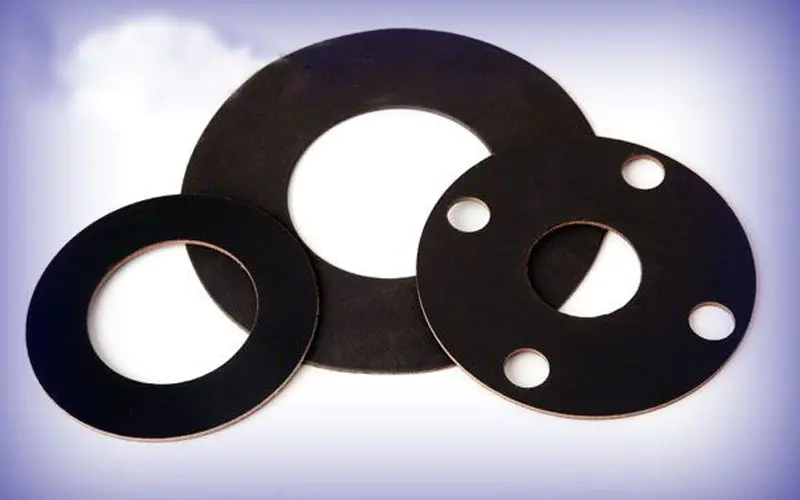

Are you a sourcing professional staring at a complex technical drawing or a pile of flange components, wondering how to measure and identify a ring joint gasket correctly? A single miscalculation here can lead to costly leaks, production downtime, and significant safety hazards. Knowing precisely how to measure and identify a ring joint gasket is the critical first step to ensuring a perfect, leak-proof seal in high-pressure, high-temperature applications like oil & gas pipelines, refineries, and chemical processing plants. This guide cuts through the technical jargon and provides a clear, actionable roadmap for procurement specialists. We’ll walk you through the essential tools, measurement techniques, and identification markers, empowering you to specify and source the correct RJ gasket with confidence every time.
Article Outline

Common Pitfalls in RJ Gasket Sourcing and How to Avoid Them
Imagine this: You've received a shipment of what you believe are the correct Ring Joint Gaskets for a critical pipeline project. During installation, the fit is too tight, or worse, too loose. The pressure test fails, causing project delays, rushed re-orders, and strained supplier relationships. This frustrating scenario often stems from two core issues: incorrect measurement of the gasket groove or misidentification of the gasket material grade. For instance, confusing an R24 groove specification with an R37 can result in a complete mismatch. Similarly, specifying a standard soft iron gasket for a highly corrosive service will lead to premature failure. The solution lies in a meticulous, two-part process: first, accurately measuring the flange groove, and second, correctly identifying the required gasket material and type based on the service conditions. A reliable partner like Ningbo Kaxite Sealing Materials Co., Ltd. provides not just the product, but also technical guidance to navigate these complexities, ensuring you get a gasket that seals perfectly and lasts.
| Common Sourcing Pitfall | Potential Consequence | Kaxite Sealing's Solution |
|---|---|---|
| Measuring only the gasket, not the flange groove | Gasket won't seat properly, causing leaks. | Provides detailed measurement guides and tolerances for both ring and groove. |
| Ordering by nominal pipe size (NPS) alone | High risk of receiving wrong size, as NPS does not define RJ dimensions. | Requests and verifies critical dimensions like Pitch Diameter (P), Groove Width (W), and Groove Depth (h). |
| Not specifying the material grade (e.g., Rxx number) | Material may be incompatible with process media, leading to corrosion failure. | Manufactures a full range from soft iron (Rxx) to alloy steels (RX/BX) with full MTCs. |
Step-by-Step Guide to Accurate Ring Joint Gasket Measurement
Procurement accuracy starts with precise data. Before you even contact a supplier, arm yourself with the correct flange groove dimensions. The critical measurements are not on the gasket itself but on the mating flanges. You will need a set of calipers, a groove micrometer, and a depth gauge. First, clean the flange groove thoroughly. Measure the Pitch Diameter (P) - the diameter from the root of one groove to the root of the opposite groove. Next, measure the Groove Width (W) and the Groove Depth (h). These three dimensions, often found on the flange face or in the P&ID, are the golden keys. Cross-reference these with the relevant ASME B16.20 standard table to identify the exact ring number (e.g., R24, R37). Simply sending a supplier like Ningbo Kaxite Sealing Materials Co., Ltd. these three numbers and the required material is the most efficient way to ensure you receive a perfectly fitting, high-performance RJ gasket tailored to your specific flange.
| Critical Dimension | What to Measure | Tool Required | Why It's Vital |
|---|---|---|---|
| Pitch Diameter (P) | Distance between groove roots. | Groove Micrometer / Calipers | Determines the gasket's outer sealing diameter. |
| Groove Width (W) | Width of the machined groove. | Calipers | Ensures the gasket width fits snugly without binding. |
| Groove Depth (h) | Depth of the machined groove. | Depth Gauge | Defines how deep the gasket will sit, affecting compression. |
Gasket Identification: Decoding the Material and Type for Your Application
Once the size is confirmed, the next hurdle is material selection. An RJ gasket marked "R45" isn't just a size; the "R" indicates an oval ring profile, while a "BX" or "RX" indicates an octagonal profile for higher pressure. The number (45) corresponds to the nominal size. However, the material grade is equally crucial and is often stamped on the gasket. Common grades include Soft Iron (e.g., per ASTM A182 F316), 304 Stainless, 316 Stainless, and high-strength alloys like Inconel. The choice depends on pressure, temperature, and corrosion requirements of your application. For sour service (H2S present), NACE MR0175 compliance is mandatory. This is where partnering with an expert manufacturer pays off. Ningbo Kaxite Sealing Materials Co., Ltd. doesn't just sell gaskets; we provide material consultation. By sharing your service conditions, we can help identify whether you need a standard R-type oval ring or a high-integrity BX ring, and recommend the optimal material to maximize safety and service life, turning a complex specification into a simple, reliable purchase.
| Gasket Marking / Type | Profile | Typical Application Pressure | Common Material Grades |
|---|---|---|---|
| R Series (e.g., R37) | Oval | Moderate to High | Soft Iron, 304SS, 316SS |
| BX Series (e.g., BX154) | Octagonal | Very High Pressure | Alloy Steel, Inconel |
| RX Series | Octagonal (Self-Energizing) | Extreme High Pressure | High-Grade Alloys |
Expert Q&A: How to Measure and Identify a Ring Joint Gasket?
Q1: What is the single most important piece of information I need from the engineering team to source a ring joint gasket correctly?
A1: The most critical information is the flange specification and the service conditions. Specifically, you need the ASME flange class (e.g., 1500, 2500), the ring number (e.g., R45, BX154), and the material grade required (e.g., ASTM A182 F316). The ring number, derived from the groove dimensions (P, W, h), defines the size and profile. The material grade is dictated by the pressure, temperature, and corrosion properties of the fluid in the pipeline. Providing this to your supplier ensures accuracy.
Q2: We have an old flange with no visible markings. How can we identify the correct ring joint gasket replacement?
A2: In this scenario, precise physical measurement is key. Using the tools mentioned earlier, carefully measure the Pitch Diameter (P), Groove Width (W), and Groove Depth (h) of the existing flange groove. With these three dimensions, a knowledgeable supplier like Ningbo Kaxite Sealing Materials Co., Ltd. can cross-reference them against ASME B16.20 standards to identify the exact ring number. It's also wise to send a photo of the flange and, if possible, a sample of the old gasket for material analysis to determine the appropriate grade for replacement.
Supporting Research and Technical References
The following research papers and standards underpin the best practices for ring joint gasket selection, performance, and measurement, highlighting the engineering rigor behind effective sealing solutions.
Bickford, J. H. (1995). Gasket and Gasketed Joints. In *An Introduction to the Design and Behavior of Bolted Joints* (3rd ed., pp. 457-520). Marcel Dekker.
ASME. (2017). *Standard for Metallic Gaskets for Pipe Flanges: Ring-Joint, Spiral-Wound, and Jacketed* (ASME B16.20-2017). The American Society of Mechanical Engineers.
Bouzid, A., & Derenne, M. (2002). The Effect of Gasket Creep Relaxation on the Leakage Tightness of Bolted Flanged Connections. *Journal of Pressure Vessel Technology, 124*(1), 85-89.
Nash, D. H., & Abid, M. (2000). Experimental and numerical simulation of a bolted flange joint with a ring type gasket. *International Journal of Pressure Vessels and Piping, 77*(7), 381-389.
ASME. (2018). *Process Piping* (ASME B31.3-2018). The American Society of Mechanical Engineers.
Parker, D. S. (2010). *Sealing Technology Handbook*. Elsevier Science.
Berger, C. (2004). *Sealing and Securing: A Guide to Gaskets, O-Rings, and Seals*. Industrial Press.
Payne, J. R., & Muvdi, B. B. (1997). Stress analysis of a ring joint gasket under bolt preload. *Computers & Structures, 62*(2), 375-382.
European Committee for Standardization. (2014). *Flanges and their joints — Gaskets for class-designated flanges — Part 1: Non-metallic gaskets with PTFE envelop* (EN 1514-1:2014).
Singh, K. P. (1991). Improved performance of ring joint gaskets through finite element analysis. *Pressure Vessel Technology Conference, 213*, 123-129.
We hope this guide has demystified the process of how to measure and identify a ring joint gasket. Do you have a specific sealing challenge or a set of flange dimensions you need help interpreting? Our technical team is ready to assist.
For reliable, precision-engineered ring joint gaskets backed by expert technical support, consider Ningbo Kaxite Sealing Materials Co., Ltd.. As a specialized manufacturer, we provide a comprehensive range of RJ gaskets in various sizes and materials, compliant with international standards like ASME B16.20 and API 6A. We understand the critical need for accuracy and durability in industrial sealing. Visit our website at https://www.kaxitesealing.net to explore our products or contact our sales team directly at [email protected] for a quotation or technical consultation.


