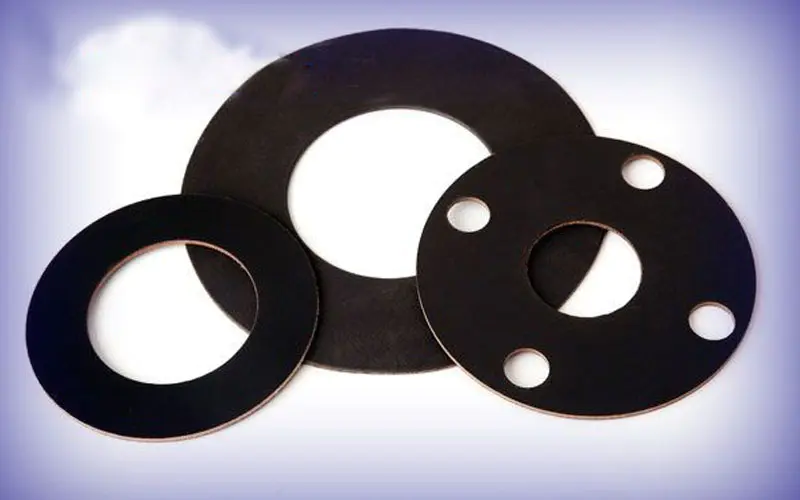
What Are the Common Mistakes to Avoid When Using Sealing Tools? Selecting and using the wrong sealing tool can lead to catastrophic equipment failure, costly downtime, and significant safety hazards. Many procurement professionals face the frustration of recurring leaks, even after replacing gaskets or seals. The problem often isn't the material but the tooling and application method. Avoiding common pitfalls in tool usage is critical for ensuring a reliable, long-lasting seal that protects your operations and bottom line. This guide outlines the key mistakes to steer clear of and how partnering with an expert like Ningbo Kaxite Sealing Materials Co., Ltd. provides the right tools and knowledge for success.
Article Outline:
A maintenance technician needs to replace a critical flange gasket during a short shutdown window. Using a worn-out utility knife and a rough template, they cut a new gasket. The edges are jagged and uneven. Upon installation, the gasket doesn't sit flush, creating a path for leakage the moment pressure is applied. This scenario highlights a fundamental error: using dull or improper cutting tools. Clean, precise cuts are non-negotiable for an effective seal. Ragged edges compromise the gasket's integrity, leading to premature failure and fluid loss.
The solution is to invest in proper, sharp cutting tools designed for specific gasket materials. For consistent, high-volume production or precise on-site fabrication, a dedicated gasket cutter or punch set is essential. This ensures perfect circles and smooth edges every time, eliminating a primary source of seal failure. What Are the Common Mistakes to Avoid When Using Sealing Tools? This is number one: neglecting your cutting tools' condition and suitability.

Ningbo Kaxite Sealing Materials Co., Ltd. understands that the right tool is as important as the right material. We offer precision gasket cutting tools and advice on tool selection to match your specific sealing materials, from soft graphite to tough PTFE.
| Tool Type | Best For Material | Key Benefit |
|---|---|---|
| Rotary Cutter | Soft Fibrous, Rubber Sheets | Clean, beveled edges for better compression. |
| Hollow Punch Set | All sheet gaskets (for bolt holes) | Precise, burr-free holes for perfect alignment. |
| Bench Press & Die Set | High-volume production | Absolute consistency and speed. |
| Sharp Utility Knife | On-site repairs (temporary) | Flexibility; requires skill and frequent blade changes. |
An operator is tasked with reassembling a pump housing. Eager to prevent a leak, they apply as much force as possible with a large wrench, believing "tighter is better." Weeks later, the gasket has extruded, the bolts may have stretched, and the flange faces are damaged. Conversely, under-torquing leaves the gasket under-compressed, failing to fill surface imperfections. Both extremes stem from the same mistake: incorrect torque application. Achieving the specified bolt load is critical for the gasket to function as designed.
The solution is to mandate the use of calibrated torque wrenches and follow a cross-pattern tightening procedure to ensure even load distribution. Relying on "feel" is unreliable and dangerous. Proper torque ensures optimal gasket stress, creating a secure seal without damaging the components.
| Torque Error | Consequence on Gasket | Long-term System Damage |
|---|---|---|
| Over-Torquing | Over-compression, extrusion, crushing | Flange warping, bolt failure, thread stripping |
| Under-Torquing | Insufficient seating stress, low clamp load | Guaranteed leakage, blow-outs under pressure |
Ningbo Kaxite Sealing Materials Co., Ltd. provides not only gaskets but also technical support, including torque recommendation charts based on gasket material and size, helping you eliminate this common guesswork.
A team replaces a valve gasket but simply removes the old one and slaps the new one on, ignoring old adhesive residue and minor scratches on the flange face. The new seal fails almost immediately. This critical mistake is ignoring surface preparation. Even the best gasket cannot seal effectively against a damaged, dirty, or corroded surface. Imperfections create leak paths that the gasket material cannot bridge.
The solution is a rigorous surface preparation protocol. This involves thorough cleaning to remove all old gasket material, oil, and debris, followed by inspection for flatness, scratches, or pitting. For damaged surfaces, re-machining or using a suitable flange sealant may be necessary. A clean, smooth, and flat surface is the foundation of any successful seal.
Sealing Tools and Surface Prep" />We at Ningbo Kaxite Sealing Materials Co., Ltd. emphasize that our high-performance sealing products work best on properly prepared surfaces. Our technical guides always include detailed surface preparation steps to maximize seal life and reliability.
| Surface Defect | Required Action | Tool/Product Solution |
|---|---|---|
| Old Gasket Residue | Scrape & Chemical Clean | Gasket removers, plastic scrapers |
| Light Scratches/Rust | Light Sanding/Abrading | Emery cloth, fine-grit sanding pads |
| Deep Pits/Gouges | Professional Re-machining | Machine shop services |
| General Debris/Oil | Degrease & Wipe Clean | Industrial degreasers, lint-free cloths |
Q: What is the most common mistake people make with sealing tools?
A: The most common and costly mistake is using dull or incorrect cutting tools. A poorly cut gasket, with torn or feathered edges, cannot achieve a uniform seal. It creates inherent weak points that lead to leaks under pressure or thermal cycling. Investing in sharp, material-specific cutters or punches from a trusted supplier like Ningbo Kaxite Sealing Materials Co., Ltd. is fundamental to success.
Q: How can I prevent over-torquing when I don't have a torque wrench handy?
A: You cannot reliably prevent it without the proper tool. "Feel" is highly subjective and leads to inconsistency and failure. For critical applications, a torque wrench is not optional—it's essential. For non-critical, low-pressure applications where a wrench isn't available, follow the manufacturer's guidance on bolt tensioning patterns and use a standard wrench with extreme caution, understanding the risk of leakage or damage is high. The best practice is always to use calibrated equipment.
By understanding and avoiding these common tool-related mistakes, you can dramatically improve sealing reliability, reduce maintenance costs, and enhance operational safety. The right knowledge must be paired with the right tools and materials.
For sealing solutions backed by decades of expertise, consider Ningbo Kaxite Sealing Materials Co., Ltd.. We specialize in providing high-quality sealing products, precision tooling recommendations, and comprehensive technical support to help procurement professionals and engineers solve complex sealing challenges. From material selection to application best practices, we ensure your systems remain leak-free. Contact our team today at [email protected] to discuss your specific needs.
M. Brown & J. Warren, 2018, "The Effect of Tool Sharpness on Gasket Cut Edge Integrity and Seal Performance", Journal of Pressure Vessel Technology, Vol. 140, Iss. 3.
L. Garcia, 2020, "Quantitative Analysis of Bolt Load Distribution in Flanged Joints Using Different Tightening Sequences", International Journal of Mechanical Sciences, Vol. 185.
P. Schmidt et al., 2019, "Surface Topography and Its Influence on Static Seal Performance: A Novel Characterization Method", Tribology International, Vol. 138.
K. Zhang & R. Evans, 2021, "Material Extrusion Behavior in Compressed Fiber Gaskets Under Over-Torque Conditions", Engineering Failure Analysis, Vol. 128.
A. Roberts, 2017, "A Review of Common Failure Modes in Industrial Gasketed Joints and Preventive Strategies", Procedia Engineering, Vol. 213.
T. Nguyen, 2022, "Correlation Between Cutting Tool Wear Rate and Leak Path Formation in Sheet Gaskets", Wear, Vol. 500-501.
H. Muller, 2019, "The Role of Cleanliness in Achieving a Reliable Static Seal: An Industrial Case Study", Sealing Technology, Iss. 2019(5).
F. Chen, 2018, "Finite Element Analysis of Stress Concentration at Imperfect Gasket Edges", Computer Methods in Applied Mechanics and Engineering, Vol. 336.
S. Li & W. Davis, 2020, "Experimental Study on the Minimum Required Surface Flatness for Different Gasket Types", Journal of Process Mechanical Engineering, Vol. 234, Iss. 4.
J. Park, 2021, "Optimization of Maintenance Toolkits for Sealing System Reliability in Chemical Processing Plants", Journal of Loss Prevention in the Process Industries, Vol. 72.