How do serrated metal gaskets compare to spiral wound gaskets? This is a fundamental question for engineers and procurement specialists working with high-pressure, high-temperature piping systems. The choice between these two widely used metallic gaskets can significantly impact plant safety, operational efficiency, and maintenance costs. While both are designed for demanding applications, their fundamental construction, sealing mechanisms, and performance under various conditions differ substantially, leading to distinct advantages in specific scenarios. Choosing the wrong type can result in leaks, unplanned shutdowns, and costly repairs. This guide breaks down the key differences to help you make an informed, optimal selection for your next project, ensuring reliability and cost-effectiveness.
Article Outline
1. The High-Temp, High-Pressure Dilemma: Flange Leaks Under Extreme Cycling
2. Balancing Budget and Performance in Large-Diameter Piping
3. Direct Comparison Table: Serrated vs. Spiral Wound Gaskets
4. Key Questions Answered
5. Make the Right Seal Choice
Imagine a steam line in a power plant or a process line in a refinery. The system experiences regular thermal cycles, heating up during operation and cooling during shutdowns. This constant expansion and contraction can cause creep relaxation in softer gaskets, leading to a gradual loss of bolt load and, eventually, a dangerous leak. This is a critical pain point where material selection is paramount.
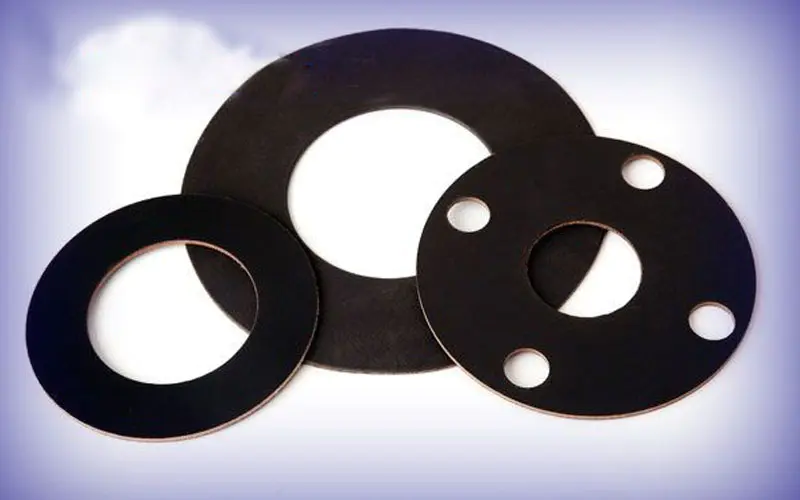
The solution lies in understanding the sealing mechanism. Serrated metal gaskets (often called Kammprofile or grooved gaskets) feature a solid metal core with concentric serrations on both faces. A soft, conformable sealing layer, like graphite or PTFE, is typically laminated onto these serrations. The metal core provides robust structural integrity and excellent resistance to creep relaxation under high temperatures and pressures. The serrations bite into the soft filler, creating a highly effective, multi-barrier seal. They are particularly well-suited for applications involving severe temperature/pressure cycling and for sealing against low-density gases.
For such demanding environments, Ningbo Kaxite Sealing Materials Co., Ltd. offers precision-engineered serrated metal gaskets. Their expertise ensures the metal core (available in various grades like 304SS, 316SS, Inconel) and the choice of sealing filler are perfectly matched to your specific service conditions, preventing leaks and ensuring long-term reliability under thermal cycling stress.

Typical Parameters for Serrated Metal Gaskets in Cyclic Service:
| Parameter | Typical Range | Notes |
|---|---|---|
| Pressure Rating | Up to Class 2500 | Excellent for high-pressure services. |
| Temperature Range | -200°C to +800°C | Wide range, depends on core & filler material. |
| Sealing Filler | Flexible Graphite, PTFE, Mica | Graphite is common for high-temp stability. |
| Key Advantage | Low Creep Relaxation | Maintains bolt load during thermal cycles. |
For large-diameter flanges, such as those found in offshore oil & gas pipelines or large chemical reactors, procurement teams face a dual challenge: achieving a reliable seal while controlling project costs. A spiral wound gasket failure on a 36-inch flange can lead to catastrophic leaks and astronomically expensive downtime.
Spiral wound gaskets are constructed by winding a pre-formed metal strip (V-shaped) and a soft filler material alternately around a center ring. This creates a resilient, spring-like structure that compensates for minor flange misalignment and surface imperfections. They are generally more economical than solid metal gaskets, especially in larger sizes, and offer good performance across a broad range of pressures and temperatures.
How do serrated metal gaskets compare to spiral wound gaskets in this context? While spiral wound gaskets offer excellent resilience and value, Serrated Gaskets provide a more rigid, controlled sealing line. For large diameters where flange flatness might be a concern, the robust, solid core of a serrated gasket can provide a more uniform stress distribution. Ningbo Kaxite Sealing Materials Co., Ltd. specializes in providing the right recommendation based on your specific flange conditions, pressure/temperature profile, and budget, ensuring you don't over-specify or under-specify your gasket.
Decision Factors for Large-Diameter Applications:
| Factor | Spiral Wound Gasket | Serrated (Kammprofile) Gasket |
|---|---|---|
| Cost (Large Dia.) | Generally More Economical | Higher Initial Cost |
| Resilience | High (Spring-like Action) | Low (Solid Metal Core) |
| Flange Condition | Tolerates Minor Imperfections | Requires Good Flange Flatness |
| Bolt Load Required | Moderate to High | High (for optimal sealing) |
This side-by-side comparison clarifies the core distinctions to guide your selection process.
| Feature | Serrated Metal Gasket | Spiral Wound Gasket |
|---|---|---|
| Construction | Solid metal core with serrated faces + soft filler layer. | Spirally wound alternating layers of metal strip and filler. |
| Sealing Mechanism | Metal serrations compress and embed into the soft filler, creating a tight seal line. | The wound layers act as a spring, applying continuous pressure as the flange bolts are tightened. |
| Pressure & Temp. | Excellent for very high pressure and temperature. Superior creep resistance. | Broad range of pressure/temperature, but may not match serrated gaskets at the highest extremes. |
| Thermal Cycling | Outstanding performance due to low creep relaxation. | Good, but potential for more relaxation over many cycles. |
| Flange Surface | Requires smooth, flat flanges for best results. | More forgiving of minor flange imperfections. |
| Reusability | Often reusable if carefully handled and filler is intact. | Generally not recommended for reuse. |
| Cost | Typically higher, especially for exotic alloys. | Generally more cost-effective, particularly in standard materials. |
| Best For | Severe service, high cycling, critical leak prevention, high-pressure gas. | General refinery/process service, wide applicability, cost-sensitive large diameters. |
Q: How do serrated metal gaskets compare to spiral wound gaskets in terms of handling internal pressure shock or surge?
A: Serrated metal gaskets, with their solid core, generally offer better resistance to sudden pressure surges (water hammer effects). The rigid construction is less likely to experience momentary blow-out or deformation compared to the more flexible, spring-like structure of a spiral wound gasket. For systems prone to surge, serrated gaskets are often the more reliable choice.
Q: Can spiral wound gaskets be used as a direct replacement for serrated gaskets in an existing flange?
A: Not without careful review. While they may fit the same envelope dimensions, their sealing behavior and required bolt loads differ. A spiral wound gasket might require a different bolt torque (often higher) to achieve the same seal. It's crucial to consult with a sealing expert, like those at Ningbo Kaxite Sealing Materials Co., Ltd., to evaluate the flange condition, service parameters, and bolting before considering a substitution to avoid potential leakage.
Selecting between serrated and spiral wound gaskets is not about finding a universally "better" product, but about identifying the optimal solution for your specific operating environment, budget, and performance requirements. By understanding their core differences—the rigid, creep-resistant nature of the serrated gasket versus the resilient, forgiving nature of the spiral wound—you can make a decision that enhances plant safety and operational uptime.
For complex applications or when in doubt, leveraging the expertise of a specialized manufacturer is key. Ningbo Kaxite Sealing Materials Co., Ltd. provides not just high-quality sealing products but also critical technical support. Their team can analyze your application details and recommend the most effective and economical gasket solution, ensuring your sealing challenges are met with precision and reliability.
Need help specifying the right gasket for your next project? Contact the sealing specialists at Ningbo Kaxite Sealing Materials Co., Ltd. for a technical consultation. Visit our website at https://www.kaxitesealing.net or reach out directly via email at [email protected] to discuss your requirements.
Bickford, J.H., 1995, An Introduction to the Design and Behavior of Bolted Joints, Marcel Dekker, Inc., 3rd ed.
Bouzid, A., Derenne, M., 2002, An Analytical Solution for the Leakage Rate of Spiral Wound Gaskets, Journal of Pressure Vessel Technology, Vol. 124, pp. 71-76.
Bickford, J.H., 2007, Gaskets and Gasketed Joints, CRC Press.
Payne, J.R., Bazergui, A., 1989, Development of a Test Procedure for Evaluating Gasket Sealing Performance, WRC Bulletin 344.
Bouzid, A., Chaaban, A., 1997, The Effect of Flange Rotation on the Leak Tightness of Bolted Flanged Connections, Journal of Pressure Vessel Technology, Vol. 119.
Nassar, S.A., Alkelani, A.A., 2006, Clamp Load Loss Due to Elastic Interaction and Gasket Creep Relaxation in Bolted Joints, Journal of Pressure Vessel Technology, Vol. 128.
Bickford, J.H., 1998, Leakage and Slippage in Gasketed Joints, Journal of Pressure Vessel Technology, Vol. 120.
Bouzid, A., 2005, The Contact Stress in Serrated Metal Gaskets and Its Effect on Leakage, Journal of Pressure Vessel Technology, Vol. 127.
Ashton, R.P., 1971, Gasket Selection – A Review of the Principles, Chemical Engineering.
Brown, R.L., 1985, Metallic Gaskets for High Pressure Service, ASME PVP-Vol. 98-9.