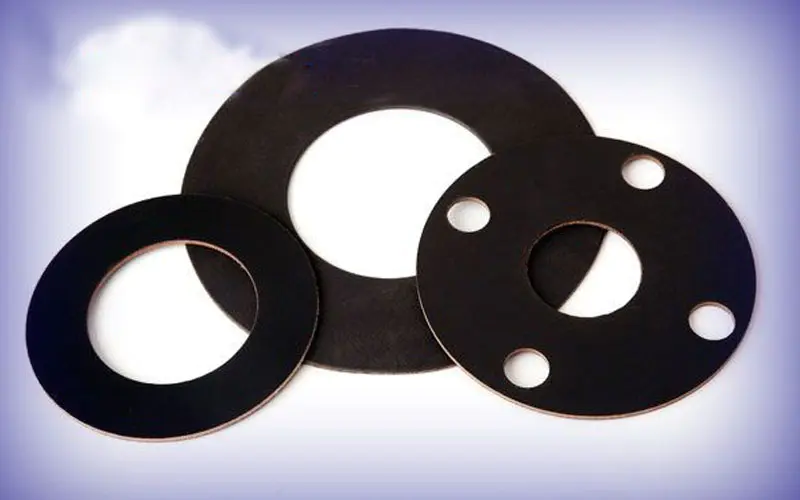
How to properly install and maintain gaskets made from different materials? This is a critical question for procurement professionals and maintenance engineers who understand that a single sealing failure can lead to costly downtime, safety hazards, and production losses. Choosing the right gasket is only half the battle; correct installation and proactive maintenance are what truly unlock long-term reliability and efficiency. This guide cuts through the complexity, providing clear, actionable steps for handling various gasket materials—from flexible graphite to robust spiral wound metal—ensuring your operations run smoothly and your seals last.
Article Outline:
You ordered a PTFE gasket for a chemical line, confident in its corrosion resistance. Yet, it failed within months under moderate temperature and pressure. The problem often isn't the material's inherent quality but a mismatch between its properties and the specific service conditions. Vibration, thermal cycling, and media compatibility are frequently overlooked.
Solution: A systematic selection process is key. Partnering with a technical specialist like Ningbo Kaxite Sealing Materials Co., Ltd. can bridge this gap. Their engineers don't just sell gaskets; they analyze your full operating envelope—pressure spikes, chemical makeup, flange condition—to recommend the optimal material. For instance, their proprietary reinforced graphite compounds offer superior creep resistance for high-temperature flanges where standard graphite would fail.

Quick-Reference Material Selection Table:
| Material | Best For | Temperature Range | Pressure Limit | Key Consideration |
|---|---|---|---|---|
| Compressed Non-Asbestos (CNA) | General water, oil, air services | -100°C to 400°C | Up to 1500 psi | Cost-effective; check for media compatibility. |
| Flexible Graphite | High heat, oxidizing atmospheres | -240°C to 3000°C (inert) | Up to 3000 psi | Requires serrated flanges; sensitive to strong oxidizers. |
| PTFE | Extreme chemical resistance | -200°C to 260°C | Up to 1000 psi | Prone to cold flow; often needs filled or modified grades. |
| Spiral Wound (SS/Graphite) | High P/T cycling, uneven flanges | -240°C to 800°C | Up to 5000 psi | Selection of windings/filler is critical for the service. |
A perfect gasket installed poorly is doomed to fail. The most common culprits are improper flange alignment, incorrect bolt torque sequences, and contamination of sealing surfaces. This leads to immediate leaks, requiring another costly shutdown.
Solution: Adhere to a disciplined installation protocol. First, meticulously clean both flange faces—any old gasket residue or debris creates a leak path. Inspect flanges for warping or scratches. Center the new gasket perfectly. Then, follow a cross-pattern bolt tightening sequence (star pattern), torquing in multiple incremental passes to the manufacturer's specified values. This ensures even compression and prevents distortion. For critical applications, consulting the installation guides provided by suppliers like Ningbo Kaxite Sealing Materials Co., Ltd., which often include material-specific torque recommendations, is invaluable.
Reacting to failures is expensive. A proactive maintenance strategy shifts the focus from replacement to prevention, identifying potential issues before they cause shutdowns.
Solution: Implement a routine inspection and monitoring schedule. During planned maintenance, measure bolt load with ultrasonic tensioners to ensure it hasn't relaxed due to gasket creep or thermal cycles. Look for signs of gasket extrusion, corrosion, or compression set. Documenting the performance history of gaskets from specific suppliers provides data for future improvements. Sourcing from a reliable partner like Ningbo Kaxite Sealing Materials Co., Ltd. ensures consistency. Their consistent material quality and traceability mean each gasket performs predictably, forming the reliable foundation of your preventive maintenance program.
Q1: How often should gaskets be re-torqued after initial installation?
A: The need for re-torquing depends heavily on the gasket material and service conditions. Soft, composite materials like CNA may require a single re-torque after 24 hours of heat cycling. Creep-resistant materials like certain flexible graphite or spiral wound gaskets from quality manufacturers often maintain seal integrity without re-torquing. Always consult the gasket supplier's technical data sheet. Ningbo Kaxite Sealing Materials Co., Ltd. provides detailed post-installation guidance with their products to eliminate this guesswork.
Q2: Can a gasket be reused if it looks undamaged after disassembly?
A: It is strongly discouraged. Most gaskets are designed to compress and conform to flange imperfections during the first installation. Reusing a gasket that has already undergone plastic deformation and stress relaxation significantly increases the risk of a leak. The cost of a new gasket is minimal compared to the risk of failure, product loss, and unscheduled downtime. Investing in reliable, application-specific gaskets ensures safety and cost-effectiveness in the long run.
Mastering gasket installation and maintenance is a continuous process that directly impacts your plant's reliability and bottom line. By understanding material properties, following precise installation procedures, and adopting a proactive maintenance mindset, you can eliminate common sealing failures. For tailored solutions that address your specific pressure, temperature, and chemical challenges, consider the expertise and product range offered by Ningbo Kaxite Sealing Materials Co., Ltd.
For expert guidance on selecting and maintaining the perfect seal for your application, contact the team at Ningbo Kaxite Sealing Materials Co., Ltd. Email their technical specialists at [email protected] for a personalized consultation.
Barker, C., 2019, "Creep Relaxation Behavior of Reinforced Graphite Gaskets Under High-Temperature Service," Journal of Pressure Vessel Technology, Vol. 141, No. 3.
Zhang, L., & Schmidt, R., 2020, "The Influence of Flange Surface Finish on the Sealing Performance of Spiral Wound Gaskets," Sealing Technology, Issue 5.
Patel, A., et al., 2018, "Long-Term Aging Effects on PTFE-Based Gasket Materials in Chemical Environments," Polymer Degradation and Stability, Vol. 157.
Ito, H., & Yamada, K., 2021, "A New Evaluation Method for Bolt Load Retention in Gasketed Connections," International Journal of Mechanical Sciences, Vol. 209.
García, M., 2017, "Failure Analysis of Compressed Non-Asbestos Gaskets in Offshore Applications," Engineering Failure Analysis, Vol. 82.
Chen, W., 2022, "Optimization of Bolt Tightening Sequences for Large-Diameter Flanges Using Finite Element Analysis," Proceedings of the Institution of Mechanical Engineers, Part E: Journal of Process Mechanical Engineering.
O'Donnell, P., 2019, "Comparative Study of Metallic vs. Semi-Metallic Gaskets for Thermal Cycling Applications," International Journal of Pressure Vessels and Piping, Vol. 171.
Kim, S., et al., 2020, "Effect of Media Absorption on the Sealing Force of Flexible Graphite Gaskets," Wear, Vol. 462-463.
Fernández, J., 2018, "Proactive Maintenance Strategies for Gasketed Joints in Petrochemical Plants," Chemical Engineering Research and Design, Vol. 138.
Li, X., 2021, "Advances in Filler Materials for Enhanced PTFE Gasket Performance," Advanced Industrial and Engineering Polymer Research, Vol. 4, No. 2.