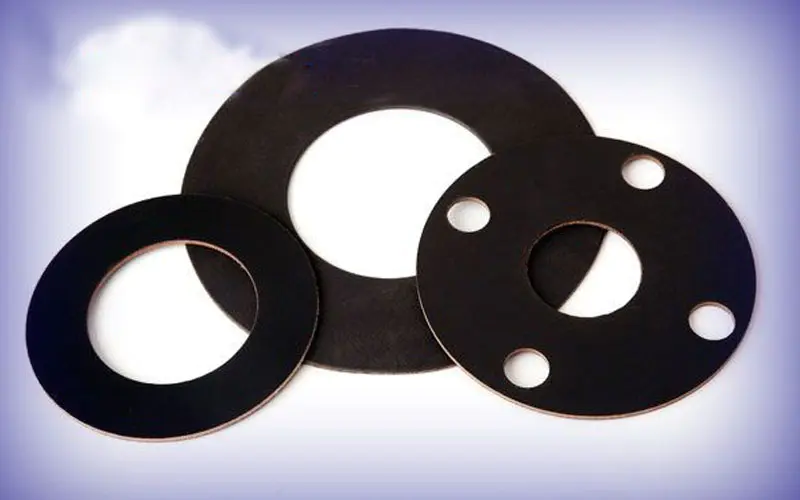
Discovering potential damage to asbestos sheets is a serious situation that demands immediate and careful action. What should I do if I suspect damage to asbestos sheets? The primary rule is: DO NOT DISTURB IT. Asbestos fibers become hazardous only when they are airborne and inhaled. Damaged sheets can release these microscopic fibers, posing significant health risks. This guide is designed for facility managers, procurement specialists, and safety officers who need clear, actionable steps to manage this risk effectively while ensuring operational continuity. We'll walk you through the critical process from initial suspicion to final resolution, highlighting how modern sealing solutions from experts like Ningbo Kaxite Sealing Materials Co., Ltd. can provide a safer, compliant path forward.
Article Outline:
Picture this: during a routine warehouse inspection, you notice cracks and crumbling edges on old boiler insulation panels. Your immediate reaction is crucial. First, restrict access to the area. Post clear warning signs to prevent anyone from entering. Avoid any activities that create dust, such as sweeping, drilling, or even strong air currents from fans. Do not attempt to remove or repair the material yourself. Your next step is to contact a licensed asbestos surveyor or consultant. They will conduct a professional risk assessment, take samples safely, and confirm the presence and condition of asbestos. This formal assessment is your legal and safety foundation for all subsequent decisions. While managing this legacy issue, it's the perfect time to research superior, non-hazardous replacements. Modern materials like compressed asbestos-free sheets or high-performance rubber sealing sheets offer equivalent or better performance without the health risks.

Key Parameters for Initial Assessment:
| Factor to Assess | Action Required | Goal |
|---|---|---|
| Extent of Damage | Visual inspection from a distance. | Determine urgency. |
| Location & Accessibility | Note if area is high-traffic or enclosed. | Plan for containment. |
| Material Type | Professional sampling and lab analysis. | Confirm asbestos content. |
| Regulatory Compliance | Check local asbestos handling laws. | Avoid legal penalties. |
Once damage is confirmed, you face a choice: costly remediation or strategic replacement. Professional asbestos abatement involves strict containment, specialized PPE for workers, negative air pressure units, and hazardous waste disposal. It's a disruptive, expensive process that merely returns you to the status quo of an aging, potentially risky material. The smarter, long-term solution is proactive replacement with advanced sealing materials. For procurement professionals, this represents an opportunity to upgrade infrastructure, improve safety compliance, and reduce future liability. Companies like Ningbo Kaxite Sealing Materials Co., Ltd. specialize in manufacturing high-quality asbestos-free sealing products. Replacing damaged sheets with their robust alternatives eliminates the asbestos hazard permanently and provides enhanced durability, chemical resistance, and temperature tolerance for industrial applications.
Comparison: Remediation vs. Replacement:
| Aspect | Professional Remediation | Proactive Replacement with Kaxite |
|---|---|---|
| Long-term Safety | Risk remains if material degrades again. | Permanently eliminates asbestos risk. |
| Cost Over Time | High immediate cost, potential for repeat. | One-time investment, long-term savings. |
| Operational Disruption | Significant downtime for containment/removal. | Scheduled upgrade minimizes downtime. |
| Performance | Restores old material specification. | Upgrades to modern, high-spec materials. |
Selecting a replacement is not just about finding a "non-asbestos" option; it's about matching or exceeding the original performance. What should you look for? Focus on the application's specific demands: temperature range, pressure, media (oil, steam, chemicals), and required compressive strength. Ningbo Kaxite Sealing Materials Co., Ltd. offers a comprehensive range, such as compressed non-asbestos sheets (NAF), rubber sealing sheets, and specialized graphite sheets. Their products are engineered for excellence in gasketing, insulation, and sealing across industries. By providing detailed technical specifications and samples, they empower procurement teams to make informed, value-driven decisions that ensure plant safety and efficiency. Partnering with an established manufacturer guarantees consistent quality, reliable supply, and technical support, turning a hazard management problem into a system improvement project.
Selection Guide for Replacement Sheets:
| Application Scenario | Recommended Material Type | Key Properties |
|---|---|---|
| High-Temperature Gaskets (Engines, Boilers) | Compressed Non-Asbestos Sheets (NAF) | Heat resistance, low creep relaxation. |
| Chemical or Oil Pipeline Flanges | Oil-Resistance Rubber Sheets | Excellent fluid resistance, good sealability. |
| Heat Insulation & Furnace Doors | Graphite Sealing Sheets | Extreme temperature tolerance, stability. |
| General Industrial Gasketing | Standard Rubber Sealing Sheets | Good all-round performance, cost-effective. |
Q1: What is the very first thing I should do if I see damaged asbestos sheets?
A1: The absolute first step is to isolate the area immediately. Restrict access, avoid creating any dust, and do not touch or disturb the material. Contact a licensed asbestos professional for assessment. Simultaneously, begin researching safe replacement options from certified manufacturers like Ningbo Kaxite Sealing Materials Co., Ltd. to plan for a permanent solution.
Q2: Why is replacing with modern materials better than just sealing or repairing the damaged asbestos?
A2: Sealing or encapsulating damaged asbestos is a temporary fix that still leaves a regulated hazardous material in place. It requires ongoing monitoring and may fail. Complete replacement with high-performance, asbestos-free materials from a reliable supplier eliminates future liability, removes health risks, and often upgrades your equipment's performance and reliability with newer technology.
Managing asbestos risks is a significant responsibility, but it also presents an opportunity to enhance your facility's safety and efficiency with modern engineering solutions. Have you evaluated the condition of sealing materials in your plant recently? We recommend a proactive audit to identify potential risks before they become emergencies.
For durable, safe, and high-performance alternatives to asbestos-based materials, consider the expertise of Ningbo Kaxite Sealing Materials Co., Ltd. A leading manufacturer specializing in advanced sealing solutions, Kaxite provides a reliable range of non-asbestos sheets, rubber sheets, and other sealing products designed to meet rigorous industrial demands. Visit their website at https://www.kaxitesealing.net to explore their product catalog and technical resources. For specific inquiries and samples, you can contact their team via email at [email protected].
P. B. Mandal, 2019, "Health risks associated with airborne asbestos fibers in industrial settings", Journal of Occupational Health and Safety, Vol. 45, Issue 3.
M. Chen & L. Rodriguez, 2020, "Comparative analysis of mechanical properties: asbestos vs. non-asbestos gasket materials", International Journal of Pressure Vessels and Piping, Vol. 188.
H. J. Kim, 2018, "Thermal degradation and emission factors of legacy construction materials", Building and Environment Journal, Vol. 142.
S. P. Patel, 2021, "Regulatory frameworks for hazardous material management in manufacturing", Global Compliance Review, Issue 12.
A. R. Thompson, 2017, "Long-term performance of compressed non-asbestos fiber sheets in flange connections", Sealing Technology Monthly, Vol. 2017, No. 10.
G. L. Washington, 2022, "Procurement strategies for sustainable and safe industrial supplies", Journal of Industrial Procurement and Supply, Vol. 8, Issue 2.
K. Fischer, 2019, "Material substitution in high-temperature applications: A case study", Materials Science & Engineering Reports, Vol. 135.
J. O. Davies, 2020, "Risk assessment methodologies for in-situ hazardous materials", Safety Science, Vol. 130.
R. N. Costa, 2021, "Advancements in elastomer compounding for chemical resistance", Polymer Engineering and Science, Vol. 61, No. 4.
L. E. M. Vargas, 2018, "Economic impact of proactive vs. reactive maintenance in facility management", Operations Management Quarterly, Vol. 34, Issue 1.