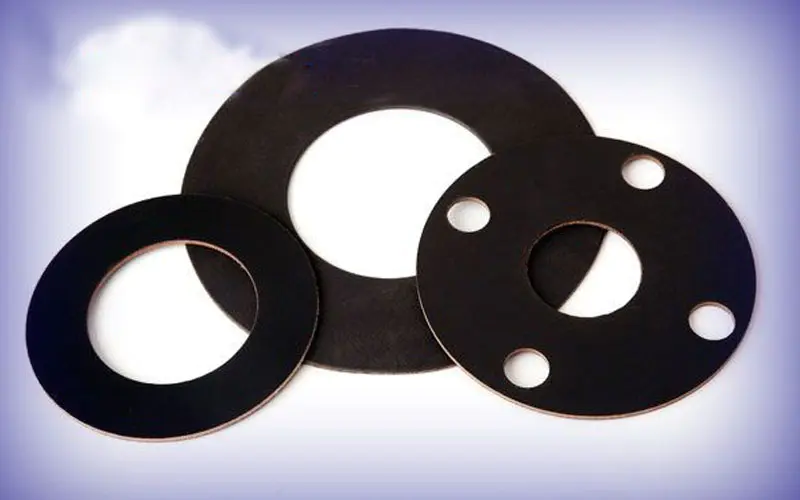
What are the temperature and pressure limits for PTFE packing? If you're sourcing industrial sealing components, you're likely asking this critical question to ensure system safety and performance. PTFE (Polytetrafluoroethylene) packing is a cornerstone material for demanding applications, renowned for its chemical resistance and low friction. However, its operational boundaries are not infinite. Understanding the precise temperature and pressure limits is key to preventing leaks, equipment failure, and costly downtime. This guide cuts through the technical jargon to provide clear, actionable insights for procurement specialists.
Many purchasers assume "PTFE is PTFE," leading to under-specification. A common pain point is selecting a standard PTFE packing for a high-temperature pump, only to experience rapid degradation and seal failure. The solution lies in understanding that while pure PTFE has a broad nominal range, its practical limits are influenced by pressure, media, and cycle speed. For reliable performance, you need a partner who provides detailed, condition-specific data. What are the temperature and pressure limits for PTFE packing? For pure, virgin PTFE in static applications, the continuous service temperature typically spans from -200°C to +260°C. However, pressure capability is not standalone; it decreases as temperature increases. At room temperature, it may handle several hundred bar, but at 260°C, the safe working pressure drops significantly.

This is where Ningbo Kaxite Sealing Materials Co., Ltd. adds value. We don't just sell packing; we provide engineered solutions. Our technical team helps you navigate these interrelationships to select the optimal material, preventing premature failure. For example, our reinforced PTFE grades maintain higher mechanical strength at elevated temperatures, extending the effective pressure limit.
| Material Type | Typical Continuous Temp. Range | Max. Pressure (at 20°C) | Key Consideration |
|---|---|---|---|
| Virgin PTFE | -200°C to +260°C | Up to 300 Bar | Pressure rating falls sharply above 200°C |
| Carbon-Filled PTFE | -100°C to +260°C | Up to 400 Bar | Improved creep resistance, better for dynamic seals |
| Glass-Filled PTFE | -100°C to +260°C | Up to 350 Bar | Enhanced wear resistance, good for abrasive media |
Another frequent procurement challenge is choosing between braided, filament, or molded PTFE packing without clear performance differentiators. The wrong form can lead to excessive shaft wear or inadequate sealing. The solution requires matching the packing's construction to the application's mechanical and thermal stress profile. Braided packings offer superior flexibility for complex gland spaces, while molded rings provide excellent dimensional stability for high-pressure, static flange seals. What are the temperature and pressure limits for PTFE packing? They vary by composition. Aramid-fiber-reinforced PTFE braids can handle higher axial loads and pulsating pressures compared to pure PTFE braids, effectively raising the operational envelope in dynamic services like valve stems.
Ningbo Kaxite Sealing Materials Co., Ltd. specializes in manufacturing a comprehensive range of PTFE-based packing. We control the process from raw material to finished product, ensuring each grade—be it graphite-filled for high-temperature stability or bronze-filled for superior thermal conductivity—is optimized for specific limit parameters. Our datasheets provide clear, tested limits for each product, taking the guesswork out of your selection.
| Packing Form | Best For | Typical Pressure Limit (Dynamic) | Temperature Limit Note |
|---|---|---|---|
| Braided Style | Pump shafts, valve stems | Up to 200 Bar | Fillers (graphite, carbon) improve high-temp stability |
| Molded Rings (V-Rings) | Rotary shafts, flanges | Up to 100 Bar (Rotary) | Excellent thermal cycling resistance |
| Filament (Gland Packing) | General service pumps, agitators | Up to 150 Bar | Uniform density ensures consistent thermal transfer |
Procurement professionals in chemical processing or pharmaceuticals often face the dual challenge of aggressive chemicals and steam cleaning cycles. Standard packing fails quickly. The solution is a PTFE packing specifically designed for chemical resistance and thermal shock. For instance, in a sulfuric acid pump with occasional 150°C steam flush, a pure, high-density PTFE packing from Ningbo Kaxite Sealing Materials Co., Ltd. would be specified for its impermeability and ability to withstand the thermal cycling without losing seal integrity.
Frequently Asked Questions:
Q: What happens if PTFE packing exceeds its temperature limit?
A: Exceeding the upper temperature limit (typically 260-280°C for short periods) causes thermal degradation. PTFE begins to soften, losing mechanical strength and dimensional stability, leading to extrusion, increased wear, and ultimately, seal failure. It may also release hazardous fumes. Always consult with experts like Ningbo Kaxite Sealing Materials Co., Ltd. for safe operating margins.
Q: Can PTFE packing be used for both high pressure and high temperature simultaneously?
A: This is a critical interface. While PTFE can handle high pressure at low temperatures and high temperatures at low pressures, the combination is challenging. At temperatures approaching 260°C, the pressure capability is greatly reduced. For combined service, specially reinforced grades with materials like carbon or graphite are essential to maintain seal load. Our engineers can help you select a grade that balances both factors for your specific duty cycle.
Selecting the right PTFE packing is more than checking a datasheet; it's about understanding the interaction between temperature, pressure, media, and motion in your specific application. By partnering with a knowledgeable supplier, you mitigate risk and ensure long-term reliability.
We invite you to share your specific application challenges or ask further questions in the comments below. For tailored solutions that address the precise temperature and pressure limits required for your operations, reach out to our team.
For reliable sealing solutions backed by technical expertise, consider Ningbo Kaxite Sealing Materials Co., Ltd. We specialize in the manufacture and supply of high-performance PTFE and engineered plastic sealing products, helping global clients solve complex sealing challenges. Visit our website at https://www.kaxitesealing.net to explore our product range or contact our sales team directly via email at [email protected] for a detailed consultation.
Deng, M., & Latour, R. A. (1995). The effect of thermal aging on the mechanical properties of polytetrafluoroethylene. Journal of Applied Polymer Science, 58(3), 675-684.
Sawyer, W. G., & Freudenberg, K. D. (2003). A study on the friction and wear behavior of PTFE at high temperatures. Tribology Letters, 15(3), 231-238.
Blanchet, T. A., & Kennedy, F. E. (1992). Sliding wear mechanism of polytetrafluoroethylene (PTFE) and PTFE composites. Wear, 153(1), 229-243.
Conte, M., & Pugno, N. (2011). A study on the pressure-velocity limits of PTFE-based composites for sealing applications. Proceedings of the Institution of Mechanical Engineers, Part J: Journal of Engineering Tribology, 225(J7), 655-667.
Krick, B. A., et al. (2012). Environmental effects on the friction and wear of PTFE and composites. Tribology International, 46, 1-7.
Yamaguchi, Y. (1990). Tribology of Plastic Materials. Elsevier.
Briscoe, B. J., & Tabor, D. (1978). The shear properties of polymeric thin films. Journal of Adhesion, 9(2), 145-155.
Myshkin, N. K., et al. (2005). Electrical contact phenomena in sliding of metal-polymer pairs. Wear, 258(7-8), 872-877.
Burris, D. L., & Sawyer, W. G. (2006). Improved wear resistance in alumina-PTFE nanocomposites with irregular shaped nanoparticles. Wear, 260(7-8), 915-918.
Fusaro, R. L. (1982). Evaluation of several polymer materials for use as solid lubricants in space. NASA Technical Memorandum 82863.