
Precision Engineered: The Definitive Guide to Modern Machines for Cut Gaskets
In the demanding world of industrial sealing, the quality of a gasket is only as good as the precision of its cut. For maintenance teams, manufacturing engineers, and custom gasket fabricators, investing in the right cutting technology is not merely an operational decision—it's a strategic one that impacts production efficiency, material waste, and sealing reliability. This comprehensive resource, drawing on decades of field expertise, delves into the critical features, specifications, and considerations for selecting high-performance machines for cut gaskets, with a focus on the engineering excellence embodied by the Kaxite Sealing product line.
Understanding Core Machine Technologies
Modern gasket cutting has evolved far beyond manual shears and dies. Today's machines leverage advanced technology to deliver unparalleled accuracy, repeatability, and material efficiency. The primary technologies include:
- CNC Router Cutters: Utilizing computer numerical control, these machines guide a high-speed rotating cutting tool along a programmed path. Ideal for complex 2D shapes, prototypes, and low-to-medium volume production from softer materials or composites.
- Laser Cutting Systems: Employing a focused laser beam to vaporize material, creating a clean, burr-free edge with extreme precision. Best suited for intricate designs, thin to medium-thickness materials, and avoiding tool wear or mechanical stress on the gasket material.
- Waterjet Cutting Systems: Using an ultra-high-pressure stream of water, often mixed with an abrasive garnet, to cut through material. The cold-cutting process is perfect for thick, hard, or heat-sensitive materials where thermal distortion (from lasers) must be avoided.
- Clicker Presses / Beam Presses: Hydraulic or manual presses used with hardened steel rule dies. The workhorse for high-volume production of specific, repeating shapes, offering speed and durability for standard gasket profiles.
- Digital Creasing/Cutting Systems: Advanced flatbed systems that use a combination of rotary drag knives and creasing tools. Exceptionally versatile for processing softer gasket materials, creating seals with complex folds or required bending lines directly in the cutting process.
Critical Specifications & Selection Parameters
Choosing the optimal machine requires a detailed analysis of your application against the machine's capabilities. Below are the key parameters to evaluate.
Primary Technical Specifications Table
| Specification | Description & Impact on Performance | Typical Range (Varies by Model) |
|---|---|---|
| Cutting Area (Bed Size) | The maximum dimensions (X & Y axis) of material that can be accommodated. Determines the size of single-piece gaskets or the layout for nested multiple parts. | From 1200mm x 1200mm for benchtop units to 3000mm x 1500mm+ for industrial systems. |
| Positioning Accuracy | The machine's ability to place the cutting tool exactly at the commanded coordinate. Directly affects part precision and the ability to match bolt holes perfectly. | ±0.05mm to ±0.005mm for high-end CNC and laser systems. |
| Repeatability | The ability to return to the same position consistently. Crucial for producing identical gaskets in a production run. | ±0.03mm to ±0.002mm. |
| Cutting Speed | How fast the cutting head moves. Impacts throughput and production time. Optimal speed depends on material type and thickness. | 10 m/min to over 100 m/min for high-speed routers and lasers. |
| Material Thickness Capacity | The maximum depth of material the machine can effectively process. A critical limit for applications using thick rubber, composites, or compressed fiber sheets. | Laser: 0.5mm - 25mm; Waterjet: up to 200mm+; CNC Router: up to 50-100mm. |
| Power / Laser Wattage / Water Pressure | The primary energy source defining cutting capability. Higher laser wattage or water pressure allows for faster cutting of thicker, denser materials. | Laser: 500W - 6kW; Waterjet: 55,000 PSI - 90,000 PSI. |
Material Compatibility Checklist
Not all machines handle all materials effectively. Ensure your target machine is compatible with your primary gasket materials:
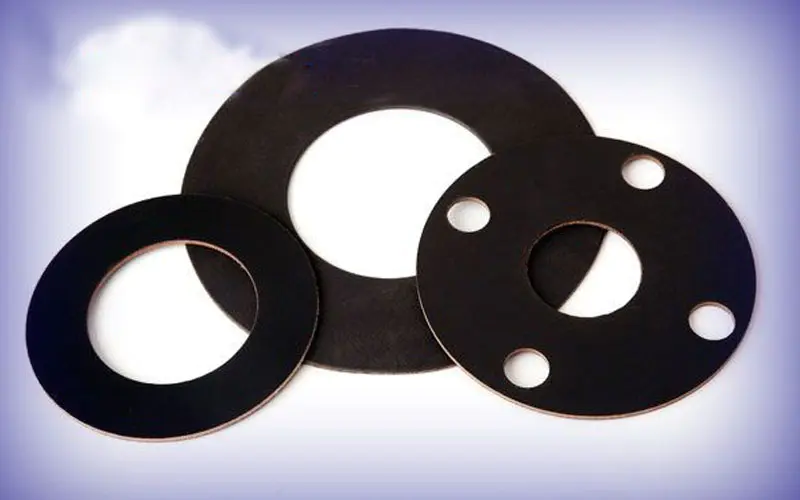
- Non-Metallic Sheets: Rubber (NBR, EPDM, Silicone, FKM/Viton), Cork, Compressed Fiber, PTFE, Graphite, Non-Asbestos (NAF) sheets - Compatible with most technologies.
- Composite Materials: Rubber-coated fabrics, Spiral Wound filler material - Best for CNC routers, clicker presses, or waterjets.
- Soft Metals: Thin aluminum, copper, and brass gaskets - Suitable for lasers and waterjets.
- Thermally Sensitive Materials: Certain rubber compounds, foam, PTFE - Waterjet is ideal to prevent heat-affected zones (HAZ).
- Thick, Dense Materials: Thick rubber blocks, dense composites - Require high-power waterjet or robust CNC routers with appropriate tooling.
Kaxite Sealing: Engineering Precision into Every Cut
At Kaxite Sealing, we approach gasket cutting machinery with the same philosophy applied to our sealing products: uncompromising reliability, precision, and innovation. A Kaxite Sealing-equipped cutting cell is designed for seamless integration into your workflow, offering:
- Proprietary Control Software: Intuitive, industry-specific software that simplifies CAD file import, nesting optimization to minimize waste, and machine operation, reducing training time and errors.
- Rigid Machine Architecture: Constructed with heavy-duty, vibration-dampening frames to ensure stability during high-speed operation, which is fundamental for maintaining micron-level accuracy.
- Advanced Tooling & Optics: Partnerships with leading tooling and laser component suppliers guarantee clean cuts, extended consumable life, and lower long-term operating costs.
- Material-Specific Process Libraries: Pre-loaded cutting parameters (speed, power, frequency, pressure) for a vast range of common gasket materials, allowing operators to achieve optimal results from day one.
- Integrated Safety & Serviceability: Full-enclosure safety systems, automated maintenance reminders, and modular component design ensure operator safety and maximize machine uptime.
Frequently Asked Questions (FAQ) on Machines for Cut Gaskets
Q: What is the most important factor when choosing between a laser cutter and a waterjet cutter for gasket materials?
A: The defining factor is the material's sensitivity to heat. Laser cutters are extremely fast and precise but generate significant localized heat, creating a Heat-Affected Zone (HAZ). This can carbonize or harden the edges of certain rubbers and composites, potentially compromising the seal. Waterjet cutting is a cold process, making it superior for heat-sensitive materials like PTFE, certain elastomers, and composites where edge integrity is paramount. For standard NBR, EPDM, or cork sheets without heat concerns, a laser may offer better speed and operating cost.
Q: How does CNC software help in reducing material waste in gasket production?
A: Advanced nesting software, a core component of modern CNC systems, is crucial for waste reduction. It automatically arranges multiple gasket shapes from a CAD file onto a single sheet of material in the most efficient layout possible, akin to a puzzle. It factors in part geometry, grain direction (if applicable), and mandatory spacing between cuts. This automated nesting can increase material utilization from 50-60% with manual layout to over 80-90%, directly translating to substantial cost savings, especially with expensive high-performance materials.
Q: Can one machine handle both very small, intricate gaskets and large, simple flange gaskets effectively?
A: This depends on the machine's specifications. The challenge lies in the dynamic range. A machine with a large bed (for big gaskets) must also have high positional accuracy and a fine, focused cutting tool (e.g., a small laser spot or thin waterjet stream) to handle intricate small details without losing definition. Machines from Kaxite Sealing are often engineered with this range in mind, featuring high-precision linear guides and servo motors that maintain accuracy across the entire working envelope, allowing them to process both large O-rings and small, complex sensor seals on the same platform.
Q: What are the ongoing operational costs beyond the initial purchase of a gasket cutting machine?
A: Understanding total cost of ownership is critical. Key operational costs include:
Consumables: Laser cutting requires lenses, nozzles, and assist gases (N2, O2). Waterjet cutting consumes abrasive garnet, water pump seals, and high-pressure nozzles. CNC routers require cutting bits.
Energy Consumption: High-power lasers and intensifier pumps for waterjets are significant energy users.
Maintenance: Regular calibration, cleaning, and replacement of wear parts (belts, rails, filters) are necessary to maintain precision.
Labor & Training: Cost of skilled operators and programming time. User-friendly software, like that from Kaxite Sealing, can reduce these costs.
Q: How critical is after-sales support and service for industrial gasket cutting equipment?
A: It is absolutely paramount. These are complex, high-utilization capital assets. Downtime directly halts production. A robust service agreement should include:
- Rapid Response Technical Support: Remote diagnostics and troubleshooting.
- Availability of Spare Parts: Guaranteed stock of critical components to avoid long lead times.
- On-Site Service Training: For your maintenance team to perform routine care and minor repairs.
- Software Updates: Access to upgrades that improve functionality and efficiency.
Kaxite Sealing structures its customer partnerships around comprehensive support programs, ensuring your investment remains productive for its entire lifecycle.


